


Sun Power Price: How Much Does Solar *Really* Cost in 2024?
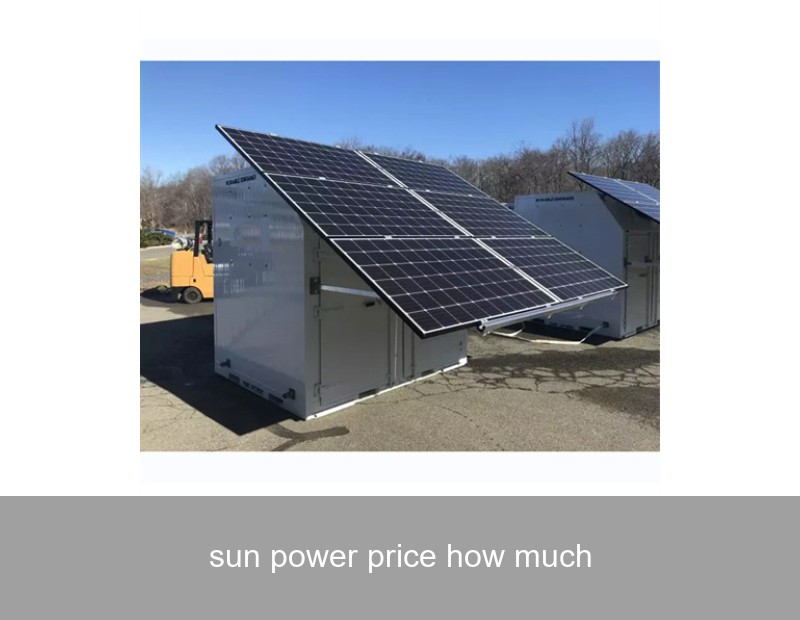
If you're searching for "sun power price how much," you're asking the right first question. But let's be honest—you're not just looking for a random number per watt. You're asking, "Is this a smart investment for my home or business?" The simple answer is that the price of the solar panels themselves has plummeted, making solar more accessible than ever. The more complete answer, however, involves understanding the total value of a system designed not just to generate power, but to intelligently manage and store it. This is where the true calculation of cost versus long-term benefit begins.
The Real Question Behind "Sun Power Price"
When we talk about "sun power price," we're really discussing two interconnected concepts: the upfront capital expenditure (CAPEX) and the long-term cost of energy (LCOE). A decade ago, the focus was almost entirely on the staggering upfront cost. Today, thanks to advancements in technology and scale, panel prices have fallen by over 80%. This shifts the conversation from "Can I afford it?" to "How do I optimize it?" The new challenge isn't just generation; it's dealing with solar's intermittent nature—the sun doesn't shine at night, and production peaks may not match your consumption peaks. This is why the modern "sun power price" equation increasingly includes energy storage.

Image: Modern solar panel installations are more efficient and affordable than ever. (Photo by Vivint Solar on Unsplash)
Breaking Down the Costs: More Than Just Panels
Let's deconstruct a typical solar photovoltaic (PV) system quote. It's a sum of several key components.
Hardware Costs (The Physical System)
- Solar Panels (Modules): Typically 15-25% of total system cost. High-efficiency models cost more but require less roof space.
- Inverters: The "brains" that convert DC solar power to usable AC power. Crucial for efficiency and monitoring (10-15% of cost).
- Racking & Mounting: The structure that securely attaches panels to your roof or ground (5-10%).
- Energy Storage (Battery): The optional but increasingly vital component. Adds significant upfront cost but transforms system value by enabling energy independence and backup power.
"Soft" Costs (The Invisible Investment)
This is where regional differences (especially between the US and Europe) are most pronounced. These can account for 50-65% of the total price and include:
- Permitting, inspection, and interconnection fees
- Installation labor
- Sales and marketing overhead
- System design and engineering
- Financing costs
| System Size | Typical Output | Estimated Total Cost (US) | Estimated Total Cost (EU) | Key Consideration |
|---|---|---|---|---|
| Residential (6 kW) | ~7,500 kWh/year | $16,500 - $21,000 | €14,000 - €20,000 | Highly dependent on roof complexity and local labor rates. |
| Commercial (50 kW) | ~60,000 kWh/year | $95,000 - $130,000 | €80,000 - €115,000 | Economies of scale start to apply; soft costs per watt decrease. |
| Residential + Storage (10 kW + 15 kWh) | Self-consumption + Backup | $30,000 - $45,000+ | €28,000 - €42,000+ | Adds resilience and time-of-use arbitrage, maximizing ROI. |
The True Game-Changer: The Levelized Cost of Energy (LCOE)
This is the metric that flips the script. LCOE calculates the average net-present cost of electricity generation over a system's lifetime. Think of it as the "price per kWh" your solar plant produces. According to analyses from Lazard, utility-scale solar PV now has an LCOE of $24-$96 per MWh, making it one of the cheapest sources of new electricity generation, often outcompeting fossil fuels. For homeowners and businesses, this means the long-term savings on electricity bills must be the primary lens for evaluating the "sun power price." A well-designed system can lock in low, predictable energy costs for 25+ years, insulating you from volatile utility rates.
A Real-World Case: Solar + Storage for a European Agri-Business
Let's move beyond theory. Consider a medium-sized dairy farm in Northern Germany. Their challenge: high energy costs for cooling and feeding systems, with a significant portion of consumption occurring in the early morning and evening—outside of peak solar hours.
- Phenomenon: High operational costs and carbon footprint from grid reliance.
- Data & Solution: They installed a 120 kWp solar carport system coupled with a 240 kWh Highjoule HES-Series commercial battery storage system. The solar array covers 60% of their annual demand directly.
- Case Outcome: The Highjoule battery stores excess midday solar production. This stored energy is then dispatched during high-price evening hours and for critical overnight cooling, increasing self-consumption to over 85%. The system also provides backup power for critical milking operations. The project's simple payback period is calculated at under 7 years, thanks to Germany's high grid electricity prices and intelligent energy arbitrage enabled by Highjoule's Energy Management System (EMS).
- Insight: For this business, the "sun power price" wasn't just about the cost of panels. It was the price of a reliable, low-carbon, and cost-controlling energy ecosystem. The storage component was not an extra cost but the key to unlocking maximum financial and operational value from their solar investment.

Image: Agri-businesses are ideal candidates for solar-plus-storage solutions. (Photo by American Public Power Association on Unsplash)
Beyond the Price Tag: Maximizing Your Solar Investment
So, how do you ensure you get the best value for your investment?
- Focus on Total Lifetime Value: Compare quotes on system output (kWh/year), not just price per watt-peak. A cheaper, less efficient system may cost you more in lost production over 25 years.
- Demand Smart Storage Integration: If considering batteries, ensure the system is designed holistically. The inverter, battery, and software must communicate seamlessly for optimal charging/discharging based on your usage and tariff patterns.
- Understand Your Tariff: Time-of-Use (TOU) rates make storage more valuable. Maximizing self-consumption becomes a direct financial gain.
- Plan for Resilience: For many, the "price" of backup power during grid outages is a significant, though often unquantified, benefit of a solar+storage system.
The Highjoule Solution: Intelligent Energy Management
This is where Highjoule's expertise transforms the "sun power price" discussion. We don't just sell components; we provide integrated, intelligent power solutions. For over 18 years, we've specialized in designing systems where solar generation, battery storage, and advanced software work as one cohesive unit.
Our HES-Series battery energy storage systems, built with durable LiFePO4 chemistry, are engineered for daily cycling and long life—crucial for a strong solar ROI. They are paired with our proprietary EMS platform, which acts as the brain of your installation. This software doesn't just react; it learns your energy patterns, forecasts solar production, and intelligently decides when to store solar energy, power your home/business, or even sell back to the grid at the most profitable times. For commercial and microgrid applications, this level of control is indispensable for managing demand charges and ensuring operational continuity.
By choosing a provider like Highjoule, you're investing in a system optimized for your specific location, consumption, and goals. We help you navigate incentives like the US Investment Tax Credit (ITC) or European grants, ensuring the final "price" you pay is the most competitive for the long-term value you receive.
What Does Your Energy Future Look Like?
The question "sun power price how much?" has evolved. It's no longer a simple retail query. It's an invitation to calculate your energy independence, your cost predictability, and your contribution to a sustainable grid. The upfront number is a single data point in a 25-year financial and environmental equation.
What specific energy challenge—be it soaring bills, unreliable grid power, or sustainability targets—is driving you to ask about the price of sun power today?
 Inquiry
 Online Chat