


Energy Storage: A New Approach for a Sustainable Grid
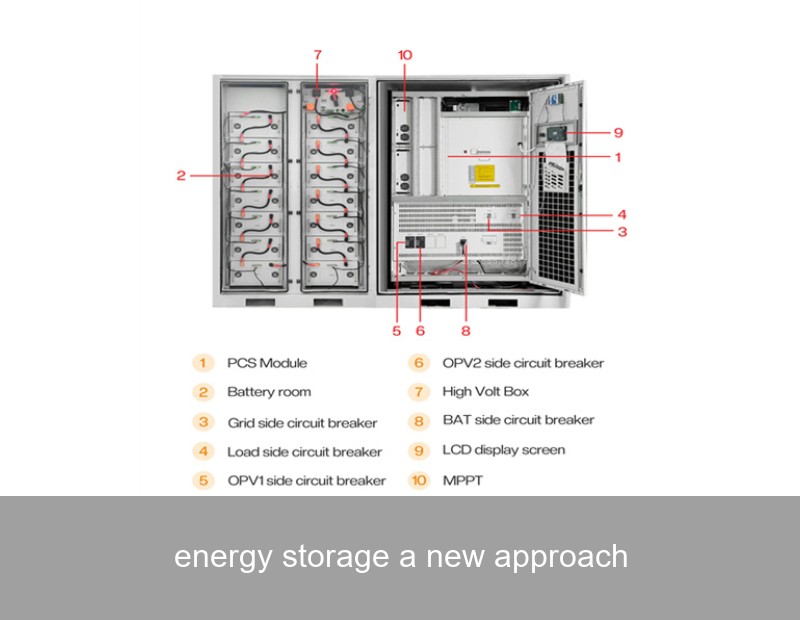
For decades, our electrical grids have operated on a simple, brute-force principle: generate electricity at the exact moment it's consumed. This "just-in-time" model is being pushed to its breaking point. The culprit and the cure are two sides of the same coin: the rapid rise of renewable energy. Solar panels sit idle at night, and wind turbines can go quiet for days, creating a mismatch between green generation and our constant demand. The solution isn't just more batteries; it's a fundamental shift in strategy. This article explores energy storage: a new approach that moves beyond backup power to become the intelligent, dynamic heart of a modern energy system.
Table of Contents
- The Phenomenon: Why Our Old Grid Is Struggling
- The Data: Quantifying the Imbalance
- The New Approach: Storage as a Dynamic Grid Asset
- Case Study: A German Industrial Park Paves the Way
- How Highjoule Embodies This New Approach
- The Future: An Interactive, Resilient Energy Network
The Phenomenon: Why Our Old Grid Is Struggling
Picture the traditional grid as a one-way street. Power flows from massive, centralized plants (like coal or nuclear) directly to our homes and factories. These "baseload" plants were predictable and steady. Now, imagine adding millions of small, variable generators—solar roofs and wind farms—to that street. They produce clean power, but their output isn't dictated by our coffee breaks or evening TV schedules; it's dictated by the weather. This variability creates two critical challenges:
- The Duck Curve: In regions with high solar penetration, net power demand plummets during sunny afternoons as solar floods the grid. Then, as the sun sets and people return home, demand surges rapidly, forcing traditional "peaker" plants (often gas-fired) to ramp up quickly—a costly and inefficient process.
- Grid Congestion and Curtailment: Sometimes, renewable generation in a local area exceeds what the local grid wires can handle or total demand. Grid operators are then forced to pay renewable generators to switch off—a process called curtailment. It's wasted clean energy and lost revenue.

Image Source: U.S. Department of Energy, illustrating the "Duck Curve" phenomenon.
The Data: Quantifying the Imbalance
The scale of this challenge isn't theoretical. In 2023, California's grid operator (CAISO) curtailed over 2.4 million megawatt-hours of renewable energy—enough to power nearly 250,000 homes for a year. In Europe, Germany saw periods where renewable generation exceeded 100% of national demand, yet couldn't fully utilize it due to transmission constraints and lack of storage.
Simultaneously, the demand for flexible, resilient power is soaring. Data centers, EV charging depots, and advanced manufacturing require not just clean power, but ultra-reliable and high-quality power. The traditional "backup diesel generator" approach is no longer viable for sustainability or operational goals. The data points to an urgent need for a buffer, a shock absorber, and an optimizer: intelligent energy storage.
The New Approach: Storage as a Dynamic Grid Asset
So, what is this new approach to energy storage? It's a paradigm shift from seeing storage as a standalone battery in a basement to viewing it as an integrated, software-defined grid asset. This approach has three core pillars:
- Multi-Stacking Value Streams: A modern battery storage system doesn't have just one job. It can perform several simultaneously: storing cheap solar for evening use (energy arbitrage), providing millisecond-frequency response to stabilize the grid (ancillary services), reducing a factory's peak demand charges, and serving as emergency backup. This "value stacking" is key to economic viability.
- AI-Powered Predictive Control: The intelligence isn't in the battery cells; it's in the software that controls them. Advanced systems use weather forecasts, electricity price predictions, and consumption patterns to autonomously decide when to charge, when to discharge, and which service to prioritize to maximize owner returns and grid benefits.
- Grid-Forming Capabilities: This is the cutting edge. Traditional inverters follow the grid's frequency (grid-following). Next-generation, grid-forming storage can actually establish a stable voltage and frequency waveform. This is crucial for grids with high renewable penetration, as it provides inherent stability and can even "black start" a local grid after an outage.
Case Study: A German Industrial Park Paves the Way
Let's look at a real-world application. A medium-sized industrial park in North Rhine-Westphalia, Germany, faced rising energy costs, grid capacity fees, and sustainability targets. They installed a 4.8 MWh battery energy storage system (BESS) integrated with their existing rooftop solar.
| Challenge | Solution | Result (Annualized) |
|---|---|---|
| High peak demand charges | BESS discharges during short peak periods to "shave" the maximum load. | 18% reduction in grid capacity fees. |
| Solar curtailment at noon | Excess solar generation is stored instead of being limited. | Increased solar self-consumption by 35%. |
| Desire for grid participation | The system bids unused capacity into the primary control reserve market. | Added €45,000 in ancillary service revenue. |
| Backup power requirement | BESS provides seamless transition to backup for critical processes. | 4 hours of full-facility backup ensured. |
This project exemplifies the new approach: a single storage asset delivering four distinct value streams, turning a cost center into a revenue-generating, resilient, and greener infrastructure. According to a Fraunhofer ISE study, such multi-use applications are essential for the economic deployment of storage in Germany and across Europe.
How Highjoule Embodies This New Approach
At Highjoule, we've been pioneering this integrated philosophy since our founding in 2005. Our products and services are built from the ground up to deliver on the promise of storage as a dynamic grid asset.
Our flagship product, the Highjoule Nexus Platform, is more than a containerized battery. It's an all-in-one energy management system featuring:
- Grid-Forming Inverters: Providing inherent stability for microgrids and weak grids, making them ideal for off-grid or grid-edge applications.
- Athena AI OS: Our proprietary operating system uses machine learning to continuously optimize dispatch across energy markets, onsite consumption patterns, and hardware health.
- Modular & Scalable Design: From commercial Highjoule Cube units to utility-scale Highjoule Array installations, our systems scale seamlessly to meet evolving needs.
For our clients—whether a U.S. hospital seeking resilience, a European factory targeting cost savings and decarbonization, or a renewable developer building a new solar-plus-storage plant—we provide a full-service partnership. This includes feasibility analysis, system design, financing support, and long-term performance monitoring, ensuring the storage system delivers maximum value over its entire lifespan.

Image Source: Unsplash, representative image of a modern battery energy storage system installation.
The Future: An Interactive, Resilient Energy Network
The ultimate endpoint of this new approach to energy storage is a truly decentralized, interactive grid. Imagine thousands of these intelligent storage systems—in homes, businesses, and substations—communicating and coordinating to balance the grid, mitigate congestion, and integrate renewable energy at an unprecedented scale. This isn't just about technology; it's about redefining the relationship between energy producers, consumers, and the infrastructure that connects them.
What does this mean for you? If you're a business leader, it means taking control of your energy destiny, transforming it from a volatile cost into a manageable asset. If you're a community planner, it means building infrastructure that is both sustainable and resilient against climate-driven outages. The tools and the approach are here today.
Is your organization ready to explore how a dynamic, multi-purpose energy storage strategy can meet your financial, operational, and sustainability goals in this new energy landscape?
 Inquiry
 Online Chat