


Understanding Solar Panels Thailand Cost: A Smart Investment Guide
If you're a homeowner or business leader in Thailand, you've likely felt the sting of rising electricity bills and wondered about the power of the sun overhead. The initial question on everyone's mind is: what is the real solar panels Thailand cost? While the upfront price tag is a crucial starting point, the true story is about long-term value, energy independence, and a sustainable future. This guide will demystify the costs, showcase the tangible benefits, and explore how modern technology makes solar a smarter investment than ever.
Table of Contents
- The Real Cost Breakdown of Solar in Thailand
- Beyond the Price Tag: The Value of a Complete Energy System
- Case Study: A Thai Business's Journey to Energy Security
- Maximizing Your ROI: The Critical Role of Energy Storage
- How Highjoule Empowers Your Solar Investment
- Is Your Property Ready for a Solar Transformation?
The Real Cost Breakdown of Solar in Thailand
The cost of a solar panel system in Thailand isn't a single number. It's a spectrum influenced by several key factors. As of 2024, a typical residential installation can range from ฿30,000 to ฿70,000 per kilowatt-peak (kWp), with commercial systems often achieving lower costs per kWp due to scale. A standard 5kWp home system might have a gross price between ฿150,000 and ฿350,000.
But what creates this range? Let's break it down:
- System Size & Quality: More panels and higher-efficiency modules (like monocrystalline) cost more but generate more power in limited space.
- Installation Complexity: Roof type, angle, and accessibility affect labor costs.
- Inverter Technology: This is the brain of your system. Basic string inverters are less expensive, while modern microinverters or hybrid inverters offer better performance and monitoring for a higher initial cost.
- Additional Components: This is where the real magic happens for modern energy independence—adding a battery energy storage system (BESS).
Think of it this way: a solar panel system without storage is like having a rainwater tank with a hole in the bottom. You use the water (electricity) as it rains (suns shines), but you can't save it for a dry day (night or cloudy weather). Including storage fundamentally changes your energy economics and resilience.

Image: A modern rooftop solar installation. Source: Unsplash
Beyond the Price Tag: The Value of a Complete Energy System
Focusing solely on the per-watt cost of panels is an outdated approach. Today, savvy investors look at Levelized Cost of Energy (LCOE)—the total lifetime cost of your system divided by the total energy it will produce. This is where quality components and intelligent design pay off.
More importantly, consider these value drivers:
- Drastically Reduced Bills: Solar can offset 60-100% of your daytime consumption. With storage, you can extend those savings to cover nighttime usage.
- Protection Against Tariff Hikes: You lock in your energy cost for 25+ years, insulating yourself from future utility price increases.
- Energy Security: With a battery backup, power outages become a minor inconvenience, not a disruption. This is critical for businesses, homes with medical equipment, or areas with unstable grids.
Case Study: A Thai Business's Journey to Energy Security
Let's look at a real-world example from Samut Prakan, Thailand. A mid-sized frozen seafood processing factory faced two major challenges: crippling monthly electricity bills averaging ฿400,000 and frequent, short grid outages that disrupted refrigeration cycles, risking spoilage.
In 2023, they installed a 500 kWp rooftop solar system coupled with a 1 MWh containerized battery storage system. The solar panels Thailand cost for this project was a significant investment, but the results were transformative:
| Metric | Before Installation | After Installation |
|---|---|---|
| Monthly Electricity Bill | ~฿400,000 | ~฿80,000 (80% reduction) |
| Grid Outage Impact | Production halts, product risk | Zero impact; seamless switch to battery power |
| ROI Period | N/A | Estimated 4.5 years |
| CO2 Reduction | N/A | ~600 tons annually |
The battery system was programmed for peak shaving—discharging during the utility's most expensive rate periods—and providing instant backup. This case moves beyond simple solar payback to showcase business continuity insurance funded by energy savings. You can explore more on Thailand's energy trends via the International Energy Agency.
Maximizing Your ROI: The Critical Role of Energy Storage
As the case study shows, adding storage unlocks the full potential of your solar investment. This is where the expertise of a global system integrator becomes invaluable. Not all storage solutions are created equal.
A high-performance battery energy storage system (BESS) like those developed by Highjoule does more than just store electricity. It intelligently manages energy flow based on your consumption patterns, tariff schedules, and even weather forecasts. Our systems use advanced lithium iron phosphate (LFP) battery chemistry, renowned for its safety, long lifespan (typically over 6,000 cycles), and stability in hot climates—a perfect match for Thailand's conditions.
By integrating solar with smart storage, you transform from a passive consumer to an active manager of your energy ecosystem.

Image: Monitoring a modern energy storage system. Source: Unsplash
How Highjoule Empowers Your Solar Investment
At Highjoule, we understand that discussing solar panels Thailand cost is just the beginning of the conversation. Since 2005, we've evolved from a component provider to a full-solution architect for commercial, industrial, and microgrid applications. Our role is to ensure your solar investment delivers maximum financial and operational returns.
For the Thai market and similar climates, we offer:
- Highjoule HPS Series (Hybrid Power Systems): All-in-one units combining inverter, charger, and grid management. They are the perfect brain for a solar+storage system, optimizing self-consumption and providing seamless backup.
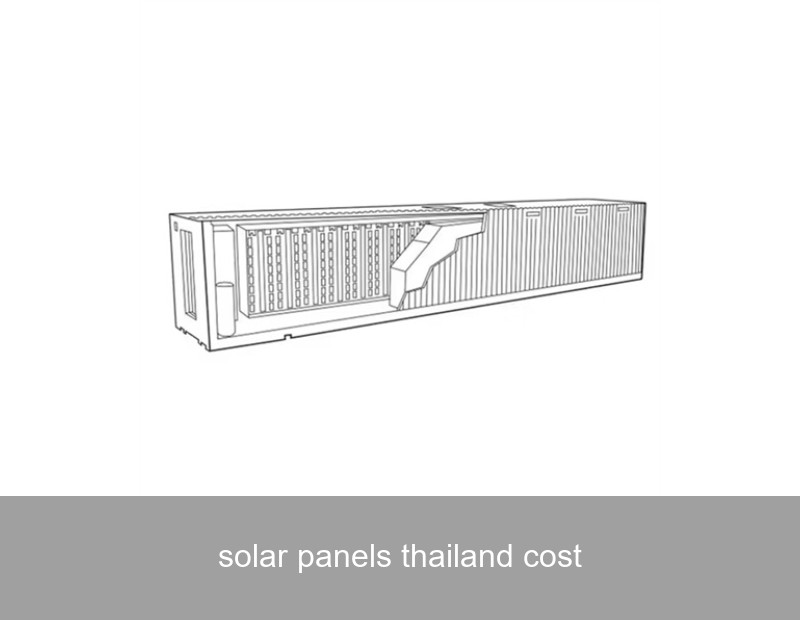
- Highjoule CUBE Containerized BESS: Pre-engineered, scalable storage solutions for larger commercial and industrial needs. They offer plug-and-play installation and can be tailored for peak shaving, backup power, or grid services.
- AI-Powered Energy Management Software (EMS): The true intelligence behind the hardware. Our EMS learns your site's patterns and automatically controls the system to minimize costs and maximize efficiency, all viewable from a simple dashboard.
Our approach is to provide a future-proof system. A quality solar installation lasts 25+ years. The storage and intelligence we integrate today ensure your system adapts to changing energy tariffs, regulations, and your own evolving needs. For technical insights on storage safety and standards, refer to resources from DNV.
Is Your Property Ready for a Solar Transformation?
The conversation about solar energy has matured. It's no longer just "how much do the panels cost?" but "what is the value of energy independence and predictable costs for the next quarter-century?" The technology, particularly when paired with smart storage from experts like Highjoule, is proven, reliable, and economically compelling.
So, we leave you with this question to ponder: When you review your next monthly utility bill, what strategic investment could you be making instead of simply paying that recurring cost? What would the ability to control your power price and secure your operations against outages be worth to your home or business?
 Inquiry
 Online Chat