


Solar Plant Energy Storage Cabinet Price: A Smart Investor's Guide
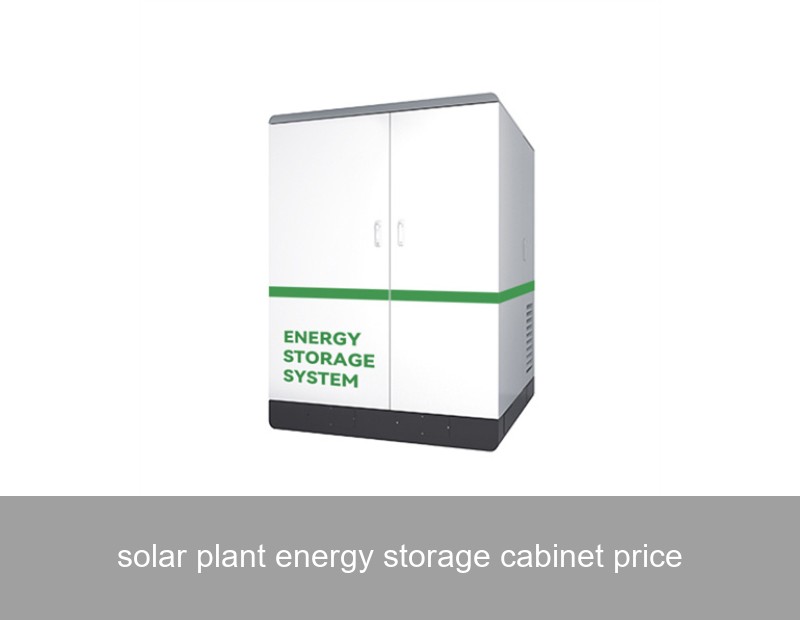
If you're managing or developing a solar plant, you've likely asked the question: "What's the price for an energy storage cabinet, and is it worth it?" It's a crucial query. As the renewable energy landscape matures, simply generating solar power isn't enough. The real value—and the real challenge—lies in managing that power effectively. The price of a solar plant energy storage cabinet isn't just a line item; it's an investment in grid stability, revenue optimization, and a more resilient energy future. Let's break down what you're really paying for and how to evaluate this critical asset.
Understanding Solar Plant Energy Storage Cabinet Price
First, let's clarify terminology. When industry professionals talk about a "solar plant energy storage cabinet price," they're typically referring to the cost of a containerized Battery Energy Storage System (BESS). This isn't a simple metal box with batteries inside. It's a sophisticated, integrated power unit that includes lithium-ion battery racks, a thermal management system, power conversion systems (PCS), fire suppression, and a sophisticated energy management system (EMS) all housed in a secure, weatherproof enclosure.
The quoted price can vary wildly—anywhere from $300 to over $800 per kilowatt-hour (kWh) of usable energy capacity for the system. Why such a broad range? It's because the final figure is a sum of its parts, influenced by technology, scale, and intelligence.
Key Components Driving the Cost
To make an informed decision, you need to understand what you're buying. Here’s a breakdown of the core cost drivers:
| Component | Description | Impact on Price & Value |
|---|---|---|
| Battery Cells & Chemistry | The core energy storage medium (e.g., LFP - Lithium Iron Phosphate). | LFP chemistry, known for safety and longevity, is a industry standard. Higher energy density and cycle life increase upfront cost but lower lifetime cost. |
| Power Conversion System (PCS) | The inverter that converts DC battery power to AC grid power. | High-efficiency (>98%) bi-directional inverters are crucial. They determine how quickly and efficiently energy can be dispatched, impacting revenue from grid services. |
| Energy Management System (EMS) | The "brain" that controls charging, discharging, and grid interaction. | This is where intelligence pays off. A smart EMS can optimize for price arbitrage, frequency regulation, and peak shaving, directly boosting ROI. |
| Thermal Management & Safety | Cooling systems and integrated fire safety. | Liquid cooling systems, while potentially more expensive upfront, ensure consistent performance, extend battery life, and are non-negotiable for safety. |
As a global leader since 2005, Highjoule designs its H-Series Modular Storage Cabinets with these components in perfect harmony. We don't just source parts; we engineer an integrated system where the advanced liquid cooling talks to the EMS, which optimizes for the PCS, ensuring every component works at peak efficiency for over a decade. This systems-level approach is a critical factor in long-term value, far beyond the initial purchase order.
Looking Beyond the Sticker Price: Total Cost of Ownership (TCO)
Focusing solely on the upfront solar plant energy storage cabinet price is the single biggest mistake a developer can make. The smarter metric is Total Cost of Ownership (TCO).
- Installation & Balance of System (BoS): A pre-integrated, plug-and-play cabinet significantly reduces civil works and installation time. Highjoule's containerized solutions are commissioned in weeks, not months.
- Operational Efficiency: A cabinet with a high-roundtrip efficiency (say, 95% vs. 88%) wastes less energy on every cycle, putting more sellable kWhs on the grid.
- Longevity & Degradation: A cheaper system may degrade faster, losing capacity. Highjoule's systems, using premium LFP chemistry and active liquid cooling, are engineered to retain over 80% capacity after 6,000+ cycles.
- Revenue Stacking: This is the game-changer. Can your storage cabinet perform multiple value streams simultaneously? Think: energy time-shift (arbitrage) + frequency response + capacity market payments. Our AI-powered HELIOS EMS platform is designed specifically for this multi-market optimization, turning a cost center into a revenue engine.

Image: A modern solar plant integrated with containerized battery storage. Source: Unsplash (Representative image)
A Real-World Case Study: The German Solar Farm
Let's ground this in reality. A 50MWp solar farm in Brandenburg, Germany, was facing frequent grid curtailment during peak solar hours, losing significant revenue. They needed a solution to capture this wasted energy and participate in the lucrative primary control reserve (PCR) market.
The Project: Integration of a 10 MWh / 5 MW Highjoule H-Series storage cabinet.
The Data-Driven Outcome (First 12 Months):
- Capital Expenditure (Cabinet Price): ~$4.8 million (approx. $480/kWh).
- Revenue Generated:
- Curtailment Mitigation: Saved 2.1 GWh of otherwise lost solar energy, valued at ~€180,000.
- PCR Market Participation: Generated ~€320,000 in frequency regulation revenue.
- Peak Shaving: Reduced grid dependency charges by ~€40,000.
- Total Annual Revenue Impact: ~€540,000.
This project demonstrates that the solar plant energy storage cabinet price was not an expense, but an investment with a clear payback period. The intelligence of the system to seamlessly switch between value streams was key. You can read more about grid service markets from the Energy Storage News authority.
The Highjoule Solution: Smart, Scalable, Sustainable
At Highjoule, we believe the right price delivers unmatched value. Our approach for commercial and utility-scale solar partners focuses on three pillars:
- Modular Design: Our H-Series cabinets are building blocks. Start with a 1 MWh unit and scale linearly as your solar plant grows or your needs change. This protects your initial investment and provides unparalleled flexibility.
- Intelligence by Default: Every cabinet comes with the HELIOS EMS, a cloud-connected platform that uses predictive algorithms and real-time market data to autonomously maximize your financial return. It's like having a 24/7 trading desk for your electrons.
- Full Lifecycle Partnership: We don't just sell hardware. Our service includes remote monitoring, performance analytics, and proactive maintenance plans to ensure your system delivers on its financial promise for its entire 15+ year lifespan.
This integrated product and service model is why leading developers choose Highjoule. We become a long-term partner in your asset's profitability. For deeper technical insights on battery longevity, refer to this study by The National Renewable Energy Laboratory (NREL).
Making Your Investment Decision: Questions to Ask
When you receive a quote for a solar plant energy storage cabinet, move beyond the price per kWh. Ask your provider these critical questions:
- What is the projected round-trip efficiency under real operating conditions?
- How does the EMS software plan to stack revenue in my specific market (e.g., ERCOT, CAISO, or EU markets)?
- What is the guaranteed end-of-life capacity and degradation curve?
- What does the warranty cover, and what is the estimated operational downtime?

Image: Advanced energy management system controlling power flow. Source: Unsplash (Representative image)
The energy transition is accelerating. Is your solar plant ready to evolve from a simple generator to a smart, dispatchable, and highly profitable grid asset? What single revenue stream in your local market could make the business case for storage undeniable for your next project?
 Inquiry
 Online Chat