


Why a Solar Plant with Battery Storage is the Future of Energy
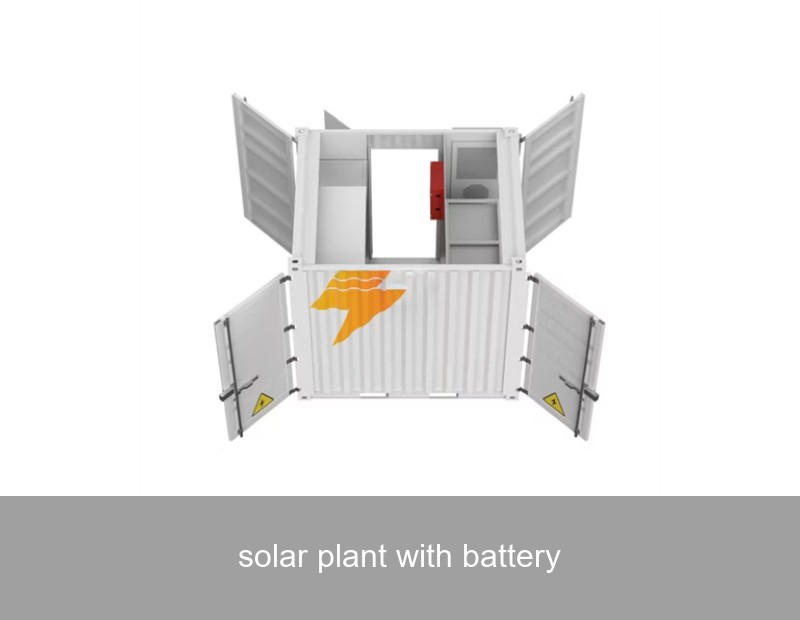
Imagine a solar farm at noon, basking in the sun, generating more clean power than the grid can handle. Now, picture that same farm after sunset, completely idle while fossil fuel plants ramp up to meet demand. This is the fundamental challenge of renewable energy: it's intermittent. But what if that solar plant could capture the sun's midday bounty and save it for later? This is no longer a hypothetical. A solar plant with battery storage, or a solar-plus-storage hybrid system, is rapidly becoming the new standard for reliable, dispatchable, and economically savvy renewable power. For businesses, utilities, and communities, integrating advanced battery storage is the key to unlocking solar energy's full potential.
Table of Contents
- The Grid Challenge: Sunlight Doesn't Match Demand
- How a Solar Plant with Battery Works: More Than Just a Backup
- The Tangible Benefits: From Stability to Savings
- A Real-World Case: The Hornsdale Power Reserve Legacy
- Highjoule's Role: Powering the Hybrid Energy Future
- The Future Outlook and Your Next Step
The Grid Challenge: Sunlight Doesn't Match Demand
The "duck curve" is a well-documented phenomenon in energy markets like California and Germany. It visually depicts the net load on the grid—total demand minus renewable generation. As solar output peaks during midday, net demand plummets. Then, as the sun sets and people return home, demand surges while solar generation drops off a cliff. This creates a steep ramping requirement for traditional gas or coal plants, leading to grid instability and high costs.
The data is stark. According to the U.S. Department of Energy's Solar Futures Study, achieving a decarbonized grid will require hundreds of gigawatts of solar paired with storage to manage this intermittency. A standalone solar plant addresses only half of the equation. Adding a battery transforms it into a predictable, firm power source that can deliver electricity when it's needed most, not just when it's available.

Image Source: National Renewable Energy Laboratory (NREL), depicting the famous "Duck Curve."
How a Solar Plant with Battery Works: More Than Just a Backup
Think of a battery energy storage system (BESS) as the heart and brain of a modern solar facility. It doesn't just store energy; it intelligently manages its flow based on grid signals, market prices, and physical constraints.
Core System Components:
- Solar PV Array: Converts sunlight into direct current (DC) electricity.
- Inverters/Converters: Transform DC from solar and batteries to grid-compatible alternating current (AC).
- Battery Racks & Modules: The physical storage units, typically using lithium-ion chemistry for its energy density and efficiency.
- Battery Management System (BMS): Monitors cell health, temperature, and state of charge for safety and longevity.
- Energy Management System (EMS): The intelligent controller that decides when to charge, when to discharge, and at what power level to maximize value.
Operational Modes in Action:
| Time | Solar Generation | Battery Action | Grid Impact |
|---|---|---|---|
| Midday (High Solar) | High | Charging: Storing excess energy | Prevents curtailment, stabilizes grid |
| Late Afternoon (Ramp) | Falling | Discharging: Supplements solar | Eases the "neck" of the duck curve |
| Evening Peak (No Solar) | Zero | Discharging: Full power output | Replaces peaker plants, meets high demand |
| Night (Low Demand) | Zero | Idle or charging from grid (if cheap) | Provides ancillary services (frequency regulation) |
The Tangible Benefits: From Stability to Savings
The value proposition of a solar plant with battery storage extends across multiple dimensions.
- Grid Stability & Resilience: Batteries can respond to frequency fluctuations in milliseconds, far faster than any turbine. This inertia-less response is critical for grids with high renewable penetration.
- Economic Optimization: Store energy when wholesale prices are low (or even negative) and sell when prices spike. This energy arbitrage turns a solar plant into a more profitable asset.
- Capacity Firming: Allows developers to guarantee a certain power output level, making solar a "dispatchable" resource that utilities can rely on for capacity needs.
- Reduced Curtailment: Instead of being told to turn off during grid congestion, a solar plant can store that would-be-lost energy for later use, maximizing its capacity factor.
- Deferred Infrastructure Upgrades: By providing local peak power, solar-plus-storage can delay the need for expensive transmission and distribution upgrades.
A Real-World Case: The Hornsdale Power Reserve Legacy
No discussion is complete without mentioning the landmark project that proved the concept at scale: the Hornsdale Power Reserve in South Australia. Paired with the Hornsdale Wind Farm, this 150 MW / 193.5 MWh Tesla battery system, launched in 2017, provided a masterclass in battery value.
Its impact was immediate and quantifiable. According to a report by The Australian Energy Market Operator (AEMO), the facility:
- Reduced the region's frequency control ancillary services (FCAS) costs by over 90% in its first year, saving consumers tens of millions of dollars.
- Responded to major grid outages in under 140 milliseconds, preventing load-shedding and blackouts.
- Demonstrated seamless switching between market services (frequency regulation, energy arbitrage, and emergency backup).
Hornsdale shattered the perception of batteries as mere backup. It proved they are dynamic grid assets that enhance reliability and reduce system-wide costs—a blueprint now being followed globally.

Image Source: Clean Energy Council, Australia (Hornsdale Power Reserve).
Highjoule's Role: Powering the Hybrid Energy Future
Since 2005, Highjoule has been at the forefront of this transition. We understand that a successful solar plant with battery integration isn't just about hardware; it's about intelligent, application-specific system design and long-term performance.
Our HPS Series of containerized battery energy storage systems are engineered for utility and large-scale commercial applications. They feature:
- Ultra-High Energy Density: Maximizing storage capacity within a compact footprint.
- Advanced Liquid Cooling & Safety: Ensuring optimal cell temperature for longevity and unmatched safety through our proprietary battery management technology.
- Grid-Forming Inverter Capability: Our systems can "black start" and stabilize microgrids, a critical feature for future grids.
More importantly, Highjoule provides a full turnkey service—from initial feasibility studies and financial modeling to system design, grid compliance support, installation, and long-term asset management via our cloud-based monitoring platform. For a solar developer, this means a single, trusted partner to navigate the complexity of creating a truly dispatchable and revenue-optimizing renewable asset.
Beyond Large Scale: The Commercial & Industrial Application
The same principles apply at a smaller scale. A manufacturing plant with rooftop solar can use a Highjoule C&I BESS to maximize self-consumption, reduce peak demand charges (a major portion of utility bills), and provide critical backup power. This transforms a cost center into a value center.
The Future Outlook and Your Next Step
With declining battery costs, supportive policies like the U.S. Inflation Reduction Act (IRA), and urgent decarbonization goals, the trend is irreversible. The solar plant of the future is, unequivocally, a solar plant with battery storage. It's the most logical step to increase the usability, value, and grid-friendliness of renewable energy investments.
The question is no longer if to add storage, but how to do it right. How will you design your system to capture the most value streams? What battery chemistry and system architecture are optimal for your specific site conditions and market rules?
What specific challenge in your energy portfolio—be it peak shaving, renewable integration, or grid resiliency—could a tailored solar-plus-storage solution from Highjoule solve for you today?
 Inquiry
 Online Chat