


Solar and Wind Hybrid System UK: Your Guide to Unlocking Year-Round Renewable Power
If you're exploring renewable energy in the UK, you've likely faced a common dilemma: solar panels are quiet and productive in the sunny summer months, but what about those long, windy, and cloud-covered winter days? Relying on a single source of renewable energy often leads to seasonal gaps. This is where the concept of a solar and wind hybrid system UK becomes not just innovative, but essential. By intelligently combining solar photovoltaic (PV) panels and a small wind turbine, you can create a more consistent and reliable power generation profile that aligns beautifully with the UK's variable climate. As a global leader in advanced energy storage, Highjoule has been at the forefront of integrating these complementary technologies with smart battery systems since 2005, helping businesses, communities, and homeowners achieve true energy independence.
Table of Contents
- The UK's Renewable Energy Challenge: Sun vs. Wind
- How a Solar and Wind Hybrid System Works: Synergy in Action
- A Real-World Case Study: The Cornish Community Microgrid
- The Highjoule Advantage: Intelligent Storage is the Key
- Key Considerations for Your UK Hybrid System Project
- The Future of Hybrid Systems in the UK
The UK's Renewable Energy Challenge: Sun vs. Wind
Let's look at the data. The UK has made tremendous strides in renewable energy, particularly in offshore wind. However, for on-site generation, the patterns are clear. According to Met Office climate summaries, solar irradiance peaks from April to September, while the winter months see a significant drop. Conversely, wind speeds tend to be stronger and more consistent during the autumn and winter periods. This creates a natural complementary relationship.
Imagine your energy generation as a yearly graph. A solar-only system shows a prominent summer peak and a shallow winter trough. A wind-only system might show more consistent bumps, but potentially with gaps during calm summer spells. When you overlay these two graphs, the valleys of one are often filled by the peaks of the other. The result? A flatter, more reliable curve of self-generated electricity throughout the year. This synergy is the core value proposition of a hybrid renewable system, reducing your reliance on the grid during periods of high demand and price volatility.

Image: A visual representation of complementary energy generation. Source: Unsplash (Credit: American Public Power Association)
How a Solar and Wind Hybrid System Works: Synergy in Action
A hybrid system is more than just installing solar panels and a wind turbine side-by-side. It's an integrated ecosystem designed for optimal performance. Here’s a breakdown of the key components:
- Solar PV Array: Converts sunlight into direct current (DC) electricity.
- Wind Turbine: Typically a smaller-scale, quiet model suitable for on-site use, generating AC electricity that is then converted to DC.
- Charge Controller(s): Regulates the power coming from both sources to safely charge the battery bank.
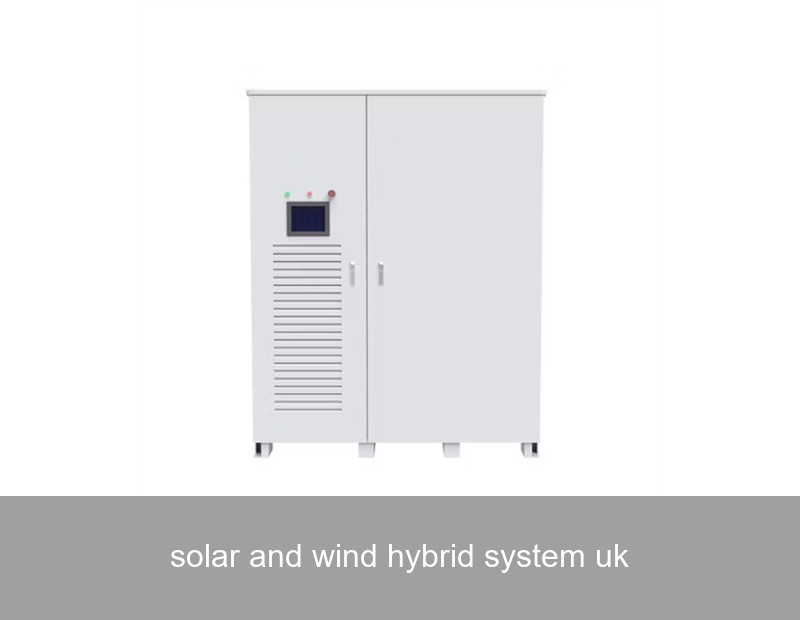
- The Intelligent Core - The Battery Energy Storage System (BESS): This is where the magic happens. A system like Highjoule's HPS Series doesn't just store energy; it intelligently manages it.
- Hybrid Inverter: Converts the stored DC power from the batteries into usable AC power for your home or business.
- Energy Management System (EMS): The brain of the operation, constantly analyzing energy production, consumption, weather forecasts, and grid tariffs to make decisions in real-time.
The process is a continuous, automated loop: energy from solar and wind is prioritized for immediate use. Any surplus is directed to charge the battery storage. Once storage is full, excess can be exported to the grid. When generation is low, power is drawn from the batteries, seamlessly preventing grid import during expensive peak times.
A Real-World Case Study: The Cornish Community Microgrid
Let's move from theory to practice. A compelling example of a successful solar and wind hybrid system UK project is the off-grid community microgrid powering a small agricultural cooperative and several farmsteads in Cornwall. Facing high grid connection costs and a desire for sustainability, the community opted for a hybrid solution.
The Challenge: Provide reliable, 24/7 power for farm equipment, cold storage, and residential needs in a location with no main grid access.
The Solution:
| Component | Specification | Role |
|---|---|---|
| Solar PV | 45 kWp ground-mounted array | Primary summer generation |
| Wind Turbine | 1 x 20 kW vertical axis turbine | Primary winter & nighttime generation |
| Battery Storage | Highjoule HPS-150 (150 kWh capacity) | Energy balancing, time-shifting, grid-forming |
| System Intelligence | Highjoule Apex EMS with forecasting | Optimizes dispatch and system health |
The Results (Annual): The system meets over 98% of the community's energy needs. Data logs show that solar provides ~65% of the annual yield, with wind contributing ~35%, crucially covering most of the winter deficit. The Highjoule BESS ensures power stability, with the EMS automatically starting a backup biodiesel generator on the rare occasions of prolonged low generation. This project demonstrates how hybrid systems are not just for theory but are viable, robust solutions for real UK energy challenges.
The Highjoule Advantage: Intelligent Storage is the Key
You might wonder, can't you just connect solar and wind to a simple battery? Technically, yes, but efficiency and system lifespan would suffer dramatically. The true enabler of an effective hybrid system is advanced, intelligent storage. This is where Highjoule's expertise becomes critical.
Our HPS (High-performance Storage) Series for commercial and industrial applications, and the Resilio Series for residential use, are engineered specifically for the demands of multi-input renewable systems. They feature:
- Multi-port & High-rate Charging: Capable of handling simultaneous, variable inputs from both solar and wind sources without degradation.
- Advanced Battery Chemistry: Utilizing lithium iron phosphate (LFP) for safety, longevity (over 6000 cycles), and stable performance in a range of temperatures.
- Integrated Grid Services: For grid-connected systems, our units can provide frequency response and other balancing services, creating a potential revenue stream.
- Weather-Adaptive AI: Our Apex EMS integrates local weather forecast data to predict generation dips and peaks, pre-charging the battery before a calm, cloudy period or preparing to store a wind-generated surplus.
For a solar and wind hybrid system UK project, partnering with Highjoule means you're not just buying a battery; you're investing in the intelligent orchestrator that maximizes your return on investment from both renewable assets.

Image: The heart of the hybrid system - intelligent battery storage. Source: Unsplash (Credit: ThisisEngineering)
Key Considerations for Your UK Hybrid System Project
Thinking about a hybrid system? Here are the essential factors to evaluate:
Site Assessment is Paramount
A professional assessment is non-negotiable. For wind, this means an analysis of local wind speed data, turbulence, and planning regulations (height restrictions, noise). The UK's planning environment for small-scale wind can be complex, but resources from the UK Government's planning portal are a starting point. For solar, roof orientation, shading, and structural integrity are key.
Financials and Incentives
While the Feed-in Tariff (FiT) is closed, the Smart Export Guarantee (SEG) allows you to get paid for excess electricity you export. A hybrid system typically increases self-consumption dramatically, reducing imports. The financial case is strongest when you consider rising grid prices, the security of supply, and the potential avoidance of costly grid upgrades.
Choosing the Right Partners
Installation requires integrators with expertise in both technologies and, crucially, in their integration with storage. Highjoule works with a certified network of installers across the UK and Europe who are trained to design and commission these sophisticated systems seamlessly.
The Future of Hybrid Systems in the UK
As the grid decarbonises and technology costs fall, the logic for hybrid systems strengthens. We are moving towards an era of "microgrids" where communities, business parks, and industrial sites operate as self-optimising energy islands, interacting intelligently with the main grid. The combination of solar, wind, and storage is a foundational model for this future.
Could your business or community be a pioneer in this energy transition? What would a resilient, low-cost, and sustainable energy supply mean for your operations over the next decade?
 Inquiry
 Online Chat