


What Does a Leading Solar Power Generation Company Do Differently?
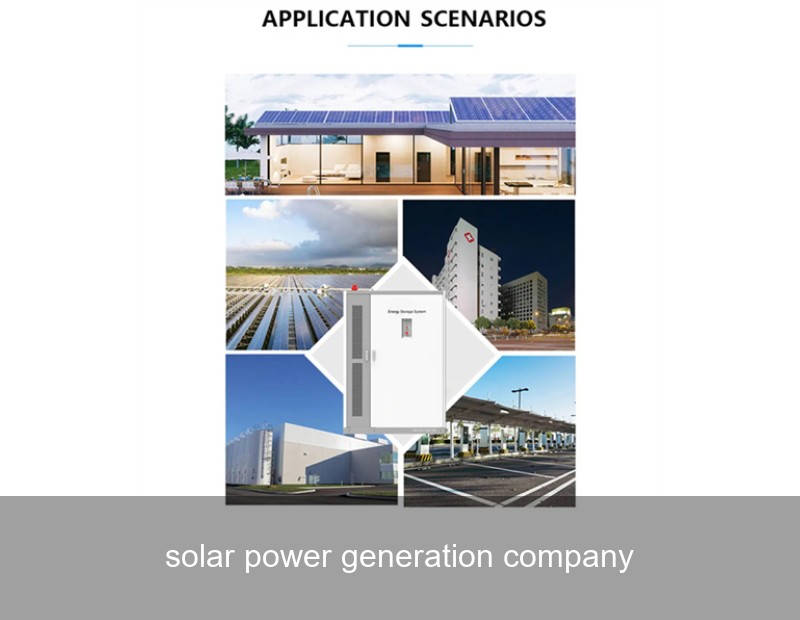
You see solar panels on rooftops and in fields, and you know they generate clean electricity. But have you ever wondered what separates a truly effective solar power generation company from the rest? The answer lies not just in the panels themselves, but in a sophisticated, intelligent approach to managing, storing, and optimizing every single kilowatt-hour produced. This is where the future of energy is being written.
Table of Contents
- The Modern Challenge: Sunlight Isn't Always Enough
- The Data Reality: Curtailment and Grid Strain
- Case Study: A German Industrial Park's Transformation
- The Highjoule Difference: Intelligence Beyond Generation
- Key Technologies for a Smarter Solar Future
The Modern Challenge: Sunlight Isn't Always Enough
The core business of a solar power generation company has evolved. It's no longer just about installing PV modules. The real challenge is the inherent intermittency of solar power. The sun sets, clouds roll in, and generation plummets—right when evening energy demand often peaks. This mismatch creates a fundamental problem for both grid stability and maximizing the return on solar investments.
Think of it like this: a solar farm without storage is like a spring with no reservoir. It flows abundantly when it rains but is dry during a drought. A forward-thinking solar company today must provide the "reservoir" and the "water management system" to ensure reliable, 24/7 clean power.
The Data Reality: Curtailment and Grid Strain
Let's look at the numbers. In markets like California and parts of Europe with high solar penetration, a phenomenon called "curtailment" is growing. Grid operators sometimes have to ask solar plants to reduce output because the grid cannot absorb the excess midday power. In 2023, California curtailed over 2.4 million MWh of solar and wind energy—enough to power nearly 250,000 homes for a year. This is clean, paid-for electricity going to waste.
Simultaneously, the duck curve—the deep dip in net demand during sunny afternoons followed by a steep evening ramp-up—becomes more pronounced. This forces grid operators to rely on fast-responding, often fossil-fuel-powered "peaker" plants, undermining the environmental benefits of solar.

Large-scale solar generation is crucial, but its true potential is unlocked with storage. Credit: American Public Power Association / Unsplash.
Case Study: A German Industrial Park's Transformation
Consider a real-world example from Bavaria, Germany. A medium-sized industrial park with a 2.5 MW rooftop solar system faced two issues: 1) They were exporting excess solar power to the grid at low, subsidized rates. 2) They were purchasing expensive peak power from the grid during early morning and evening operations.
Their solution? Partnering with a solar power generation company that integrated a 1.8 MWh battery energy storage system (BESS). Here's what changed:
| Metric | Before Storage | After Storage Integration |
|---|---|---|
| Solar Self-Consumption | 35% | Over 85% |
| Grid Peak Demand | 1.4 MW | 0.6 MW |
| Annual Energy Cost Savings | Baseline | ~€180,000 |
| Grid Curtailment Events | Frequent | Nearly Zero |
The BESS stores the midday solar surplus and discharges it during peak hours. This not only slashed costs but also turned the industrial park into a more resilient energy asset. In this case, the storage system was provided and optimized by Highjoule, showcasing how advanced storage is an indispensable tool for modern solar projects.
The Highjoule Difference: Intelligence Beyond Generation
This is where a company like Highjoule redefines the partnership. While a solar power generation company excels at capturing sunlight, Highjoule specializes in mastering its output. Since 2005, we have focused on providing the intelligent brain and robust muscle for solar installations worldwide.
Our role is to ensure that the electricity generated is not just clean, but also reliable, economical, and perfectly aligned with consumption patterns. We achieve this through:
- Highjoule H-Series Commercial & Industrial (C&I) ESS: Scalable, containerized or modular battery systems designed to integrate seamlessly with new or existing solar arrays. They feature advanced safety protocols and are built for high-cycle daily use.
- Intelligent Energy Management System (EMS): The true core of our offering. Our AI-driven EMS doesn't just store and release energy. It forecasts solar production and load demand, analyzes electricity tariffs in real-time, and automatically chooses the most economical strategy—whether to store, use, or even provide grid services.
- Microgrid Controllers: For campuses, remote communities, or critical infrastructure, we enable solar-plus-storage systems to operate independently from the main grid (island mode), providing unparalleled energy security.
For a solar developer or EPC, partnering with Highjoule means you can offer clients a complete, turnkey solution that maximizes ROI and future-proofs their investment against changing grid dynamics and energy prices.
Key Technologies for a Smarter Solar Future
So, what should you look for when evaluating storage for a solar project? Here are the critical components:
- DC-Coupled vs. AC-Coupled Architecture: DC-coupled systems, where batteries connect directly to the solar array's DC side, often have higher round-trip efficiency for storing *new* solar generation. AC-coupled systems are more flexible for retrofits. Highjoule provides both, advising on the optimal configuration.
- Battery Chemistry: While lithium-ion phosphate (LFP) is the dominant, safe choice for stationary storage due to its long life and stability, the software that manages it is paramount. Our battery management system (BMS) ensures each cell operates within its ideal parameters, extending system lifespan.
- Grid Services Software: In many markets, stored solar energy can participate in frequency regulation or capacity markets. Our systems are equipped with the necessary hardware and software interfaces to unlock these additional revenue streams, a concept often called "value stacking."

Intelligent control systems are the key to optimizing solar-storage performance. Credit: Michael Fousert / Unsplash.
The Future of Solar is Integrated and Intelligent
The trajectory is clear. According to the International Energy Agency (IEA), solar PV is set to become the largest source of global electricity capacity by 2027. However, they also emphasize that storage is the essential enabler for this growth. The most successful solar power generation company of tomorrow will be one that masters the integrated solar-plus-storage model today.
It's about creating self-optimizing energy ecosystems. Imagine a future where every commercial solar installation, from a neighborhood supermarket to a vast manufacturing plant, operates as a virtual power plant (VPP). These aggregated assets can balance the grid, support higher renewable penetration, and create a more resilient and democratic energy network. Highjoule's technology platform is designed to be the cornerstone of this very future.
As you plan your next solar project, whether for a client or your own portfolio, ask yourself this: Is our goal merely to generate green energy, or is it to deliver predictable, cost-effective, and resilient power 24 hours a day? The answer to that question will define the partners you choose and the value you ultimately create.
 Inquiry
 Online Chat