


Solar Power in Saudi Arabia: Redefining Energy Leadership Under the Sun
For decades, the global energy narrative was simple: Saudi Arabia meant oil. Black gold fueled its economy and powered the world. But walk across the sands of the Arabian Peninsula today, and you'll witness a profound transformation. The world's largest oil exporter is now looking skyward, harnessing a far more abundant and permanent resource—the sun. Solar power in Saudi Arabia is no longer a side project; it's the cornerstone of Vision 2030, a strategic blueprint to diversify the economy and build a sustainable future. This pivot isn't just about environmental responsibility; it's a masterclass in economic foresight and energy security. But as any engineer will tell you, capturing sunlight is only half the battle. The real challenge lies in storing its power for when the sun sets and delivering it reliably to cities, industries, and homes. That's where the next chapter of this energy revolution is being written.
Beyond Oil: The Data Behind the Shift
Why would an oil giant go all-in on solar? The numbers are staggeringly persuasive. Saudi Arabia boasts some of the highest solar irradiance levels on the planet, with the potential to generate the equivalent of over 1.5 million barrels of oil per day from solar energy alone. Under its National Renewable Energy Program (NREP), the Kingdom has set ambitious targets: generating 50% of its electricity from renewables by 2030, with solar expected to form the bulk. Projects like the 2.6 GW Al Shuaibah Solar PV plant, now under construction, aren't just power stations; they're statements of intent.
This shift addresses a critical domestic issue: soaring domestic energy consumption. Burning precious oil and gas for desalination and air conditioning is economically unsustainable. By freeing up hydrocarbons for higher-value export or industrial use, solar directly bolsters the nation's fiscal resilience. The transition is creating a new industrial ecosystem, attracting international investment, and fostering local expertise in high-tech sectors. In essence, Saudi Arabia is leveraging its energy expertise to master a new domain, ensuring its leadership in the post-oil energy era.
The Storage Imperative: Why Solar Needs a Brain
Here's a reality check for any large-scale solar endeavor: the sun is not a dispatchable employee. Generation peaks at midday and drops to zero at night, rarely aligning perfectly with demand curves. For solar power in Saudi Arabia to be a reliable backbone, not just a supplement, it must be paired with advanced energy storage. Think of storage as the "brain" of the solar plant—it captures excess energy, holds it, and releases it precisely when needed.
This is particularly crucial for:
- Grid Stability: Mitigating the "duck curve" effect of rapid evening ramping when solar fades and demand spikes.
- Energy-Intensive Industries: Providing 24/7 clean power for manufacturing and giga-projects.
- Remote & Off-Grid Communities: Delaying costly grid infrastructure expansions by creating self-sufficient microgrids.
Without storage, a significant portion of solar potential is wasted, and grid operators must still rely on gas turbines to balance the system. With it, solar transforms into a firm, dependable power source.

Image: Large-scale solar farms in arid environments require robust storage solutions to maximize their value. Source: Unsplash
Case Study: Powering NEOM – A Glimpse into the Future
No discussion of solar power in Saudi Arabia is complete without looking at NEOM, the $500 billion flagship megacity. Designed to run on 100% renewable energy, NEOM isn't just building solar parks; it's architecting an entire energy ecosystem from the ground up. A key component is the Oxagon industrial city, which aims to be a hub for clean, advanced industries.
Let's consider a real-world challenge: powering a 24/7 green steel plant within Oxagon using only solar and wind. The variability is immense. A solution deployed in a similar harsh, off-grid industrial setting involves a hybrid power plant combining solar PV with Battery Energy Storage Systems (BESS). For instance, a project might feature a 400 MW solar farm coupled with a 100 MW / 400 MWh BESS. The battery doesn't just provide backup; it performs critical grid-forming functions, acts as a black-start resource, and constantly arbitrages energy—storing cheap midday solar and discharging it during high-price evening hours. This setup can increase the plant's renewable consumption to over 90%, slashing diesel generator use and operational costs. While specific NEOM contracts are evolving, this model is precisely the technology blueprint being deployed to meet such unprecedented demands for reliability and sustainability.
Highjoule: Engineering Resilience for Extreme Climates
This brings us to a critical point. The desert is a beautiful but brutal partner for technology. Extreme heat (often exceeding 50°C/122°F), sandstorms, and humidity pose severe challenges for energy storage systems. Standard batteries can degrade rapidly, and control systems can fail under thermal stress. This is where deep technical expertise becomes non-negotiable.
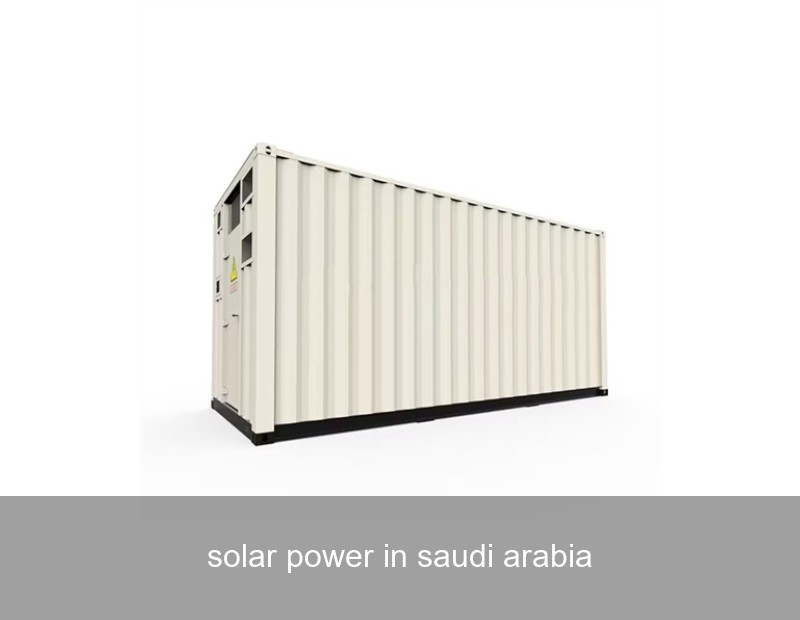
At Highjoule, with nearly two decades of experience as a global provider of advanced energy storage, we understand these challenges intimately. Our solutions are engineered not just for performance, but for durability. For environments like Saudi Arabia, we offer our IntelliBESS Platform, a containerized, all-in-one battery storage system built with resilience at its core.
How do we ensure reliability where it matters most?
- Advanced Thermal Management: Our proprietary cooling systems maintain optimal cell temperature even in extreme ambient heat, dramatically extending battery life and preventing thermal runaway.
- Grid-Forming Inverter Technology: Our systems can "create" a stable grid from scratch (black-start capability), essential for remote microgrids or ensuring NEOM-like cities never experience a blackout.
- AI-Powered Energy Management System (EMS): This is the true brain. It doesn't just react; it predicts solar generation and load patterns, optimizing charge/discharge cycles to maximize ROI and grid support.
For commercial and industrial (C&I) players in Saudi Arabia looking to reduce demand charges, ensure power quality, and build sustainability credentials, Highjoule's CommERCIAL Series offers scalable, behind-the-meter storage. For utility-scale solar farms, our Utility Core Systems provide the megawatt-scale muscle needed to firm up solar output and provide ancillary grid services.

Image: Robust, containerized battery storage systems are key for large-scale renewable integration. Source: Unsplash
The Future Grid: Decentralized, Intelligent, Sustainable
The ultimate vision for solar power in Saudi Arabia extends beyond massive fields of panels feeding a centralized grid. The future is a decentralized, intelligent network—a web of interconnected microgrids. Imagine a Red Sea tourism resort powered by its own solar + storage system, a desalination plant running independently on renewables, or a university campus operating as a self-optimizing energy island. These microgrids, powered by solar and stabilized by advanced storage like Highjoule's systems, can operate connected to the main grid or autonomously, enhancing national energy security and community resilience.
This transition also opens doors for innovative business models. Virtual Power Plants (VPPs) could aggregate thousands of distributed storage systems across the Kingdom to act as a single, flexible power plant, selling capacity back to the grid during peaks. The International Renewable Energy Agency (IRENA) consistently highlights this flexibility as the key to high renewable penetration. Saudi Arabia's journey is being watched closely by sun-rich nations worldwide, from North Africa to Australia, offering a scalable model for the energy transition.
The ambition for solar power in Saudi Arabia is clear. The technology, from PV panels to intelligent storage, is proven. The question now is about integration, optimization, and building an ecosystem that lasts for decades under the relentless sun. For project developers, industrial leaders, and utilities navigating this new landscape, the choice of storage partner will fundamentally determine the long-term success, profitability, and reliability of their solar investments. As you plan your next project in the region, what specific challenge—be it peak shaving, grid code compliance, or achieving 24/7 renewable operations—will you tackle first with the power of intelligent storage?
 Inquiry
 Online Chat