


Finding the Best Solar Batteries for Off-Grid Living: A 2024 Expert Guide
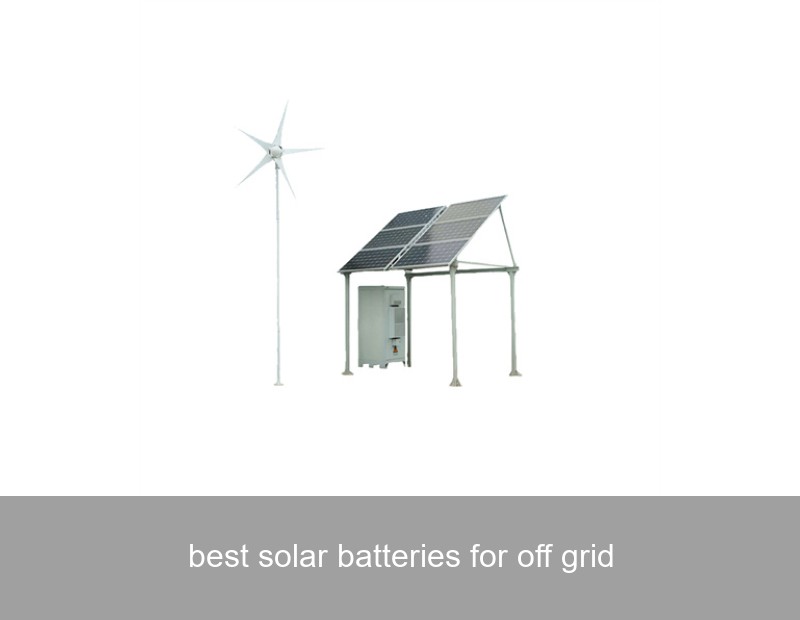
Dreaming of true energy independence? For homeowners and businesses looking to disconnect from the traditional grid or ensure resilience in remote locations, choosing the best solar batteries for off-grid systems is the most critical decision. It's the heart of your power system, storing the sun's energy to keep the lights on day and night. But with terms like LFP, depth of discharge, and cycling flying around, how do you choose? As a product technology expert at Highjoule, a global leader in advanced energy storage since 2005, I'll cut through the noise. This guide will walk you through the key considerations, backed by data and real-world examples, to help you select a battery that offers reliability, value, and peace of mind for your off-grid journey.
Table of Contents
- The Off-Grid Imperative: More Than Just Backup Power
- Key Metrics: What Makes a Solar Battery "The Best" for Off-Grid?
- Battery Chemistry Showdown: Why LFP is the Modern Champion
- Beyond the Battery: The Importance of a Cohesive System
- Case Study: Powering a Remote Alpine Lodge
- Highjoule's Approach to Off-Grid Excellence
- Your Path to Energy Independence
The Off-Grid Imperative: More Than Just Backup Power
Off-grid living isn't just a lifestyle choice; for many, it's a necessity. Whether it's a remote cabin in the Scottish Highlands, a farm in rural Texas, or a critical microgrid for a telecommunications site, connection to the main utility grid is either unavailable or prohibitively expensive. Here, your solar battery system isn't a luxury add-on—it's your sole source of electricity. This demands a fundamentally different approach than a typical grid-tied system with backup. Reliability isn't measured in hours, but in seasons. You need a system that can handle consecutive cloudy days, peak winter loads, and deliver consistent performance over a decade or more.

Image Source: Unsplash - A remote property fully powered by solar and batteries.
Key Metrics: What Makes a Solar Battery "The Best" for Off-Grid?
Let's move beyond marketing claims. When evaluating the best solar batteries for off-grid use, focus on these non-negotiable technical specifications:
- Usable Capacity (kWh): This is the actual energy you can use. Some batteries advertise a "total" capacity but have a lower "usable" amount due to built-in protective buffers.
- Depth of Discharge (DoD): A battery with a 90% DoD means you can safely use 90% of its capacity without significantly harming its lifespan. For off-grid, aim for 90% or higher.
- Round-Trip Efficiency: How much energy you get out versus what you put in. A 95% efficient battery loses only 5% of your precious solar energy to heat and conversion losses. Every percentage point counts when the sun is your only fuel.
- Cycle Life: This is the longevity king. It indicates how many charge/discharge cycles a battery can complete before its capacity degrades to a specified level (often 80%). Look for batteries rated for 6,000+ cycles.
- Power Rating (kW): Can the battery deliver enough instantaneous power to start your well pump, water heater, or workshop tools simultaneously?
| Metric | Why It's Critical for Off-Grid | What to Look For |
|---|---|---|
| Cycle Life | Determines system lifespan and long-term cost. | 6,000+ cycles to 80% capacity |
| Depth of Discharge | Defines how much of your stored energy you can actually use. | 90% or greater |
| Round-Trip Efficiency | Maximizes use of generated solar energy. | ≥95% |
Battery Chemistry Showdown: Why LFP is the Modern Champion
For years, lead-acid was the off-grid standard. Today, Lithium Iron Phosphate (LFP or LiFePO4) chemistry is the undisputed expert choice for off-grid resilience. Here’s why:
- Safety & Stability: LFP batteries are inherently more thermally stable, significantly reducing fire risk compared to other lithium-ion chemistries—a paramount concern for remote properties.
- Longevity: They offer exceptional cycle life, often 2-3 times longer than traditional lithium-ion, directly translating to a lower cost per cycle over the system's lifetime.
- Performance: They can operate efficiently across a wider temperature range and sustain high DoD daily without degradation. According to a 2021 NREL report, LFP chemistries are leading in stationary storage applications due to their balance of life, safety, and performance.
This is why at Highjoule, our core off-grid product lines, like the Highjoule Hive series, are built on premium LFP cells. We engineer them not just as components, but as integrated systems with built-in Battery Management Systems (BMS) that monitor each cell for voltage, temperature, and state of charge, ensuring the battery operates safely within its ideal parameters for decades.
Beyond the Battery: The Importance of a Cohesive System
The best solar batteries for off-grid don't operate in a vacuum. They are part of an ecosystem. Your inverter must communicate seamlessly with your battery bank to manage charging, discharging, and load shifting. A system with poor communication can underutilize or even damage your expensive batteries.
This is where integrated, "AC-coupled" or "DC-coupled" system design comes in. Companies like Highjoule specialize in providing complete, pre-engineered solutions. For instance, our Highjoule Titan microgrid controller acts as the brain of an off-grid system, intelligently managing energy flow between solar arrays, battery banks, backup generators, and the load. This holistic approach prevents the common pitfalls of mixing and matching components from different manufacturers, which often leads to finger-pointing when issues arise.
Scalability: Planning for Your Future Needs
Your energy needs will evolve. The best off-grid battery systems are modular. Instead of replacing the entire system, you should be able to add more battery modules in parallel to increase your storage capacity. This "stackable" design is a cornerstone of our Highjoule Hive products, allowing customers to start with a configuration that fits their current budget and expand as needed—future-proofing their investment.
Case Study: Powering a Remote Alpine Lodge in Switzerland
Let's look at real data. A boutique lodge in the Swiss Alps, inaccessible by main grid infrastructure, needed a 100% renewable, reliable power solution for year-round operation, with peak loads from heating, kitchen, and guest facilities.
- Challenge: Provide 24/7 power through harsh alpine winters with limited solar generation in December/January.
- Solution: A Highjoule-designed system featuring a 120 kW solar array coupled with a 480 kWh Highjoule Hive battery bank (using LFP chemistry), managed by a Highjoule Titan controller. A legacy biodiesel generator was integrated as a rarely-used backup for extreme contingencies.
- Results (12-month data):
- 99.98% power availability (generator ran for less than 8 hours total the entire year).
- 92% reduction in diesel fuel costs and associated logistics.
- The system successfully navigated a 7-day period of heavy snow and low sun with zero guest impact, relying solely on the battery's stored energy and intelligent load management.

Image Source: Unsplash - A professional battery storage installation in a commercial setting.
Highjoule's Approach to Off-Grid Excellence
With nearly two decades of experience since 2005, Highjoule doesn't just sell batteries; we deliver energy resilience. For off-grid clients across Europe and North America, our process involves:
- Deep Energy Assessment: Analyzing not just your annual usage, but your seasonal load profiles and future expansion plans.
- Purpose-Built Product Portfolio: From the modular Hive for residential and commercial scale to the powerful Titan controller for complex microgrids, our hardware is designed for off-grid durability.
- Intelligent Software: Our proprietary energy management software forecasts weather and consumption, automatically optimizing charge/discharge cycles to maximize battery life and ensure availability.
- Professional Support Network: We work through a certified network of installers who are trained specifically in off-grid system design and Highjoule technology, ensuring a correct and reliable installation.
This end-to-end control over technology and design philosophy allows us to stand behind our systems with robust warranties and performance guarantees, which is the ultimate marker of a product built to be the best solar battery for off-grid applications.
Your Path to Energy Independence
Choosing the right battery is a complex but crucial journey. It requires balancing technical specs with real-world performance, and understanding that the battery itself is only as good as the system it's in. By focusing on LFP chemistry, cycle life, scalability, and a unified system design, you're investing in true long-term autonomy.
What's the one energy-intensive appliance or goal in your off-grid plan that you're most curious about powering reliably with a solar-plus-storage system?
 Inquiry
 Online Chat