


Decoding the Solar Power Price in Sri Lanka: A Path to Energy Independence
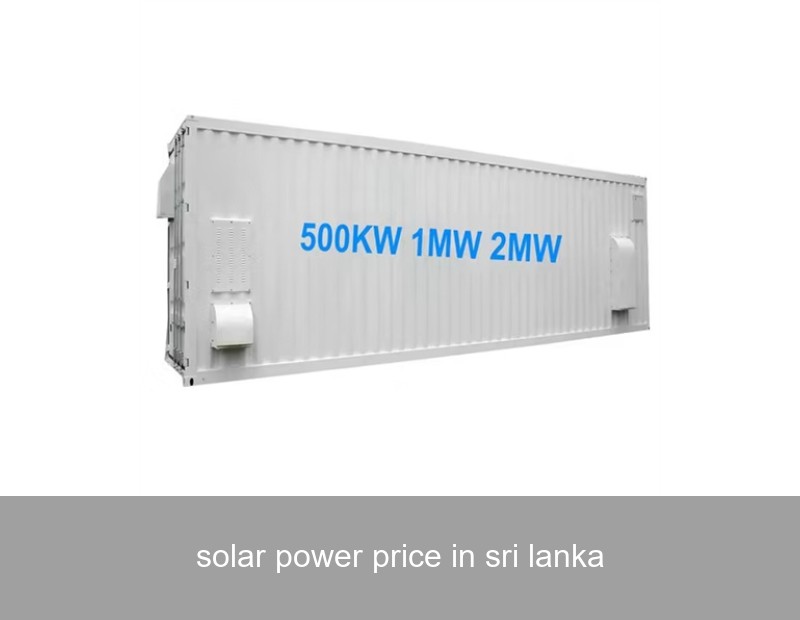
If you're exploring the solar power price in Sri Lanka, you're likely seeking more than just a cost per watt. You're investigating a tangible solution to frequent power cuts, soaring electricity bills, and the quest for reliable, self-generated energy. The conversation around solar energy in Sri Lanka has shifted dramatically. It's no longer a question of "if" but "how" to implement a system that delivers long-term value and security. While the upfront solar power price in Sri Lanka is a crucial starting point, the real story lies in understanding the total cost of ownership and the transformative role of modern energy storage.
Looking Beyond the Panels: The True Cost Components
The quoted price for a solar system often focuses on photovoltaic (PV) panels and installation. However, a robust, future-proof solution involves several key components that influence both initial investment and lifetime savings.
- Photovoltaic Panels: The efficiency and durability of the panels directly impact energy yield and longevity.
- Inverters: These devices convert DC solar power to usable AC power. Their quality dictates system efficiency and grid interaction capabilities.
- Mounting Structure & Installation: Engineering for Sri Lanka's climate, including monsoon winds, is non-negotiable for system safety.
- The Critical Game-Changer: Battery Energy Storage Systems (BESS): This is where the modern energy revolution truly happens. Storage decouples energy production from consumption, allowing you to use solar power at night or during grid outages.
When evaluating the solar power price in Sri Lanka, it's essential to view it through this holistic lens. A system without storage may have a lower upfront cost but leaves you vulnerable to the very grid instability you seek to escape. The intelligent integration of storage is what transforms a solar array from a supplementary power source into a primary, resilient energy asset.

Image: A modern solar installation. The true value extends beyond the panels. Source: Unsplash
The Solar-Storage Nexus: Unlocking True Value
Why is storage so pivotal for Sri Lanka? The island nation's energy challenges are unique: a reliance on imported fossil fuels, a grid under strain, and the need for dependable power for homes and businesses alike. Solar alone addresses only part of this equation.
Think of it this way: your solar panels are a prolific factory, working hardest at midday. But what if your home's peak energy demand is in the evening? Without a "warehouse" for that energy—a battery—the excess production is either exported to the grid at a low feed-in tariff or, worse, curtailed. A battery energy storage system acts as that warehouse, storing midday surplus for use during high-tariff evening hours or power outages. This capability directly enhances the return on investment, making the overall solar power price in Sri Lanka a more compelling and justifiable figure.
The Financial and Operational Benefits
| Challenge | Solar-Only Solution | Solar + Highjoule Storage Solution |
|---|---|---|
| Evening Power Demand | Reliance on expensive grid power or generators | Powered by stored, free solar energy |
| Grid Outages (Load-shedding) | System shuts down for safety (no power) | Seamless backup; critical loads remain powered |
| Maximizing Self-Consumption | Limited to daytime production | Can exceed 80%+ self-consumption of solar energy |
| Grid Stability & Demand Charges (Commercial) | Little to no contribution | Can provide peak shaving, reducing costly demand charges |
A Real-World Case: Stabilizing a Sri Lankan Tea Factory
Let's move from theory to practice. A medium-sized tea processing factory in the Nuwara Eliya district faced a dual challenge: unpredictable grid outages disrupting critical drying processes, and exorbitant demand charges on their electricity bill. They installed a 500 kW solar array, which helped during sunny days but left them exposed at night and during cloudy periods.
The transformative step was integrating a 1 MWh containerized battery storage system from Highjoule. Here’s the impact, measured over one year post-installation:
- Energy Cost Reduction: The system increased their solar self-consumption from ~40% to over 85%, slashing their grid electricity purchases by 60%.
- Demand Charge Savings: By using the battery to "peak shave"—discharging during short periods of highest grid demand—they reduced their peak power draw from the grid by 30%, leading to a direct 30% cut in monthly demand charges.
- Reliability: The factory eliminated production stoppages due to grid outages, protecting perishable product and ensuring on-time order fulfillment. The project's payback period was calculated at under 5 years, a strong financial and operational outcome.
This case illustrates that the effective solar power price in Sri Lanka is one that includes intelligent storage, delivering compound returns across savings, resilience, and operational continuity.
Highjoule's Role: Delivering Intelligence, Not Just Hardware
As a global leader in advanced energy storage since 2005, Highjoule understands that the key to unlocking value in markets like Sri Lanka is system intelligence. Our solutions for commercial, industrial, and residential applications are designed to optimize every kilowatt-hour.
For Sri Lankan homeowners and businesses, Highjoule offers:
- Adaptable Battery Systems: Scalable lithium-ion battery solutions that can be tailored to specific load profiles and future expansion needs.
- Advanced Energy Management System (EMS): The brain of the installation. Our EMS doesn't just store and release energy; it learns consumption patterns, forecasts solar production, and makes real-time decisions to maximize economic benefit—whether by optimizing self-consumption, providing backup, or participating in future grid services.
- Robust Design for Tropical Climates: Our containerized and modular units are built with thermal management and corrosion resistance suited to Sri Lanka's humid, warm environment, ensuring longevity and performance.
- End-to-End Support: From initial consultation and system design to commissioning and remote monitoring, we partner with local installers to ensure a seamless transition to solar-storage hybrid power.
By integrating Highjoule's technology, the effective solar power price in Sri Lanka becomes an investment in a smart, resilient energy ecosystem, rather than a simple commodity purchase.

Image: A modern Battery Energy Storage System (BESS), the core of energy resilience. Source: Unsplash
The Future Outlook for Solar Power in Sri Lanka
The trajectory for solar in Sri Lanka is incredibly promising. With supportive net metering policies and a clear national goal to increase renewable energy share, the foundation is strong. According to a report by the International Energy Agency (IEA), Sri Lanka has significant potential to expand its solar capacity. The continued decline in global battery costs, as tracked by sources like BloombergNEF, makes the solar-storage combination increasingly accessible.
The next evolution will involve more interactive grid services, where distributed systems like those powered by Highjoule's intelligence can help stabilize the national grid, creating potential revenue streams for system owners. This turns a passive investment into an active grid asset.
Your Energy Independence Journey
So, when you research the solar power price in Sri Lanka, ask yourself and potential providers these deeper questions: How does this system ensure my power is on when the grid is down? How does it maximize the financial return from my solar investment over its entire 20+ year life? How intelligent is the system at managing my unique energy profile?
The most forward-thinking energy consumers in Sri Lanka are now looking at total energy solutions. What specific energy challenge—be it unpredictable bills, operational downtime, or simply the desire for clean energy independence—is driving your search today, and how can a smart storage solution be designed to address it?
 Inquiry
 Online Chat