


Understanding Your Energy: A Guide to Solar Power System Diagrams
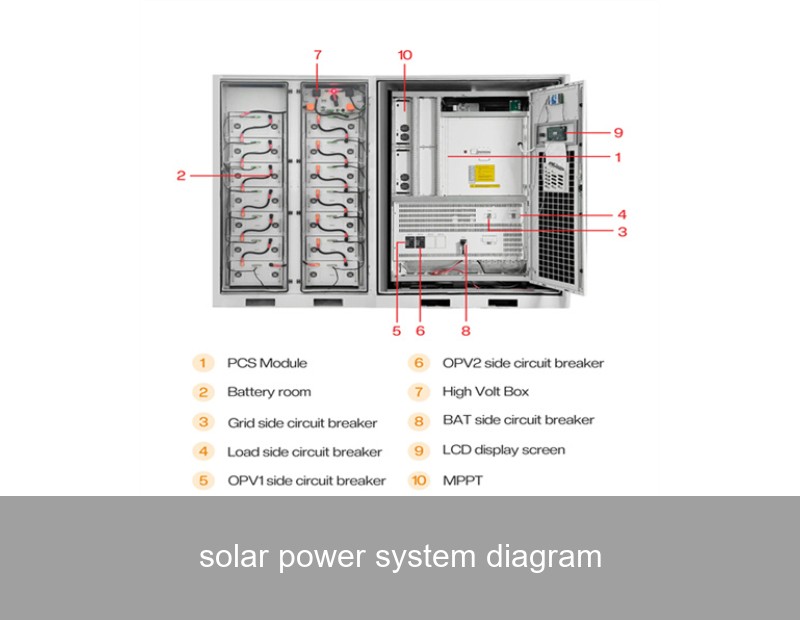
Have you ever looked at the sleek solar panels on a rooftop and wondered, "How does all that sunlight actually become usable electricity for my home or business?" You're not alone. The magic—and the mastery—lies in the orchestrated interplay of components, best understood through a solar power system diagram. Think of this diagram as the blueprint for your personal power plant. It doesn't just show parts; it reveals the intelligent flow of energy from sun to socket, and crucially, how to store it for a rainy day (or a moonlit night). For homeowners and business leaders across Europe and the U.S., deciphering this diagram is the first step toward true energy independence and resilience.
Table of Contents
The Core Phenomenon: From Sunlight to Savings
The global shift towards renewables isn't just a trend; it's an economic and environmental imperative. In 2023, solar power accounted for over 75% of new renewable capacity additions in the European Union, while in the U.S., the Solar Energy Industries Association reports that solar continues to be the fastest-growing energy source. Yet, a common phenomenon persists: system underperformance and confusion about self-consumption. Many see their solar panels export excess power to the grid during the day only to buy it back at higher rates at night. The missing piece in this puzzle, often absent from simplified solar power system diagrams, is intelligent storage and control.
Image: A modern rooftop solar array. The visible inverter is just one part of the complete system diagram. (Source: Unsplash)
Anatomy of a Modern System: Beyond Basic Diagrams
A basic diagram shows a linear path: panels → inverter → home. A modern, resilient system diagram is a dynamic network. Let's break down the essential nodes in this network.
Energy Generation: The Solar Array
This is your fuel source. Photovoltaic (PV) panels convert sunlight into Direct Current (DC) electricity. The efficiency and arrangement of these panels are critical, but they are only the beginning of the story.
Energy Conversion: The Inverter's Crucial Role
The inverter is the translator. It converts the DC electricity from your panels into Alternating Current (AC) that your home appliances and the grid use. Modern hybrid inverters go a step further, intelligently routing power between generation, storage, and consumption points.
Energy Management & Storage: The Brain and Battery
This is where the diagram becomes intelligent and where companies like Highjoule excel.
- The Battery (Storage): The heart of energy independence. It stores surplus solar energy for use when the sun isn't shining.
- The Energy Management System (EMS): The brain. This software-driven controller makes real-time decisions: should solar power charge the battery, power the house, or be exported? It optimizes for self-consumption, cost savings, or grid support.
In a Highjoule system, our IntelliBESS battery energy storage system and GridSync EMS platform are the core of this node. They don't just store energy; they learn your usage patterns, respond to grid signals (like variable electricity tariffs), and ensure every kilowatt-hour you produce is used in the most economical and efficient way possible.
Energy Distribution: To the Loads and the Grid
Finally, the AC power is distributed through your main electrical panel to power your "loads" – lights, HVAC, machinery. Any excess can be safely exported to the grid (often for a feed-in tariff), or, with a smart system, held in reserve. A critical safety component here is the isolation switch, ensuring your system can be safely disconnected for maintenance.
| Component | Function | Analogy | Highjoule's Solution |
|---|---|---|---|
| Solar PV Array | Generates DC electricity from sunlight | The "Field" or "Fuel Well" | Compatible with all major PV brands |
| Hybrid Inverter | Converts DC to AC; manages energy flow | The "Translator & Traffic Cop" | Integrated inverter solutions in IntelliBESS |
| Battery Storage | Stores excess energy for later use | The "Energy Savings Account" | High-density, long-life IntelliBESS units |
| Energy Management System | Intelligently controls all system components | The "Brain" | Proprietary GridSync AI software |
Case Study & Data: A German Bakery's Recipe for Resilience
Let's move from theory to practice. Consider "Bäckerei Schmidt," a mid-sized artisan bakery in Bavaria, Germany. Their challenge: high energy costs, especially for overnight refrigeration and early morning baking, coupled with midday solar overproduction that earned a low feed-in tariff.
The Old Diagram: A standard 50kW solar array → inverter → grid/load. Over 40% of solar generation was exported at low rates.
The Highjoule Solution: We integrated a 100kWh IntelliBESS system with GridSync EMS. The new, intelligent system diagram allowed for:
- Storing midday solar excess.
- Using stored energy to power refrigeration overnight, avoiding peak grid rates.
- Powering the morning baking shift with clean, stored solar energy before the sun was strong.
The Data-Driven Result: Within the first year, Bäckerei Schmidt achieved:
- 87% increase in solar self-consumption (from ~55% to over 95%).
- 68% reduction in grid electricity consumption during peak tariff hours.
- Projected payback period of under 5 years, thanks to optimized energy arbitrage and reduced demand charges.
This real-world example shows how an intelligent solar power system diagram, centered on smart storage, transforms a capital expense into a strategic financial and operational asset. You can explore more on the importance of storage for commercial viability from the U.S. Department of Energy.

Image: Commercial operations like bakeries have unique, high-demand energy profiles perfect for solar+storage optimization. (Source: Unsplash)
The Highjoule Difference: Intelligent Diagrams Made Real
Since 2005, Highjoule has evolved from a component provider to a global solutions architect for intelligent storage. We understand that a solar power system diagram is not one-size-fits-all. Our approach is to design the system around your unique energy profile.
- For Homes: Our residential IntelliBESS Home systems are scalable and feature seamless integration with existing solar, providing backup power and maximizing self-sufficiency.
- For Business & Industry: We design commercial-scale systems that tackle peak shaving, demand charge reduction, and provide uninterruptible power for critical operations, ensuring both savings and continuity.
- For Microgrids: Highjoule's technology forms the stable core of community or off-grid microgrids, integrating diverse generation sources (solar, wind) into a reliable power network.
Our GridSync Platform is the unifying thread, offering remote monitoring, predictive analytics, and even participation in grid-balancing programs like virtual power plants (VPPs) in eligible markets, turning your system into a revenue-generating grid asset.
Your Energy Future: What Does Your Diagram Look Like?
So, when you look at a solar power system diagram now, do you see just lines and boxes, or do you see a dynamic map of your energy independence? The critical question isn't just about generating power, but about mastering its flow on your terms. Is your current or planned system designed to simply offset bills, or is it engineered to provide resilience, control, and strategic financial value in an uncertain energy landscape?
What would optimizing the most critical node—the storage and management hub—do for your home's resilience or your business's bottom line this year?
 Inquiry
 Online Chat