


What is Zef Energi Holding Company? A New Era of Energy Investment
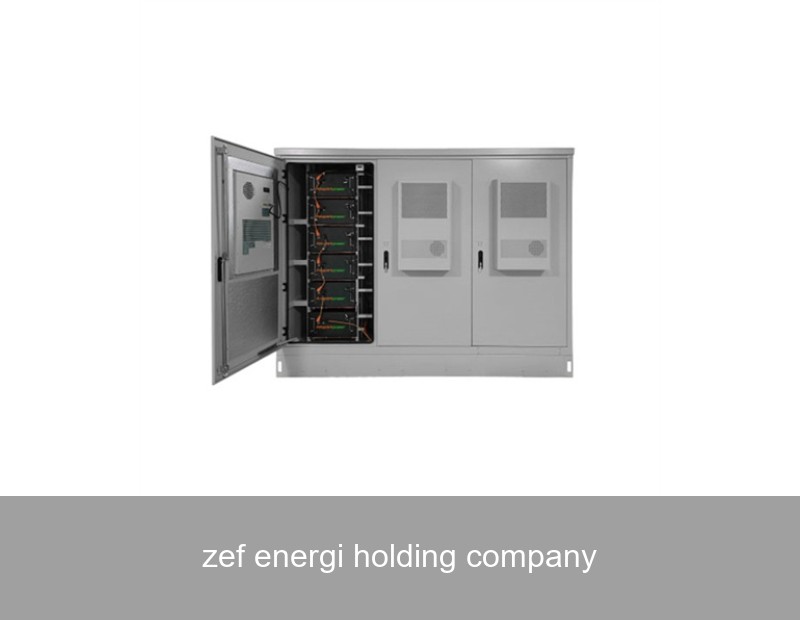
If you're watching the energy sector, you've likely heard names like Zef Energi Holding Company emerging. But what exactly are they? Think less of a traditional utility from the last century, and more of a strategic architect for the modern grid. Companies like Zef Energi represent a sophisticated investment and operational model, acquiring and managing distributed energy assets—primarily solar farms and, crucially, battery energy storage systems (BESS)—to create resilient, revenue-generating power networks. Their rise signals a fundamental truth: electricity is no longer just a commodity to be consumed; it's a dynamic asset to be optimized. And at the heart of this optimization lies advanced energy storage technology.
The Phenomenon: The Global Shift from Fossil Fuels to Energy Assets
For decades, energy investment meant oil fields, gas pipelines, and coal plants. The model was linear: extract, burn, transmit, consume. Today, the script is flipped. The push for decarbonization, energy security, and grid stability, especially in markets like Europe and the U.S., has created a booming market for renewable generation. But sunshine and wind are intermittent. This variability creates a massive opportunity—and a pressing need—for technologies that can store excess energy and dispatch it when needed. This is where the new energy holding companies stake their claim. They aren't just building solar panels; they're building intelligent, dispatchable power plants without the emissions.

a typical windy night in Texas or a sunny midday in Spain produces more power than the grid can instantly use. Instead of curtailing (wasting) that clean energy, it can be stored. Later, during a peak demand evening when fossil "peaker" plants would typically fire up, that stored energy is sold back to the grid at a premium. This arbitrage is just one of multiple value streams. For a holding company like Zef Energi, managing a portfolio of these assets is a complex dance of market forecasts, real-time trading, and physical grid services.
The Data Tells the Story: Why Investors Are Flocking to Storage
The numbers are compelling. According to the U.S. Energy Information Administration (EIA), battery storage capacity in the United States is expected to nearly double in 2024 alone. In Europe, driven by the REPowerEU plan, the energy storage market is projected to grow exponentially. But it's not just about capacity; it's about value. A 2023 Lazard Levelized Cost of Storage (LCOS) analysis shows that the cost of storage has fallen dramatically, making applications like frequency regulation and peaking capacity increasingly cost-competitive with conventional alternatives.
| Driver | Impact | Opportunity for Holdcos |
|---|---|---|
| Renewable Penetration | Increases grid volatility and curtailment | Arbitrage, Renewable Firming |
| Grid Decarbonization | Phasing out of coal/gas peaker plants | Providing clean peaking capacity |
| Ancillary Service Markets | Need for fast-frequency response & voltage support | High-value, short-duration contracts |
| Energy Security | Reducing reliance on imported fuels | Building resilient local microgrids |
Case Study: Zef Energi's Strategy in Action – The German Commercial Portfolio
Let's make this concrete. Consider a real-world scenario in a market like Germany, where industrial energy prices are high and grid constraints are common. A holding company like Zef Energi might acquire a portfolio of mid-sized commercial and industrial (C&I) sites with existing rooftop solar. The solar power is great, but it doesn't always align with the site's consumption pattern, and it doesn't help during an evening price spike or a grid outage.
Zef's strategy? Deploy coordinated, behind-the-meter battery storage systems across multiple sites. In one documented project with a similar profile, a cluster of three manufacturing facilities was equipped with a total of 2.5 MWh of storage. The results over 12 months were telling:
- Self-Consumption of Solar: Increased from 35% to over 70%, drastically reducing grid import.
- Peak Shaving: Automated discharge during the 2-hour daily grid peak reduced demand charges by an average of 28%.
- Revenue Generation: The aggregated storage capacity participated in the German primary control reserve market, generating a continuous revenue stream.
- Resilience: Critical loads at each site were backed up during two planned grid outages.
This "value stacking" transforms each site from a passive consumer into a proactive grid participant and revenue center. The holding company's expertise lies in orchestrating this across a portfolio, maximizing the financial return while enhancing grid stability.
The Intelligent Core: It's Not Just About the Battery Box
This orchestration is the real magic. The hardware—the battery cells, inverters, and enclosures—is essential. But the brain is what separates a simple battery from a grid asset. This requires an Energy Management System (EMS) that can make millisecond decisions based on market signals, weather forecasts, site load patterns, and grid conditions. It's this intelligence that allows a Zef Energi to decide: should this battery right now be saving solar, shaving a peak, selling frequency services, or providing backup power? The most profitable answer changes by the minute.
How Highjoule's Technology Enables Strategic Investors Like Zef Energi
This is precisely where Highjoule, as a global leader in advanced储能系统, partners with forward-thinking energy holding companies. Our role is to provide the reliable, intelligent, and scalable hardware and software backbone that makes these sophisticated strategies possible and profitable.
For a portfolio manager overseeing dozens of sites, consistency and remote manageability are non-negotiable. Highjoule's H-Series C&I储能系统 are designed for this. They offer a modular, containerized solution that can be rapidly deployed across diverse sites, from a warehouse in California to a factory in Poland. More importantly, our JouleMind AI-Powered EMS is the central nervous system. It doesn't just control a single system; it can aggregate and optimize an entire fleet of storage assets under a single dashboard, enabling portfolio-wide participation in energy markets.

Imagine the German case study, but at scale. Highjoule's platform allows Zef Energi's operators to set portfolio-wide financial and resilience goals. The AI then autonomously executes the optimal strategy for each site, balancing local needs with grid opportunities, all while ensuring the long-term health and safety of the battery assets. We provide the technological certainty so our partners can focus on their core business: energy investment and asset management.
The Future Landscape: What's Next for Energy Holding Companies?
The evolution is just beginning. As virtual power plants (VPPs) become mainstream, the aggregation of storage, solar, and even flexible demand from electric vehicles will create the most resilient and efficient grids we've ever seen. Holding companies like Zef Energi are poised to be the VPP orchestrators. Furthermore, the integration of long-duration storage technologies will open new markets for multi-day resilience and seasonal energy shifting.
The question for businesses, communities, and grid operators is no longer if they should engage with this new model, but how. The partnership between financial/strategic acumen (the holding company) and deep technological expertise (the system provider) is the blueprint for success.
Is your organization evaluating how to transform energy costs into a strategic asset, or how to future-proof your operations against price volatility and grid instability? What role could a tailored, intelligent storage solution play in your energy strategy?
 Inquiry
 Online Chat