


Solar Charging Stations: The Smart, Sustainable Power Hub of Tomorrow
Imagine pulling into a parking lot, plugging in your electric vehicle, and knowing that every kilowatt-hour charging your battery is generated cleanly by the sun overhead. This is no longer a futuristic vision; it's the rapidly emerging reality of solar charging stations. As the world accelerates its transition to electric mobility and distributed energy, combining photovoltaic (PV) panels with intelligent storage and management is becoming the gold standard for forward-thinking businesses, municipalities, and communities. But what does it take to build a reliable, efficient, and truly sustainable solar-powered charging hub? The answer lies not just in the panels, but in the brain and battery behind them: the advanced energy storage system.
Table of Contents
- The Rise of Solar-Powered Charging
- The Core Challenge: Sun Doesn't Shine on Demand
- The Integrated Solution: PV + Smart Battery Storage
- Case Study: A European Retail Giant's Success
- Key Components of a Robust Solar Charging Station
- The Future is Integrated and Intelligent
The Rise of Solar-Powered Charging
Across Europe and the United States, the infrastructure for electric vehicles (EVs) is expanding at a breathtaking pace. However, a significant concern lingers: is simply adding more plugs to the grid truly sustainable if that grid is still reliant on fossil fuels? This is where solar charging stations make a compelling case. They transform a point of energy consumption into a point of local, renewable generation. For site owners, this means reduced energy costs, protection against grid price volatility, a demonstrable commitment to sustainability, and an enhanced value proposition for customers and employees who drive EVs.

Image: Solar carports provide shade and generate clean power for EVs. Source: Unsplash
The Core Challenge: Sun Doesn't Shine on Demand
Here's the fundamental issue every solar charging project faces: generation and demand are misaligned. Solar panels produce the most energy in the middle of the day. But when do many people need to charge their cars? Often in the morning upon arrival at work, or in the late afternoon/evening when returning home or shopping. Without a buffer, you're forced to export excess solar to the grid (often at low rates) and pull expensive grid power back when you need to charge.
This mismatch creates a real economic and operational hurdle. According to the National Renewable Energy Laboratory (NREL), the value of solar increases significantly when paired with storage, especially for applications like EV charging where load-shifting is critical. The simple addition of panels is not enough; intelligence and storage are the missing links.
The Integrated Solution: PV + Smart Battery Storage
The most effective solar charging stations are built on a three-pillar model:
- Solar Generation: The PV array, typically installed on canopies, rooftops, or adjacent land.
- Energy Storage: A battery system that acts as a reservoir, storing midday solar surplus for use during peak charging hours or at night.
- Energy Management System (EMS): The "brain" that dynamically orchestrates energy flow between the grid, solar panels, batteries, and charging points.
This integrated approach ensures that the clean energy you produce is the energy you actually use, maximizing self-consumption, reducing demand charges from the grid, and providing backup power resilience. This is the domain where specialized expertise from companies like Highjoule becomes indispensable. With nearly two decades of experience, Highjoule designs and delivers the core intelligence and storage that transform a basic solar installation into a resilient, profit-optimizing power asset.
Case Study: A European Retail Giant's Success
Let's look at a real-world example. A major supermarket chain in Germany aimed to install solar charging stations at 50 of its locations. Their goals were clear: reduce operational energy costs, attract eco-conscious customers, and contribute to corporate carbon targets.
The Challenge: Their parking lot solar canopies generated ample energy, but over 60% was being exported to the grid during store hours because EV charging demand peaked in the evening. Meanwhile, they were paying high time-of-use rates for grid electricity to power the chargers after sunset.
The Highjoule Solution: Each site was equipped with a containerized Highjoule IntelliBESS battery storage system (ranging from 250 kWh to 500 kWh per site) coupled with our proprietary GridSync EMS. The system was programmed to:
- Store excess midday solar generation.
- Discharge during the evening charging peak (4 PM - 8 PM), avoiding expensive grid imports.
- Perform demand charge management by capping the peak power drawn from the grid.
| Metric | Result |
|---|---|
| Increase in Solar Self-Consumption | From ~35% to over 85% |
| Reduction in Grid Energy for Charging | 72% |
| Demand Charge Savings | Approx. €4,800 per site/year |
| Projected ROI for Storage System | Under 7 years |
This case, documented in a Fraunhofer ISE analysis on electromobility infrastructure, highlights the transformative impact of adding smart storage. It turned a sustainability project into a smart financial one.
Key Components of a Robust Solar Charging Station
Building a future-proof station requires careful selection of components:
- High-Efficiency PV Modules: To maximize generation in limited space.
- DC-optimized or Microinverters: For better performance under shading.
- Scalable Battery Storage: Lithium-ion phosphate (LFP) chemistry is now the preferred choice for its safety, longevity, and wide operating temperature range.
- Bi-directional Inverters: That can efficiently manage AC/DC conversion for both charging and grid interaction.
- Smart Charging Points: With load-balancing capabilities to distribute available power (from solar, battery, or grid) dynamically between vehicles.
- Central Energy Management Software: The true differentiator that optimizes the entire system for economic or carbon goals.

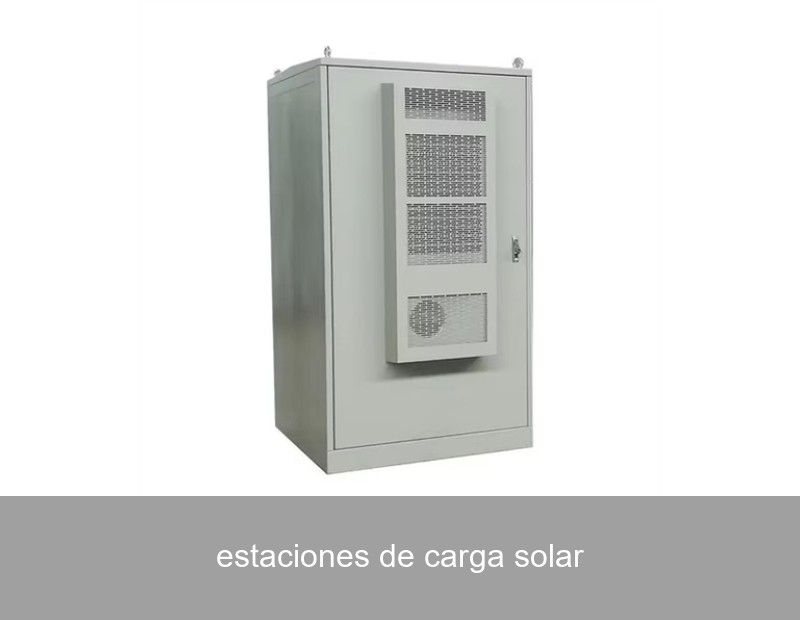
Image: A modern Battery Energy Storage System (BESS) unit, the heart of a smart charging hub. Source: Unsplash
How Highjoule Powers Smarter Solar Charging Hubs
At Highjoule, we focus on the core that makes a solar charging station intelligent and reliable: the storage and control system. Our solutions are designed specifically for the demands of commercial, industrial, and microgrid applications.
For a solar charging station project, we provide:
- Highjoule IntelliBESS: Our containerized or modular battery storage systems feature industry-leading LFP cells, passive safety design, and are built for 10,000+ cycles. They are pre-integrated with our power conversion and management systems for plug-and-play deployment.
- GridSync Energy Management Platform: This cloud-based platform is the command center. It uses AI-driven forecasting (for weather and load) to make real-time decisions on when to charge or discharge the battery, when to use solar directly, and when to draw from the grid—all to meet the owner's pre-set goals, be it cost minimization or carbon reduction.
- Seamless Integration: Our systems are designed with open protocols (like OCPP for chargers and MODBUS for generation assets) to integrate smoothly with third-party solar inverters and EV charging hardware, providing a holistic solution without vendor lock-in.
Think of us as the provider of the "power bank" and the "operating system" for your sustainable energy hub. We ensure that the clean energy you capture is not wasted but delivered precisely when and where it's needed most.
The Future is Integrated and Intelligent
The evolution of solar charging stations is moving towards them becoming full-fledged microgrids. Imagine a station that not only charges cars but also powers a nearby building, supports the local grid during times of stress (via vehicle-to-grid or stationary storage), and creates a community resilience hub during outages. The technology for this exists today.
The key to unlocking this future is choosing a storage partner with deep system integration expertise and a proven track record. It's about moving beyond components to a cohesive, software-defined energy asset.

Image: Aerial view of an integrated energy site with solar and storage. Source: Unsplash
So, as you contemplate building or upgrading your own solar charging station, ask yourself this critical question: Is your design simply connecting solar panels to chargers, or is it built around an intelligent storage core that guarantees your renewable investment delivers maximum financial and environmental returns for decades to come?
 Inquiry
 Online Chat