


Choosing the Right Solar Power System Supplier: Your Guide to Energy Independence
Have you ever looked at your rising electricity bill and wondered if there's a better way? You're not alone. Across Europe and the US, homeowners and businesses are turning to solar energy, not just to save money, but to take control of their power. But here's the catch: the success of your solar journey hinges on one critical decision—selecting the right solar power system supplier. It's not just about panels on a roof; it's about a long-term partnership for reliable, clean energy. This guide will walk you through what truly matters when choosing a supplier, ensuring your investment shines for decades to come.
Table of Contents
- The Phenomenon: More Than Just Panels
- The Data Reality: Quality Over Cost
- The Highjoule Difference: Intelligent Energy Ecosystems
- A Real-World Case: The Bavarian Bakery
- Key Questions to Ask Your Potential Supplier
- Your Energy, Your Future
The Phenomenon: More Than Just Panels
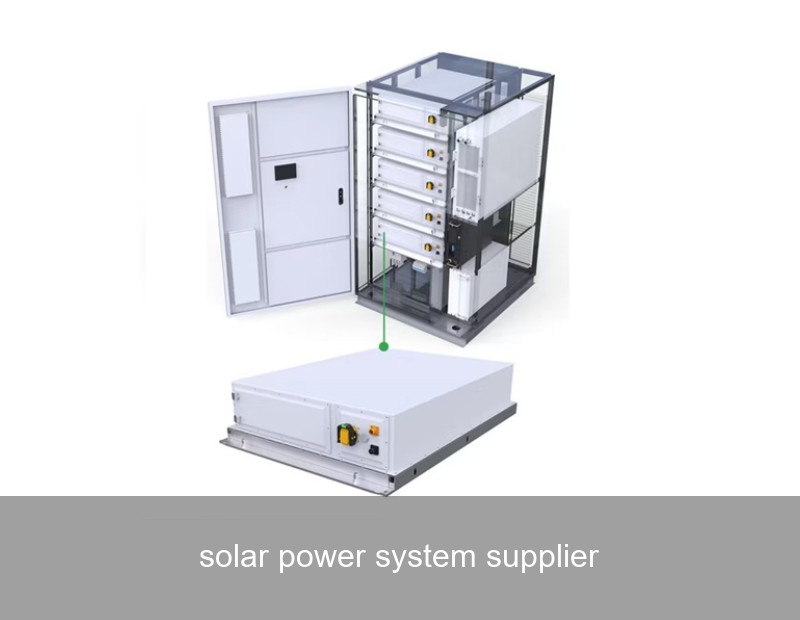
The solar industry is booming. Drive through neighborhoods in California or the countryside in Germany, and you'll see rooftops gleaming with photovoltaic modules. But this visible hardware is just the tip of the iceberg. A modern solar installation is an integrated energy system. It encompasses high-efficiency panels, sophisticated inverters, and, increasingly, a crucial third component: intelligent battery storage. This shift transforms a solar array from a daytime-only generator into a 24/7 personal power plant. The role of your solar power system supplier has evolved accordingly. They are no longer just equipment vendors; they are solution architects who must understand your unique energy consumption patterns, local climate, grid regulations, and long-term goals.
Image: A complete home solar and storage system. Credit: Unsplash
The Data Reality: Quality Over Cost
It's tempting to choose the lowest bid. However, data reveals why this can be a costly mistake in the long run. According to the National Renewable Energy Laboratory (NREL), the performance degradation rate of premium solar panels can be as low as 0.3% per year, compared to 0.7% or higher for lesser-quality modules. Over 25 years, that difference can equate to losing thousands of kilowatt-hours of generation—energy you paid for but will never receive.
Furthermore, a study focusing on the European market highlighted that system failures are most often linked not to the panels themselves, but to balance-of-system components (like inverters and wiring) and, critically, to design and installation errors. This is where the expertise of your supplier is paramount. A top-tier solar power system supplier provides:
- Holistic Design: Using advanced software to model system performance specific to your location.
- Component Synergy: Ensuring all parts, from connectors to batteries, are seamlessly compatible.
- Long-Term Performance Guarantees: Backing their work with robust warranties that cover both product and power output.
The Highjoule Difference: Intelligent Energy Ecosystems
This is precisely where Highjoule, as a global leader in advanced energy storage since 2005, redefines the role of a supplier. We don't just sell solar components; we provide integrated, smart power solutions. For residential clients, our Home Energy Hub combines high-efficiency solar integration with our proprietary lithium-iron-phosphate (LiFePO4) battery systems. What sets it apart is its AI-driven energy management software, which learns your household's patterns, automatically decides when to store solar energy or draw from the grid, and can even prepare for forecasted weather events to ensure resilience.
For commercial and industrial applications, Highjoule's Microgrid Controller platform allows businesses to seamlessly orchestrate solar PV, large-scale battery storage, and backup generators. This turns energy into a strategic asset, enabling participation in grid demand-response programs (a significant revenue stream in many US and EU markets) and providing critical backup during outages. Partnering with Highjoule means choosing a supplier invested in maximizing your system's economic return and energy independence for the life of the installation.
| Consideration | Budget-Centric Supplier | Solution-Centric Supplier (e.g., Highjoule) |
|---|---|---|
| Primary Focus | Equipment cost per watt | Levelized Cost of Energy (LCOE) over 25 years |
| System Design | Standardized, one-size-fits-most | Customized, based on detailed energy audit and simulation |
| Technology Integration | Often solar-only; add-ons may be poorly integrated | Designed from the ground up for solar + storage + smart management |
| Long-Term Support | Limited warranty; may subcontract installation | Comprehensive warranty with in-house certified installers and remote monitoring |
A Real-World Case: The Bavarian Bakery
Let's look at a concrete example from our work in southern Germany. A family-run bakery with high energy needs for refrigeration and ovens faced volatile energy prices and sought stability. They were initially quoted a solar-only system by a local supplier. However, their peak production (midday) didn't align with their morning and afternoon baking peaks, meaning they'd still buy expensive grid power.
Highjoule's team proposed a different solution: a 50kW solar array coupled with a 120kWh Highjoule C&I Battery Storage System. The intelligent system was programmed to:
- Use solar power directly during operation hours.
- Store excess midday solar to cover the afternoon peak and evening refrigeration.
- Draw a minimal "base load" from the grid during cheaper off-peak hours at night to pre-charge batteries for the next morning's rush.
The Result? The bakery now generates 85% of its own electricity annually. More impressively, it has reduced its grid power consumption during expensive peak periods by 98%. The system paid for itself in under 6 years thanks to savings and German renewable energy incentives. For them, the right supplier was the one that solved their energy cost problem, not just the panel installation problem.

Image: Commercial bakeries have unique, high-demand energy profiles. Credit: Unsplash
Key Questions to Ask Your Potential Supplier
Ready to start conversations? Arm yourself with these essential questions:
- "Can you provide a detailed, site-specific production simulation, not just a rough estimate?" (Ask for PVsyst or similar software reports).
- "How do you design for future expansion, like adding an EV charger or more storage capacity?" A modular system like Highjoule's is built for this.
- "What is your protocol for system monitoring and maintenance?" Do they offer a dedicated app? Do they proactively alert you to issues?
- "Can you show me case studies or energy data from a similar project you've completed in the last two years?" Real data beats sales brochures.
Your Energy, Your Future
The transition to solar is one of the most impactful decisions you can make for your finances and your environmental footprint. But its success is a direct function of the partner you choose. It's about finding a solar power system supplier with the engineering depth, product quality, and long-term vision to build not just a system, but your pathway to energy resilience. As you contemplate your next steps, consider this: What does true energy independence look like for your home or business, and how can your energy system adapt to your needs over the next quarter-century?
 Inquiry
 Online Chat