


Unlocking the Sun's Full Potential: The Rise of the Solar Power Tower System
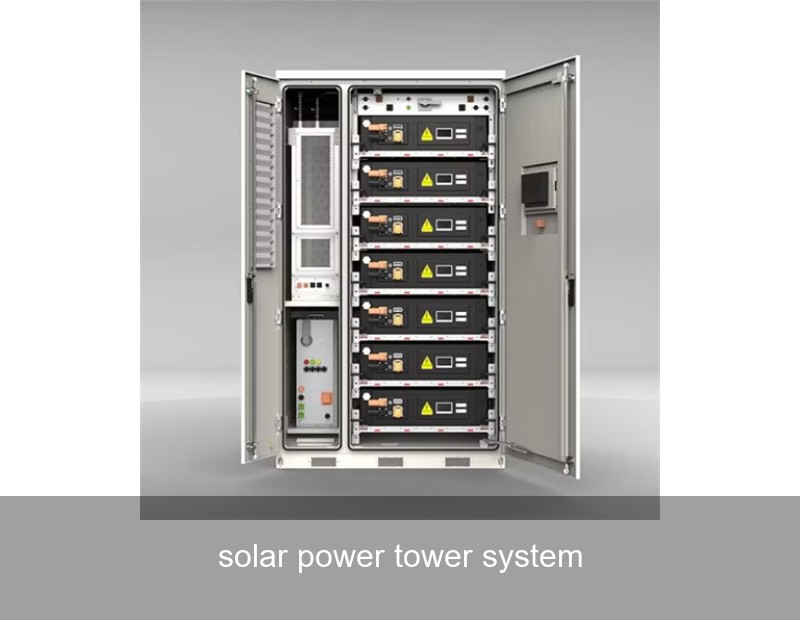
Imagine a power plant that doesn't burn fuel, but instead, uses a field of mirrors to concentrate sunlight onto a single, central receiver, creating intense heat to generate electricity around the clock. This isn't science fiction; it's the reality of a solar power tower system, also known as Concentrated Solar Power (CSP). As the world accelerates its transition to renewables, this technology is stepping into the spotlight, offering a critical solution for reliable, dispatchable clean energy. For over 18 years, Highjoule has been at the forefront of energy storage innovation, and we see advanced CSP plants, particularly those with integrated thermal energy storage, as a pivotal part of a sustainable grid. Let's explore how this technology works, why it matters now, and how it complements the broader energy storage ecosystem we serve.
How Does a Solar Power Tower System Work?
The principle is elegant in its simplicity. A solar power tower system consists of three core components:
- The Heliostat Field: Thousands of large, sun-tracking mirrors (heliostats) are arranged in a vast circular field around a central tower.
- The Central Receiver Tower: This tall tower holds the receiver, a heat exchanger that absorbs the concentrated sunlight from all the heliostats.
- The Power Block: Located at the tower's base, this is a conventional steam turbine or gas turbine system that converts the captured heat into electricity.
The magic happens when the heliostats precisely focus sunlight onto the receiver, heating a specialized transfer fluid—often molten salts—to temperatures exceeding 565°C (1,050°F). This super-heated fluid is then used to create steam, driving turbines to generate power. The use of molten salts is key, as they also serve as an excellent medium for storing thermal energy.

Image: The Crescent Dunes Solar Energy Project in Nevada, USA. Source: Wikimedia Commons (Public Domain)
The Game-Changer: Integrated Thermal Energy Storage
This is where solar power tower systems truly differentiate themselves from photovoltaic (PV) solar panels. PV generates electricity only when the sun shines. A CSP tower, however, can store the sun's heat in massive tanks of molten salt. This stored thermal energy can be released on demand, hours after sunset or during peak demand periods, to generate electricity.
Think of it as a "thermal battery" with immense capacity. While lithium-ion batteries (like those in Highjoule's commercial and utility-scale BESS) excel at short-duration, high-power responses, molten salt storage in CSP offers long-duration energy storage (LDES)—often 6 to 15 hours of full-load output. This capability transforms solar from an intermittent resource into a firm, dispatchable one, much like a traditional power plant.
A Global Case Study: The Crescent Dunes Plant
To understand the potential and the real-world learning curve, let's examine the Crescent Dunes Solar Energy Project in Nevada, USA. When commissioned in 2015, it was a beacon of innovation.
- Scale: 110 MW capacity with 1.1 GWh of thermal storage (10 hours).
- Technology: A single central tower with over 10,000 heliostats.
- Promise: To power 75,000 homes during peak hours, day or night.
The project demonstrated the core value proposition: it delivered power to the Las Vegas area in the evening when demand was high and solar PV output was falling. However, it also faced technical challenges that impacted reliability, highlighting the importance of robust engineering and operational expertise in such complex systems. The lessons from pioneers like Crescent Dunes are invaluable for the next generation of CSP towers, driving improvements in heliostat design, receiver efficiency, and salt chemistry. You can read a technical review of such projects from the National Renewable Energy Laboratory (NREL).
Synergy with Battery Energy Storage Systems (BESS)
The energy grid doesn't need one silver bullet; it needs a versatile arsenal. This is where solar power tower systems and modern battery storage find powerful synergy. At Highjoule, we specialize in intelligent battery energy storage systems for commercial, industrial, and grid applications. We see CSP not as a competitor, but as a complementary technology.
| Application | CSP with Thermal Storage | Highjoule BESS | Combined Advantage |
|---|---|---|---|
| Primary Role | Bulk energy generation & long-duration storage (6-15+ hours) | Frequency regulation, peak shaving, short-duration backup (1-4 hours) | Comprehensive grid stability and 24/7 renewable power. |
| Response Time | Minutes (to ramp turbine) | Milliseconds to seconds | BESS handles instant grid fluctuations, while CSP provides sustained bulk power. |
| Ideal Use Case | Replacing coal/gas baseload, evening peak demand | Factory peak shaving, smoothing PV output, microgrid support | A microgrid with daytime PV, CSP for night, and BESS for seamless transitions. |
Imagine a hybrid plant: a solar power tower system paired with a Highjoule BESS. The CSP provides the all-night "baseload" solar, while the BESS instantly smooths out the plant's own startup cycles or provides rapid ancillary services to the grid. This creates a ultra-reliable, multi-service renewable asset.
Highjoule's Role in the Concentrated Solar Future
While Highjoule does not build the heliostat fields or central towers, our expertise is critical in the modern CSP ecosystem. Our role focuses on the integration and optimization of the electrical output and grid interaction.
- Hybrid Plant Integration: We provide the advanced power conversion systems (PCS) and control software to seamlessly couple a BESS with a CSP plant's power block, maximizing revenue streams from both energy and grid services markets.
- Microgrid Solutions: For remote industrial or community microgrids, a smaller CSP installation can be the anchor thermal generator. Highjoule's integrated storage and control systems manage the interplay between this, on-site PV, and backup generators, ensuring reliability and reducing diesel dependence.
- Intelligent Energy Management: Our AI-driven platform, JouleMind, can optimize the dispatch of a CSP plant's stored thermal energy. It can decide whether to sell power now or hold storage for a predicted higher-price period later, all while considering weather forecasts and grid conditions.
In essence, we add the "smart" and "grid-responsive" layer to the immense thermal energy capacity of CSP. As the International Energy Agency (IEA) notes, CSP's value grows in grids with high shares of variable renewables, and smart integration is key to capturing that value.

Image: Modern energy management control room. Source: Unsplash
The Future and Its Challenges
The future for solar power tower systems is bright but requires focused effort. Next-generation projects are exploring higher-temperature fluids (like supercritical CO2) for greater efficiency and lower cost. The challenge remains capital expenditure, which is higher than solar PV. However, as carbon pricing mechanisms spread and the need for firm, clean capacity intensifies, the value of dispatchable solar rises.
Regions with high direct normal irradiance (DNI)—like the southwestern USA, Spain, Chile, the Middle East, and North Africa—are prime candidates. In Europe, projects in Spain lead the way, and there is potential in Southern European markets. The technology is a compelling option for large-scale industrial decarbonization and green hydrogen production, which requires constant, high-temperature heat and power.
An Open Question for Our Energy Future
As we push towards net-zero grids, the question is no longer just about generating cheap renewable energy, but about generating reliable and dispatchable renewable energy. Can we afford to rely solely on weather-dependent generation paired with short-duration storage, or do we need a portfolio that includes foundational technologies like solar power tower systems for long-duration resilience? What mix of thermal storage, battery storage, and other technologies will create the most robust and affordable grid for future generations?
We at Highjoule are committed to solving this puzzle through advanced storage and integration solutions. Whether your project involves a massive CSP plant, a factory rooftop PV array, or a community microgrid, the conversation starts with a simple question: How can we make your renewable energy work harder, longer, and smarter?
 Inquiry
 Online Chat