


Stockage d'énergie par volant d'inertie: The Unsung Hero of Grid Stability and Renewable Integration
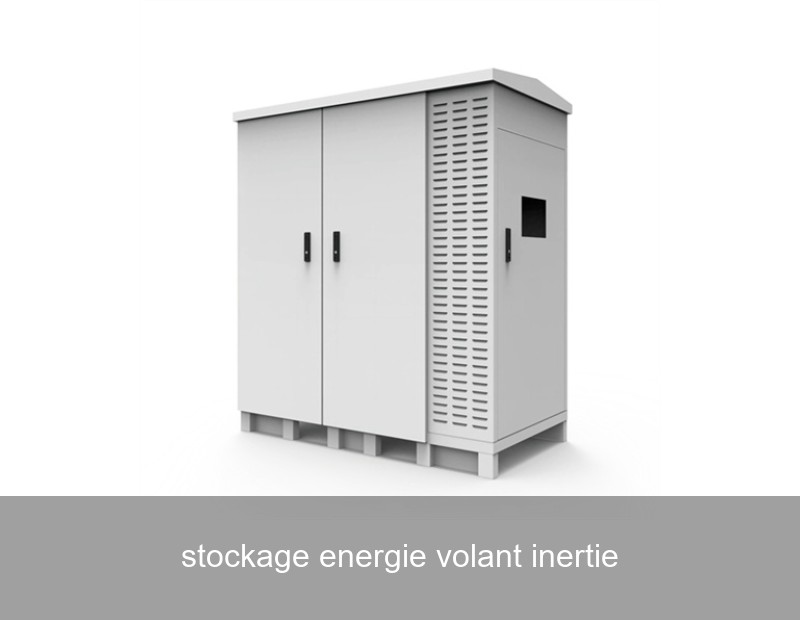
Imagine a massive, spinning wheel in a near-frictionless vacuum. Now, imagine that wheel isn't just an engineering marvel—it's a powerful battery, but one that stores energy as motion rather than chemical reactions. This is the essence of stockage d'énergie par volant d'inertie, or flywheel energy storage. As our grids become increasingly powered by variable renewables like solar and wind, the quest for fast, reliable, and durable storage solutions has never been more critical. While lithium-ion batteries often grab headlines, flywheel technology is quietly providing the backbone for grid stability in critical applications across Europe and North America.
Think of it this way: the modern electricity grid is a delicate balancing act. Supply must match demand, instant by instant. When a cloud passes over a solar farm or wind speeds drop, traditional power plants can take minutes to ramp up. That's where flywheels excel. They can discharge massive amounts of power in fractions of a second, acting as a shock absorber for the grid. This capability, known as frequency regulation, is vital for preventing blackouts and ensuring the lights stay on as we transition to a cleaner energy mix.
How Flywheel Storage Works: A Simple Breakdown
At its core, a flywheel system is elegantly simple. It converts electrical energy into rotational kinetic energy, and then back again. Let's break down the process:
- Charging (Energy In): When there's excess electricity on the grid (e.g., from strong midday solar production), an electric motor accelerates a heavy rotor—often made of advanced carbon fiber composites—to very high speeds, sometimes exceeding 10,000 RPM. The energy is now "stored" in the form of the rotor's spin.
- Idling (Energy Storage): The rotor spins in a vacuum chamber and is levitated on magnetic bearings. This setup drastically reduces friction and air resistance, allowing the wheel to maintain its speed (and thus its stored energy) for extended periods with minimal losses.
- Discharging (Energy Out): When the grid needs a quick power boost, the process reverses. The spinning rotor acts as a generator, converting the kinetic energy back into electricity and injecting it into the grid almost instantaneously.

Image: A simplified diagram of a flywheel energy storage system. Credit: U.S. Department of Energy (energy.gov)
The Components That Make It Advanced
| Component | Material/Technology | Purpose |
|---|---|---|
| Rotor | Carbon Fiber, High-Strength Steel | Mass that stores kinetic energy; lighter, stronger materials allow higher speeds and energy density. |
| Bearings | Active Magnetic Bearings (AMB) | Levitates the rotor, eliminating mechanical friction and wear. |
| Housing | Sealed Vacuum Chamber | Removes air drag, the primary source of energy loss. |
| Motor/Generator | Permanent Magnet or Induction Machine | Acts as both the accelerator (motor) and the decelerator (generator). |
Key Benefits and Applications: Where Flywheels Truly Shine
So, why choose a flywheel over other storage types? The answer lies in its unique performance profile. Flywheel energy storage systems are the sprinters of the storage world: unparalleled power and speed, but for shorter distances. This makes them ideal for specific, high-value grid services.
- Extreme Durability & Long Lifecycle: Unlike batteries that degrade with charge cycles, a well-maintained flywheel can perform millions of cycles with minimal capacity loss. It's not uncommon for systems to have operational lifespans of 20+ years.
- Instantaneous Response: They can go from standby to full power output in milliseconds. This is critical for frequency regulation, where every second counts to stabilize grid frequency (typically 50 Hz in Europe, 60 Hz in the US).
- High Power, Lower Energy: They deliver a lot of power (MW) over a short duration (seconds to minutes), perfect for bridging short-term gaps.
- Low Maintenance & Environmentally Friendly: With no chemical electrolytes, no thermal runaway risk, and often using inert materials, flywheels have a minimal environmental footprint and lower long-term operational costs.
Primary Use Cases Today:
- Frequency Regulation (FR): The dominant application, continuously adjusting output to match grid fluctuations.
- Microgrid Stabilization: Providing inertia and fast response for isolated grids, like islands or industrial facilities, often paired with solar PV.
- Uninterruptible Power Supply (UPS): Protecting data centers, hospitals, and manufacturing lines from voltage sags and brief outages.
- Renewable Smoothing: Mitigating the short-term variability ("ramping") of wind and solar farm output.
Flywheel vs. Battery Storage: A Complementary Duo, Not Rivals
It's a common misconception that energy storage technologies are in a winner-takes-all battle. In reality, a modern, resilient grid needs a diverse portfolio. Think of it like a football team: you need both swift strikers and enduring midfielders.
Lithium-ion batteries are excellent for energy shifting—storing solar energy from the afternoon to use in the evening (4-8 hour discharge). Stockage d'énergie par volant d'inertie is unmatched for power-intensive, short-duration applications measured in seconds or minutes. The most forward-thinking utilities and system integrators are now designing hybrid systems. In such a setup, flywheels handle the rapid, punishing charge/discharge cycles of frequency regulation, protecting the batteries from degradation, while the batteries handle the longer-duration storage. This synergistic approach maximizes the lifespan and economic return of the entire storage asset.
Real-World Case Study: Beacon Power's Stephentown Facility, New York, USA
Let's look at a proven, large-scale example. The Stephentown Flywheel Energy Storage Plant in New York State, operated by Beacon Power (a subsidiary of GE Vernova), has been a workhorse for grid stability since 2011.
- Scale: 20 MW capacity (able to deliver 20 million watts of power instantly).
- Technology: 200 individual flywheels, each spinning at up to 16,000 RPM in a vacuum.
- Service: Provides frequency regulation services to the NYISO (New York Independent System Operator) grid.
- Performance: The plant responds to automatic signals from the grid operator over 4,000 times per day, making tiny adjustments to keep the grid at 60.00 Hz. It has an estimated cycle life of over 100,000 cycles with minimal degradation, a feat challenging for chemical batteries.
- Impact: This facility demonstrates the commercial viability and reliability of flywheel technology for large-scale grid services, paving the way for more deployments in the US and Europe.

Image: The Beacon Power flywheel storage plant. Credit: Beacon Power/GE via Renewable Energy World.
Highjoule's Role in Advanced Energy Storage Solutions
At Highjoule, we understand that there is no one-size-fits-all solution for the energy transition. Since 2005, we have been at the forefront of designing and deploying intelligent, application-specific storage systems. While our flagship Highjoule H-IQ battery energy storage system (BESS) platform is renowned for its modularity and smart energy management for commercial and industrial applications, our expertise extends to integrating the best technology for the job.
For clients whose primary challenges involve power quality, microgrid stability, or providing ancillary grid services, we evaluate stockage d'énergie par volant d'inertie as a potential component of a holistic solution. Our engineering team specializes in creating hybrid systems that marry the instantaneous power of flywheels with the sustained energy of our advanced lithium-ion or flow battery platforms. This system-level approach, managed by our proprietary AI-driven energy management system (EMS), ensures our clients—whether a European industrial manufacturer or a U.S. utility—get the most reliable, efficient, and cost-effective storage asset possible.
For instance, for a data center requiring absolute power reliability, we might design a solution where flywheels provide the bridge for the first critical seconds during an outage, seamlessly handing over to our H-IQ BESS for longer-term backup. This layered defense ensures zero downtime.
The Future of Flywheels and Grid Modernization
The future of stockage d'énergie par volant d'inertie is bright, particularly as grids lose "natural" inertia from retiring large spinning coal and gas turbines. Inertia is the grid's resistance to change in frequency, and it's essential for stability. Future flywheel designs are exploring the use of even stronger, lighter materials and optimized motor/generators to increase energy density and reduce costs further. The European Union's push for a decarbonized grid by 2050 and FERC's Order 841 in the U.S., which opens wholesale markets to storage, are creating new revenue streams that make flywheel projects increasingly attractive.
Research institutions like Imperial College London are continually publishing on the value of synthetic inertia provided by fast-responding resources like flywheels, highlighting their indispensable role in a renewable-dominated future.

Image: The future lies in hybrid systems. Credit: National Renewable Energy Laboratory (NREL).
As you consider the resilience of your own operations or community's energy supply, what specific power quality or grid stability challenge keeps you up at night? Could a millisecond response time be the key to unlocking greater renewable penetration or preventing costly downtime for your business? We invite you to share your thoughts and challenges with our team of experts at Highjoule.
 Inquiry
 Online Chat