


The Solar Power Whole House Generator: Your Complete Guide to Energy Independence
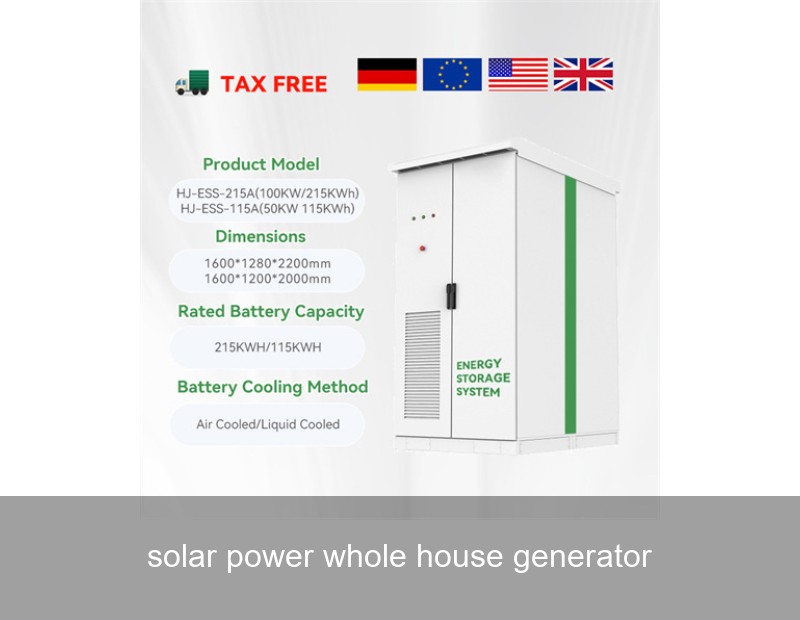
Have you ever watched a storm roll in and wondered, "What if the power goes out now?" Or opened your electricity bill only to be met with that familiar feeling of frustration? You're not alone. Across Europe and the US, homeowners are seeking a reliable, sustainable solution. The answer gaining immense popularity is the solar power whole house generator. This isn't just a backup battery; it's a comprehensive energy system that can power your entire home using the sun's abundant energy. Let's explore how this technology works and why it might be the key to your energy security and financial savings.
Table of Contents
What is a Solar Power Whole House Generator?
Unlike portable gas generators that roar to life during an outage, a solar-powered whole house generator is a silent, integrated system. It combines rooftop solar panels with a sophisticated battery storage system and a critical component called an inverter. This trio works in harmony to capture, store, and manage solar energy for use around the clock. The goal is simple: maximize your use of self-generated solar power, reduce reliance on the grid, and ensure your lights, refrigerator, heating, and essential devices stay on during any grid interruption.
This is where companies with deep expertise in integrated energy storage shine. At Highjoule, with nearly two decades of experience since 2005, we specialize in designing and manufacturing these intelligent, all-in-one systems. Our Highjoule HES Series residential energy storage systems are engineered to be the heart of a solar power whole house generator. They seamlessly connect to your solar panels, store excess energy with high-efficiency lithium-ion batteries, and provide clean, quiet power to your entire home precisely when you need it most.
How Does a Whole House Solar Generator System Work?
The magic lies in the intelligent orchestration of components. Here’s a step-by-step breakdown:
- Energy Capture: Solar panels on your roof convert sunlight into direct current (DC) electricity.
- Energy Conversion: An inverter transforms the DC electricity into alternating current (AC) that your home appliances use.
- Energy Prioritization: The system first powers your home's immediate electricity demand. Any surplus energy, instead of being sent back to the grid for minimal credit, is diverted to charge your home battery storage unit.
- Energy Storage & Management: This is the core of the "generator" function. A high-capacity battery bank, like Highjoule's modular HES system, stores the excess solar energy. An advanced Battery Management System (BMS) monitors cell health, temperature, and safety, ensuring longevity and performance.
- Automatic Switching: When the grid fails, an automatic transfer switch disconnects your home from the utility grid in milliseconds. The inverter then draws power from the charged batteries to keep your home running seamlessly. You likely won't even notice the transition.

Image: A modern home equipped with a complete solar and battery storage system. Source: Unsplash
Key Benefits: Beyond Just Backup Power
While blackout protection is a major driver, the advantages of a solar whole house generator extend much further:
- True Energy Independence: Reduce your dependence on the utility grid and volatile energy prices. You become your own power producer.
- Substantial Bill Savings: Use your stored solar energy during peak evening hours when grid electricity is most expensive. This practice, known as peak shaving, can lead to dramatic reductions in your energy costs. Highjoule's smart energy management software optimizes this process automatically.
- Clean & Silent Operation: Zero emissions, no fumes, and no noise pollution compared to fossil fuel generators.
- Increased Home Value: Studies show homes with solar-plus-storage systems have higher property values and sell faster. The U.S. Department of Energy notes the value-add of solar installations.
- Grid Support & Resilience: By reducing demand on the grid during peak times, you contribute to community-wide energy stability.
Real-World Impact: A Case Study from California
Let's move from theory to practice with a real example. Consider the Thompson family in Northern California, an area prone to both Public Safety Power Shutoffs (PSPS) and high electricity rates.
| Challenge | Solution | Results (First Year) |
|---|---|---|
| Frequent multi-day grid outages due to wildfire risk. | Installation of a 10kW solar array with a Highjoule HES-20 whole-house battery system (20kWh usable capacity). | Experienced 5 grid outages totaling 8 days. Home remained fully powered without interruption. |
| Excess solar energy was being sold back to the grid at low, non-peak rates. | Highjoule's system was configured for 90% self-consumption, storing daytime solar for evening and night use. | Reduced annual electricity bill by approximately 92%. The system paid for itself years faster than solar alone. |
| Desired a "set-and-forget" system with remote monitoring. | Utilization of the Highjoule Connect app for real-time monitoring and system control from anywhere. | Family could track energy flows, savings, and battery status effortlessly, providing peace of mind. |
This case illustrates the transformative power of a correctly sized and intelligently managed system. It’s not just about survival during an outage; it’s about thriving with a new, efficient energy paradigm every single day.
Choosing the Right System: What to Consider
Investing in a solar power whole house generator is a significant decision. Here are the key factors to discuss with your installer:
- Energy Audit: What are your critical loads (refrigerator, heating/cooling, medical equipment) and your total daily energy consumption? This determines battery size.
- Battery Capacity & Power Rating: Capacity (measured in kWh) is how much energy is stored. Power rating (measured in kW) is how much it can deliver at once. Can it start your air conditioner? Highjoule systems are designed with high power output to handle demanding startup loads.
- Modularity & Scalability: Can you add more battery modules later if your needs change? Modular designs, like ours, offer this future-proof flexibility.
- Depth of Discharge & Warranty: A quality battery can safely use most of its stored capacity (e.g., 90% Depth of Discharge) and come with a strong, long-term warranty (often 10+ years).
- System Intelligence: The software is as important as the hardware. Look for systems that can integrate with smart home ecosystems and adapt to time-of-use rate schedules automatically.

Image: A sleek, wall-mounted home battery unit, a key component of a whole-house generator. Source: Unsplash
The Future of Home Energy is Here
The conversation around energy has shifted from mere consumption to active management. With the increasing frequency of extreme weather events and the global push for decarbonization, technologies like the solar power whole house generator have moved from a niche luxury to a mainstream smart home essential. Governments in Europe and the US are encouraging this shift through incentives, such as the Residential Clean Energy Credit in the United States, which can significantly offset the cost of installation.
As a leader in advanced storage solutions, Highjoule is at the forefront of this transition. Our systems are designed not just for today's needs but for the evolving energy landscape of tomorrow. We provide end-to-end support, from initial design consultation with certified installers to ongoing performance monitoring, ensuring your investment delivers maximum value, reliability, and peace of mind for decades.
So, what's the first step toward taking control of your home's energy destiny? Is it understanding your last 12 months of electricity bills, or identifying which appliances you absolutely need to keep running during a power outage?
 Inquiry
 Online Chat