


Understanding Solar Panel Connections: The Unsung Heroes of Your Energy System
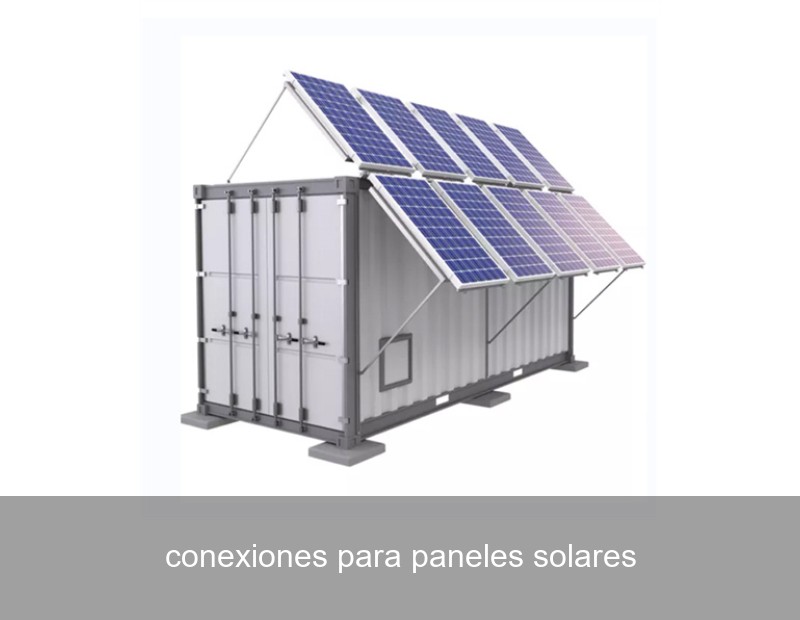
You've done your research, chosen the perfect solar panels, and you're ready to harness the sun's power. But what ties this entire system together? The answer lies in the critical, yet often overlooked, component: solar panel connections. These connections—the cables, connectors, and combiners—form the nervous system of your photovoltaic (PV) array. Get them right, and your system hums with efficiency for decades. Get them wrong, and you face inefficiency, safety hazards, and potential system failure. Let's demystify the world of solar wiring and explore how the right connections are fundamental to a high-performing, safe, and intelligent energy system.
Table of Contents
- The Backbone of Your PV System: More Than Just Wires
- The Evolution of Connectors: From DIY to UL-Certified Safety
- Why Data Matters: The Real Cost of Poor Connections
- Case Study: A German Logistics Center's Connection Overhaul
- Beyond the Panels: Connections in the Age of Smart Storage
- Future-Proofing Your Connections: Key Considerations
The Backbone of Your PV System: More Than Just Wires
Think of your solar array as a team of athletes. Each panel is a star player, but their performance as a unit depends entirely on seamless communication and coordination. The solar panel connections provide exactly that. This network includes:
- MC4 Connectors: The industry-standard plug-and-play connector for linking panels in series or parallel. Their weatherproof, lockable design is non-negotiable for outdoor durability.
- PV Cable (Solar Cable): Specially designed for DC current, with double insulation resistant to UV radiation, extreme temperatures, and moisture.
- Junction Boxes & Combiner Boxes: Central hubs where strings of panels converge. They house overcurrent protection and, in advanced systems, monitoring technology.
- DC Isolators: Safety switches that allow for safe disconnection of the DC current for maintenance or emergencies.
Every link in this chain must be meticulously planned and installed. A single loose connection or corroded terminal can create a "hotspot," a point of high resistance that generates excessive heat. This not only saps energy output but is a primary cause of long-term PV system degradation and even fire risks.
The Evolution of Connectors: From DIY to UL-Certified Safety
The early days of solar saw field-assembled connections, a labor-intensive process prone to human error. Today, we benefit from pre-assembled, certified components. The MC4 connector, for instance, is a testament to this evolution. Its "click" sound upon mating is the sound of a secure, IP67-rated (dust and water-tight) connection being made. Using uncertified or mismatched connectors is a gamble with your system's integrity. At Highjoule, our integrated storage solutions are designed to interface seamlessly with these modern, standardized connection systems. We ensure that the DC input from your perfectly connected array is efficiently converted and managed by our intelligent battery systems, like the Highjoule HPS Series, which features advanced DC coupling capabilities that optimize the entire energy pathway.
Why Data Matters: The Real Cost of Poor Connections
Let's talk numbers. A study by the National Renewable Energy Laboratory (NREL) indicates that module and connection-related issues account for a significant portion of underperformance in PV systems. A faulty connection leading to just a 5% increase in series resistance can result in over 2% power loss in that string. Over 25 years, that translates to a substantial amount of lost energy and revenue. For a 100 kW commercial system, that could mean tens of thousands of kilowatt-hours never harvested. The phenomenon isn't always dramatic; it's often a slow, silent drain on your return on investment.

Image: Proper installation of connectors is critical for long-term performance. Source: Unsplash
Case Study: A German Logistics Center's Connection Overhaul
Consider the real-world example of a logistics center near Hamburg, Germany. The facility had a 450 kW rooftop PV system installed in 2015. By 2021, monitoring data showed a consistent 8% underperformance against projections. A thermal imaging audit revealed several "hotspots" at string combiner boxes and a few module junctions.
| Issue | Impact | Solution Applied |
|---|---|---|
| Loose terminal connections in combiner boxes | Increased resistance, heat generation, energy loss | Retorquing all connections to manufacturer specs; replacing two oxidized terminals. |
| Minor water ingress in a few early-generation connectors | Risk of corrosion and permanent damage | Replacing affected connectors with modern, IP68-rated MC4 equivalents. |
| No granular monitoring | Inability to pinpoint loss location | Installing a Highjoule Smart Combiner with per-string monitoring. |
The corrective actions, focused solely on the connection infrastructure, resulted in a 7.2% recovery of lost generation within the first month. Furthermore, by integrating a Highjoule Smart Combiner, the facility managers now receive real-time alerts on any string-level anomalies, preventing future losses. This case underscores that the value of a solar investment is protected not just by the panels, but by the quality and intelligence of its connections.
Beyond the Panels: Connections in the Age of Smart Storage
Today's energy systems are more than just solar panels feeding the grid. The true potential is unlocked when solar is connected to intelligent storage. This is where the conversation about solar panel connections expands. It's no longer just about linking Panel A to Panel B; it's about how the entire DC array connects to a battery system, and how that system communicates with your building's load and the grid.
Highjoule excels in this integrated landscape. Our Energy Management System (EMS) acts as the brain, but the high-quality, high-current busbars and communication cabling within our HPS Series battery cabinets are the robust nervous system. We design these internal and external connection points for minimal resistance, maximum safety, and flawless data transfer. This ensures that every kilowatt-hour your well-connected solar panels produce is either used intelligently, stored with minimal loss, or dispatched to the grid strategically. For residential clients, our Home Energy Hub simplifies this by providing a single, pre-engineered connection point for solar, storage, and backup power, eliminating compatibility guesswork.

Image: The internal connections of a storage system are just as critical as the solar array's. Source: Unsplash
Future-Proofing Your Connections: Key Considerations
Whether you're a homeowner or a plant manager, here’s how to ensure your solar connections are built to last:
- Demand Certified Components: Insist on TÜV or UL-certified cables and connectors. Don't let price-cutting on these parts compromise your entire investment.
- Plan for Monitoring: Ensure your combiner boxes or inverter have per-string monitoring capabilities. Data is your first line of defense.
- Think System, Not Just Parts: Choose a storage provider, like Highjoule, that designs for seamless DC and AC integration. Ask about their connection philosophy and safety protocols.
- Schedule Regular Audits: Include thermal imaging and connection integrity checks in your periodic maintenance, especially after severe weather events.
The humble connection is what transforms a collection of solar panels into a resilient, revenue-generating asset. It's the bridge between capturing sunlight and achieving true energy independence.
Your System's Weakest Link?
When you look at your solar array or plan your new installation, will you be confident that the connections out of sight are performing as reliably as the panels in plain view? What step will you take to audit or specify the nervous system of your energy future?
 Inquiry
 Online Chat