


The Solar Supercapacitor Battery: The Next Leap in Renewable Energy Storage
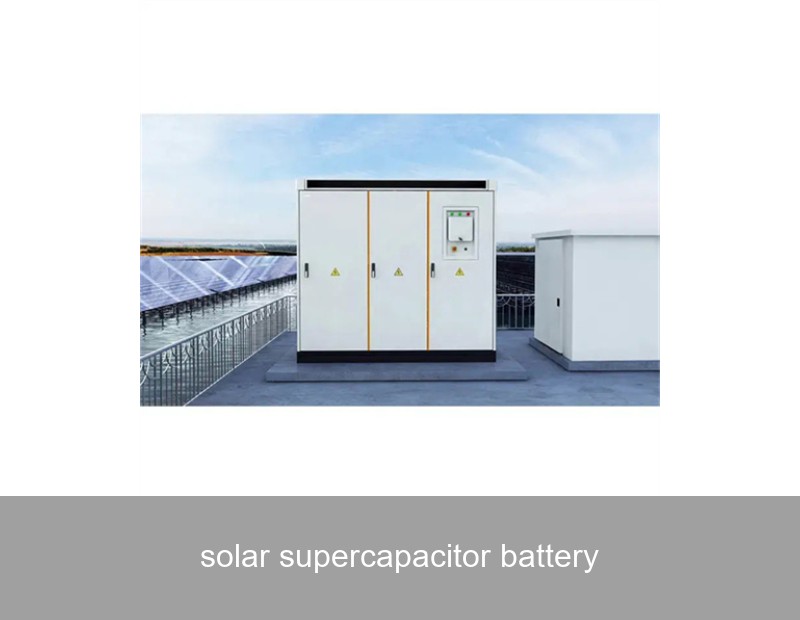
If you're investing in solar panels, you've likely faced a critical question: what's the best way to store all that clean energy for when the sun isn't shining? For years, the answer was dominated by lithium-ion batteries. But a new, powerful hybrid technology is emerging, promising to solve some of the oldest challenges in renewable energy. Enter the solar supercapacitor battery – a system that combines the high energy density of batteries with the immense power and longevity of supercapacitors. This isn't just an incremental upgrade; it's a fundamental shift in how we think about storing solar power, offering unparalleled responsiveness and durability for homes, businesses, and entire grids.
The Solar Energy Storage Dilemma: Power vs. Energy
To understand why the solar supercapacitor battery is such a breakthrough, let's look at the limitations of traditional storage. Think of your energy needs in two ways: energy (the total amount of fuel in the tank, measured in kWh) and power (how quickly you can use that fuel, measured in kW).
A classic lithium-ion battery is great at storing a lot of energy (a deep tank) but has limits on how fast it can charge or discharge (a narrow fuel line). This becomes a problem during sudden, high-power events. Imagine a cloudy day where your solar generation suddenly plummets, or a large industrial machine kicks on, demanding a huge surge of power. A standard battery might struggle to deliver that instantaneous "jolt," causing voltage dips or even needing to draw from the grid.
Supercapacitors, on the other hand, are the ultimate power athletes. They can charge and discharge in seconds, handling massive power surges with ease. But they can't store much energy for long durations. It's like having a massive fuel line connected to a tiny thimble of a tank.

Image source: Unsplash - A modern supercapacitor module, a key component in hybrid storage systems.
The logical solution? Combine them. A solar supercapacitor battery integrates both technologies into a single, intelligent system. The battery handles the steady, long-duration energy storage, while the supercapacitor acts as a shock absorber, managing rapid bursts of charge and discharge. This synergy is what makes the technology so compelling for modern solar applications.
The Data: Why This Hybrid Approach Matters
The numbers speak volumes. According to the National Renewable Energy Laboratory (NREL), grid stability with high solar penetration requires storage that can respond in milliseconds to frequency disturbances. While lithium-ion batteries typically have a cycle life of 5,000-10,000 cycles, supercapacitors can exceed 1,000,000 cycles. By offloading the high-power, rapid-cycling tasks to the supercapacitor, the hybrid system can significantly extend the overall life of the battery component, reducing long-term costs and waste.
The Power Duo: Key Advantages of a Solar Supercapacitor Battery System
So, what does this mean for you, whether you're a homeowner or a facility manager? The benefits are tangible and address real pain points.
- Blazing Fast Response & Grid Stability: The system reacts to load changes or solar intermittency in milliseconds. This is crucial for preventing microgrid crashes and providing essential grid services like frequency regulation.
- Extended Battery Life: By sparing the battery from stressful high-power surges, the supercapacitor reduces wear and tear. This can potentially double the operational lifespan of the battery bank, a major win for ROI and sustainability.
- Superior Performance in Extreme Temperatures: Supercapacitors generally perform better than batteries in very cold or hot climates, ensuring reliable storage performance year-round.
- Increased Efficiency: The ability to capture rapid, short-duration solar spikes (like those caused by passing clouds) that might otherwise be lost improves the overall efficiency of your solar array.
Real-World Case Study: A German Microgrid's Success Story
Let's move from theory to practice. A compelling example comes from a small industrial microgrid in Bavaria, Germany. The facility runs on a 500 kW rooftop solar array but faced challenges with voltage sags whenever their high-power CNC machines activated. Their existing lithium-ion battery system was too slow to compensate, causing production hiccups.
In 2023, they integrated a 100 kW / 5 kWh supercapacitor bank in parallel with their existing battery storage. The results were dramatic:
| Metric | Before Hybrid System | After Hybrid System |
|---|---|---|
| Voltage Sags per Month | 12-15 events | 0 events |
| Battery Cycle Stress (Peak Power) | High (2.5C rate) | Reduced (1C rate) |
| Grid Frequency Support Revenue | Not Possible | ~€1,200/month |
| Overall System Efficiency | 89% | 94% |
This case, documented in part by the Fraunhofer Institute for Solar Energy Systems ISE, highlights the dual benefit: solving an immediate power quality issue while creating a new revenue stream through grid services. The supercapacitor handled the machine's instantaneous power demands, while the battery provided the underlying energy. This is the solar supercapacitor battery principle in action.
Highjoule's Innovative Approach to Intelligent Hybrid Storage
At Highjoule, we've been at the forefront of advanced energy storage since 2005. We recognized the potential of hybridizing technologies early on. Our solution isn't just about bolting a supercapacitor to a battery; it's about deep system integration and intelligent management.
Our IntelliHub Hybrid ESS platform features a proprietary energy management system (EMS) that acts as the brain of the operation. It dynamically routes high-power, short-duration tasks to the integrated supercapacitor bank and manages the slower, energy-dense tasks for the lithium-ion phosphate (LFP) battery. This seamless orchestration happens autonomously, ensuring every component operates in its optimal zone.
Image source: Unsplash - Representation of advanced energy storage system monitoring.
For commercial and industrial clients across Europe and the U.S., this means:
- Highjoule PowerStack Commercial: A scalable, containerized solution that combines LFP battery racks with a supercapacitor buffer. It's designed for peak shaving, demand charge reduction, and uninterrupted power for critical operations, perfect for factories, data centers, and large retail.
- Highjoule Home+ with PowerShield Tech: Our residential line incorporates supercapacitor technology at a smaller scale to manage the sudden loads from EV chargers, heat pumps, and home appliances. This protects the main battery, extends its warranty, and ensures your home stays powered through rapid solar fluctuations.
- Microgrid Controller with Hybrid Logic: For off-grid or community projects, our controller explicitly manages multiple generation and storage assets, leveraging the supercapacitor's speed for grid-forming duties and black start capabilities.
Our systems are built on the principle that the right tool should be used for the right job. By integrating a solar supercapacitor battery architecture, we deliver a product that is not only more capable but also more economical over its extended lifetime.
The Future Outlook for Solar Storage
The energy landscape is evolving towards a more dynamic, distributed, and renewable model. As electric vehicle charging speeds increase and grid demands become more volatile, the need for instantaneous power will only grow. Technologies like the solar supercapacitor battery are poised to become a standard component in resilient energy systems. Research from institutions like Imperial College London continues to explore new materials and configurations to make these systems even more cost-effective and compact.
The question is no longer if you need storage with your solar, but what kind of storage will give you the most reliability, longevity, and value. Are you ready to explore how a hybrid system could future-proof your energy independence and turn your solar array into an even smarter asset?
 Inquiry
 Online Chat