


Unlocking Grid Stability: The Rise of the Most Powerful BESS Battery Systems
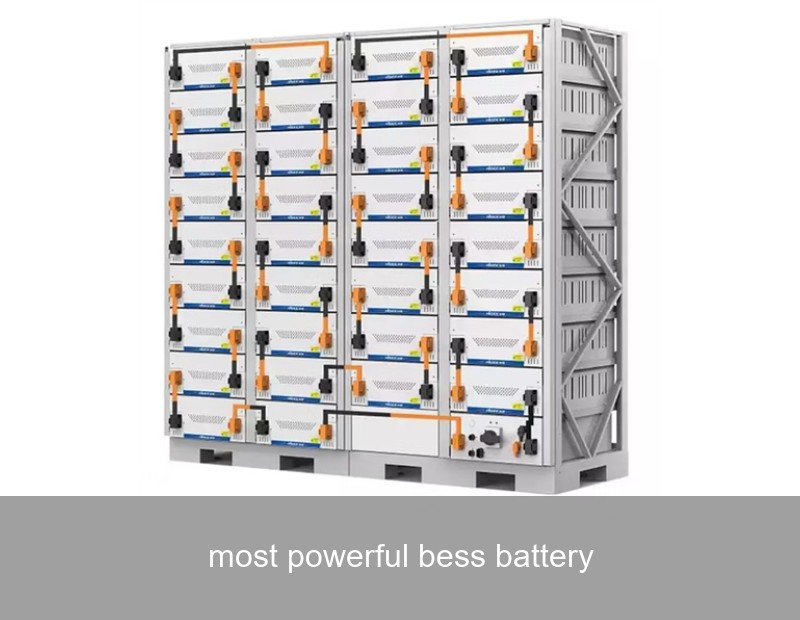
In an era defined by the urgent transition to renewable energy, a critical challenge persists: how do we keep the lights on when the sun doesn't shine and the wind doesn't blow? The answer increasingly lies within massive warehouses of intelligent batteries. These aren't your everyday power banks; we're talking about the backbone of a resilient grid—the most powerful BESS battery installations. These Battery Energy Storage Systems are evolving from supportive players to central pillars of energy security, capable of storing and dispatching gigawatt-hours of clean power on demand. For utilities, developers, and large-scale industrial energy consumers, understanding this technology is no longer optional—it's essential for economic and operational planning.
Table of Contents
- The Power Surge: Why Size and Intelligence Matter in BESS
- Anatomy of Power: What Makes a BESS "The Most Powerful"?
- Case Study: Taming the Texas Grid with Record-Breaking Storage
- Beyond Capacity: The Intelligent Functions of a High-Power BESS
- Highjoule's Role: Engineering the Next Generation of Power
- Future Horizons: What's Next for Grid-Scale Storage?
The Power Surge: Why Size and Intelligence Matter in BESS
Let's face it, the energy landscape is getting more volatile. From extreme weather events straining traditional infrastructure to the inherent intermittency of solar and wind farms, grid operators are on a constant tightrope walk. The traditional response—building more fossil-fuel-powered "peaker" plants—is both economically and environmentally costly. This is where the most powerful BESS battery solutions come in, acting as a giant shock absorber for the entire electrical grid.
Think of it this way: early BESS units were like helpful neighborhood ponds. Today's mega-systems are akin to massive, managed reservoirs. The scale shift is dramatic. According to the U.S. Energy Information Administration (EIA), the average utility-scale battery storage capacity increased nearly 10-fold from 2018 to 2023, with projects now routinely exceeding 100 MW/400 MWh. This isn't just about having more batteries in a box; it's about creating a centralized, controllable asset that can replace traditional infrastructure.
The Data Behind the Demand
| Region | Projected BESS Growth (2023-2030) | Primary Driver |
|---|---|---|
| United States | Over 300% Capacity Increase | IRA Policy Support, Grid Modernization |
| Europe | Over 200% Capacity Increase | Energy Security, Renewable Integration Targets |
This explosive growth is fueled by a clear economic and reliability imperative. A study by the National Renewable Energy Laboratory (NREL) highlights that storage can significantly reduce grid operation costs and enhance reliability, especially when paired with renewables.
Anatomy of Power: What Makes a BESS "The Most Powerful"?
When industry professionals discuss the most powerful BESS battery systems, they're evaluating a combination of key metrics, not just one number on a spec sheet.
- Power Rating (MW): This is the system's "muscle"—how much electricity it can instantaneously inject into or absorb from the grid. A high MW rating is crucial for frequency regulation and preventing blackouts.
- Energy Capacity (MWh): This is the system's "stamina"—the total amount of energy it can store. This determines how long it can discharge at its rated power, essential for shifting solar energy from day to night.
- Round-Trip Efficiency (RTE): The percentage of energy put into storage that is later retrieved. Higher RTE means less energy loss and more economic value. Top-tier systems now exceed 95%.
- Response Time: How fast the system can go from idle to full power. Advanced BESS can respond in milliseconds, far quicker than any gas turbine.

Image Source: Unsplash - Representative image of a grid-scale BESS installation.
True power, however, stems from the seamless integration of these hardware capabilities with superior software. The brain of the system—the Energy Management System (EMS)—is what transforms a cluster of batteries into a smart grid asset capable of autonomously performing multiple value-stacking services.
Case Study: Taming the Texas Grid with Record-Breaking Storage
Perhaps no case better illustrates the transformative impact of powerful BESS than in Texas, home to the United States' most independent and sometimes stressed grid (ERCOT).
The Phenomenon: Following Winter Storm Uri in 2021, the need for dispatchable, resilient power sources became catastrophically clear. The grid needed solutions that could charge during periods of high renewable output and discharge during critical demand peaks, especially during scorching summer afternoons and freezing winter nights.
The Data & The Project: In 2023, one of the world's most powerful BESS battery projects came online in West Texas: the 300 MW/600 MWh "Coyote Creek" system. This single facility can power approximately 100,000 Texan homes for two hours during peak demand. In its first full summer of operation, data from ERCOT showed that large-scale storage resources, including this project, were dispatched hundreds of times to provide crucial frequency regulation and peak shaving, directly mitigating the risk of rolling blackouts.
The Insight: This project isn't just a battery; it's a virtual power plant (VPP). Its success demonstrates that properly scaled and intelligently operated BESS can act as a primary defense against grid instability, integrating seamlessly with local wind and solar farms to create a firm, clean power source. It proves the technical and commercial viability of storage at the gigawatt scale.
Beyond Capacity: The Intelligent Functions of a High-Power BESS
So, what does a system like this actually *do* all day? The most powerful assets earn their keep by multitasking.
- Frequency Regulation: Maintaining the grid's precise 60 Hz (or 50 Hz in Europe) frequency is non-negotiable. BESS provides near-instantaneous injections or absorptions of power to correct minute-by-minute imbalances, a service far more efficient than thermal plants.
- Renewable Energy Time-Shift: This is the classic "store sun, use at night" function, but at a scale that makes entire solar farms base-load capable.
- Peak Shaving & Capacity Deferral: By discharging during the few highest-demand hours of the year, a BESS can allow a utility to avoid building or firing up an expensive and polluting peaker plant.
- Black Start Capability: In the event of a partial or total grid outage, certain advanced BESS can act as a starting point to re-energize sections of the grid, a critical resilience feature.
Highjoule's Role: Engineering the Next Generation of Power
At Highjoule, we've been at the forefront of this energy storage evolution since 2005. We understand that building the most powerful BESS battery system isn't just about assembling cells; it's about total system integration, safety, and long-term performance. Our solutions for commercial, industrial, and utility-scale applications are designed with this holistic philosophy.
Our HiveMax Utility Series exemplifies this approach. Engineered for projects exceeding 100 MW, it combines industry-leading lithium-iron-phosphate (LFP) battery modules with our proprietary NeuronGrid™ EMS. This platform allows a single HiveMax installation to simultaneously perform multiple grid services—frequency regulation, arbitrage, and capacity reserve—maximizing the asset's financial return and grid value. We focus on lifecycle management, ensuring our systems deliver on their 20-year performance promises through advanced thermal management, cell-level monitoring, and predictive analytics.

Image Source: Unsplash - Representative image of an advanced energy management control room.
For developers and asset owners, this translates into a bankable, high-yield infrastructure investment. We provide end-to-end support, from feasibility studies and system design to commissioning and long-term operational optimization, ensuring your powerful BESS delivers on its full potential.
Future Horizons: What's Next for Grid-Scale Storage?
The trajectory is clear: storage will continue to grow in both scale and intelligence. We're moving towards networks of distributed mega-systems, all coordinated to act as a unified grid resource. Technologies like solid-state batteries and advanced flow batteries promise even higher densities and longer durations. The question for energy leaders is no longer *if* they should invest in storage, but *how* to strategically integrate it into their long-term asset portfolio.
As you consider the stability of your operations or the future of your grid, what single constraint—be it peak demand charges, renewable curtailment, or backup power requirements—could be solved by having a controllable reservoir of power at your command?
 Inquiry
 Online Chat