


Decoding the Solar Supply Price in Sweden: Your Path to True Energy Value
If you're exploring solar power in Sweden, you've likely encountered a wide range of quotes for a "solar supply price." One company might offer a seemingly low price per panel, while another presents a comprehensive system at a higher upfront cost. This can be confusing. Is the cheapest option the best? Or does a higher price tag guarantee better performance, especially during Sweden's long, dark winters? The truth is, the headline solar supply price in Sweden is just the starting point. The real value lies in a system's year-round performance, durability, and its integration with smart storage—factors that determine your actual return on investment and energy independence.
The True Cost of Solar in Sweden: More Than Just Panels
The initial quote for solar panels is influenced by several key factors specific to the Nordic market. High-efficiency monocrystalline panels, which perform better in lower-light conditions, are common but cost more than standard options. The complex installation on varied roof types (like steep tile or metal roofs common in Sweden) and the need for robust mounting systems to handle snow loads add to the labor and material cost. Furthermore, a quality inverter—the brain of your solar system—is a significant component of the price.
However, focusing solely on this upfront solar installation price is a short-term view. Let's look at the data. According to the International Energy Agency (IEA), the global levelized cost of electricity (LCOE) from solar PV has fallen dramatically, making it highly competitive. In Sweden, despite fewer sun hours, modern systems are designed for high yield. The real financial challenge isn't just production; it's utilization. Without storage, excess energy generated on a sunny summer afternoon is exported to the grid at a lower price, while you buy back expensive power during the evening and winter months.

Image: Solar panels in a Swedish setting. Source: Unsplash
Key Components Influencing Your Solar Quote
- Panel Efficiency & Type: High-efficiency panels cost more but generate more power per square meter, crucial for space optimization.
- Inverter Technology: Micro-inverters or hybrid inverters offer better performance in shaded conditions and enable easier storage expansion.
- Installation Complexity: Roof angle, material, and site accessibility can affect labor costs.
- System Monitoring & Smart Features: Advanced energy management software adds value by optimizing consumption.
The Game-Changer: How Storage Maximizes Your Solar Investment
This is where the conversation about solar supply price in Sweden evolves. A standalone PV system addresses only half of your energy equation. To truly slash your electricity bills and increase self-consumption, integrating a battery energy storage system (BESS) is transformative. Think of it this way: solar panels are your energy producers, and a battery is your energy bank.
By storing surplus solar energy instead of selling it cheaply, you can use that clean power when you need it most—during peak tariff periods or at night. This dramatically increases your energy self-sufficiency from maybe 30-40% with solar alone to 70% or more with a correctly sized storage solution. It also provides invaluable backup power during grid outages, a feature increasingly appreciated.
Future-Proofing Your Energy with Highjoule
At Highjoule, we don't just supply solar panels; we engineer intelligent, integrated energy systems. For over 18 years, we've specialized in creating solutions that deliver true long-term value, particularly in markets like Sweden and across Europe where energy dynamics are complex.
Our approach is to design systems where solar and storage work in perfect harmony. Our HES (Highjoule Energy System) platform combines high-performance PV modules with our proprietary IntelliBESS lithium-ion battery systems and smart energy management software. This system doesn't just store energy; it learns your consumption patterns, weather forecasts, and electricity tariffs to autonomously decide when to store, use, or export energy, maximizing your financial return every day of the year.
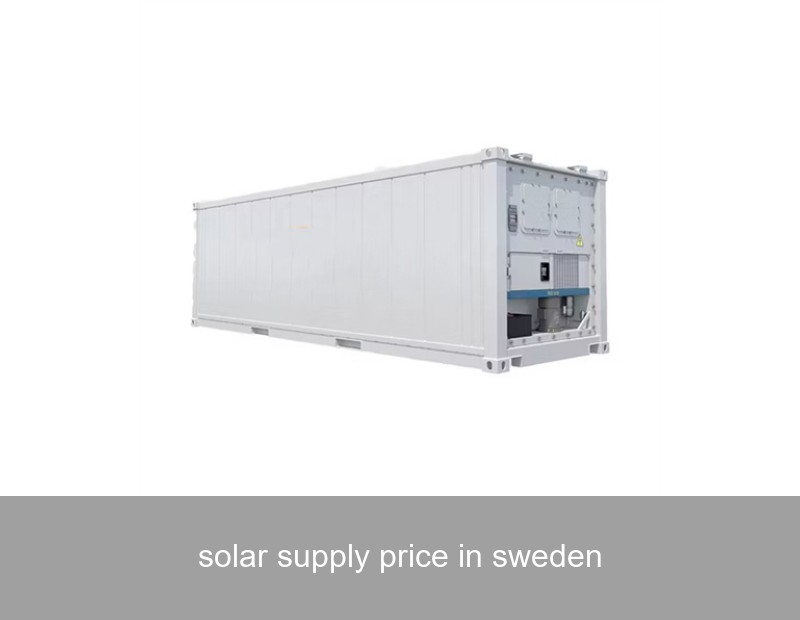
For larger commercial or industrial applications, our GridMax series offers scalable, containerized storage solutions that can provide peak shaving, demand charge reduction, and even grid services, turning your energy asset into a revenue stream.
Case Study: A Swedish Dairy Farm's Journey to Energy Independence
Let's make this real with data from the field. Consider "Ängsgård Dairy," a mid-sized farm in Västergötland. Facing volatile electricity prices and high consumption for cooling, milking, and ventilation, they installed a 50 kWp solar array in 2021. While it reduced daytime grid draw, the owner, Lars, was frustrated that his solar supply price calculation didn't account for high evening usage.
In 2023, Ängsgård partnered with Highjoule to integrate a 40 kWh IntelliBESS unit. The results, monitored over one year, were compelling:
| Metric | Solar Only (2022) | Solar + Highjoule Storage (2023-24) | Change |
|---|---|---|---|
| Self-Consumption of Solar Energy | 41% | 89% | +117% |
| Annual Electricity Bill Cost | 285,000 SEK | 92,000 SEK | -68% |
| Grid Import During Peak Hours | 78 MWh | 22 MWh | -72% |
| System Payback Period (Estimated) | 12 years | 6.5 years | Reduced by 46% |
"The initial investment was higher," Lars notes, "but looking at the total solar and storage system price as one project, the payback is much faster. We now have predictable costs and security. The system even kept our milk cool during a 12-hour grid outage last winter." This case underscores that the most critical metric isn't the cheapest upfront cost, but the lowest lifetime cost of energy.

Image: A technician inspecting a modern battery storage system. Source: Unsplash
Beyond the Price Tag: Making the Smart Choice for Your Swedish Property
So, how should you evaluate your options? When you receive quotes for the solar supply price in Sweden, ask these deeper questions:
- Is this a commodity hardware quote, or a designed energy solution with guaranteed performance?
- How does the proposal address my winter energy needs, not just summer production?
- Is the system "storage-ready," and what would be the integrated cost and benefit of adding a battery now or later?
- What is the long-term service, warranty, and software update plan?
Sweden's energy authority, Energimyndigheten, provides excellent resources on solar potential across different regions, which can help set realistic production expectations. Furthermore, staying informed on EU renewable energy directives can provide context on the broader market trajectory.
Your Next Step Towards Energy Resilience
The journey to energy independence starts with redefining value. Instead of asking, "What is the solar panel price in Sweden?", consider asking, "What is the price of achieving 80% energy self-sufficiency and price stability for my home or business for the next 25 years?"
What specific energy challenge—be it unpredictable bills, lack of backup power, or a desire to reduce your carbon footprint—is motivating you to look at solar today, and how can a solution that thinks beyond the panels address that holistically?
 Inquiry
 Online Chat