


Navigating Solar System China Suppliers: A Guide for Global Buyers
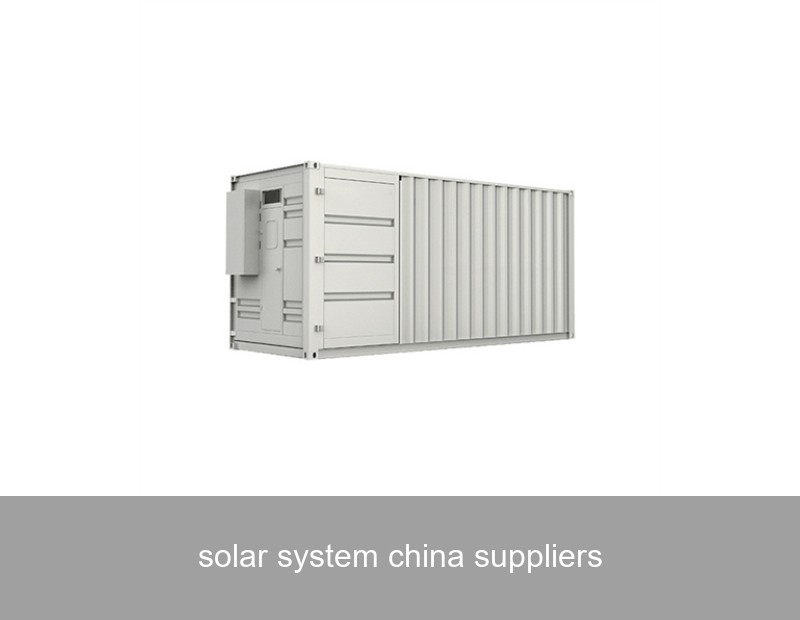
If you're sourcing solar panels or a complete photovoltaic system, you've undoubtedly encountered the vast market of solar system China suppliers. The phenomenon is clear: China dominates global solar manufacturing. But for businesses and homeowners in Europe and the US, the decision involves more than just finding a supplier; it's about understanding the entire ecosystem of quality, reliability, and long-term value. This article cuts through the noise, offering data-driven insights and a clear framework to evaluate your options, including the advantages of partnering with an integrated Western solution provider like Highjoule.
Table of Contents
- The Global Landscape: Why China Dominates Solar Manufacturing
- Looking Beyond Price: The Hidden Costs of Direct Sourcing
- Decoding Quality & Standards: What Certifications Really Matter?
- Case Study: A German Commercial Project's Supplier Journey
- The Highjoule Advantage: An Integrated, Intelligence-Driven Approach
- Making Your Choice: Key Questions for Your Solar Investment
The Global Landscape: Why China Dominates Solar Manufacturing
Let's start with the data. According to the International Energy Agency (IEA), China's share in all key manufacturing stages of solar panels exceeds 80%. For some essential components, like polysilicon and wafers, this share is well above 95% (IEA Solar PV Global Supply Chains Report, 2022). This scale creates a significant price advantage. For a procurement manager, the allure is straightforward: lower upfront capital expenditure (CAPEX).
However, this scale also means a wide spectrum of suppliers, from tier-1 brands with global reputations to lesser-known factories with varying quality control. The keyword "solar system China suppliers" returns millions of results, representing this immense diversity. The initial phenomenon of low cost must be met with a deeper analysis of what that price includes—and, crucially, what it might exclude.

Image Source: Unsplash - Representing large-scale solar deployment, a market heavily influenced by global supply chains.
Looking Beyond Price: The Hidden Costs of Direct Sourcing
The PAS (Problem-Agitate-Solution) framework is useful here. The Problem is the need for cost-effective, high-performance solar equipment. The Agitation comes from the hidden complexities of direct international sourcing:
- Logistics & Import Duties: Coordinating shipping, customs clearance, and handling potential tariffs (like the U.S. AD/CVD duties on certain solar imports) adds cost and administrative burden.
- Technical Compatibility & System Integration: A solar panel is one component. Its performance is maximized only when perfectly integrated with compatible inverters, mounting systems, and—increasingly critical—an intelligent battery storage system.
- After-Sales Support & Warranty Fulfillment: What happens if a batch underperforms or fails? Enforcing a warranty across continents can be a lengthy, costly process. Local technical support for troubleshooting is often absent.
- Project Timeline Risk: Delays in production, shipping, or quality holds can derail an entire installation schedule, creating financial knock-on effects.
This is where the Solution evolves from buying components to procuring a guaranteed performance outcome.
Decoding Quality & Standards: What Certifications Really Matter?
Reputable solar system China suppliers will have international certifications. Key marks to look for include:
| Certification | What It Covers | Why It's Important |
|---|---|---|
| IEC 61215 / IEC 61730 | Design qualification and type approval for solar panel safety and performance. | The core international benchmark for panel reliability and safety. |
| UL 61730 / UL 1703 (US Market) | Safety standards for the North American market. | Often required for permitting and insurance in the USA and Canada. |
| CE Marking (EU Market) | Conformity with EU health, safety, and environmental standards. | Mandatory for selling products in the European Economic Area. |
However, certifications are a baseline. True quality assurance involves long-term degradation rates, real-world performance in varying climates, and the financial health of the manufacturer to honor a 25-year linear performance warranty. This due diligence is resource-intensive for an end-buyer.
Case Study: A German Commercial Project's Supplier Journey
Consider a real-world example from our target market. A mid-sized dairy farm in Bavaria, Germany, aimed for energy independence. Their initial plan was to procure panels directly from a well-priced solar system China supplier and use a local installer.
The Data & Outcome: The panels arrived on time and passed initial inspection. However, after 18 months, the farm's manager noticed underproduction. The local installer diagnosed a mismatch between the panel voltage-temperature coefficients and the European-made inverter's operating window, exacerbated by colder Bavarian mornings. The performance loss was estimated at 5-7% annually. Furthermore, when contacted, the Chinese supplier offered to replace panels (with costly shipping), but the root cause was system integration, not a panel defect. The solution involved a costly inverter retrofit and system re-tuning.
The Insight: The upfront savings were erased by the long-term production loss and retrofit cost. The project highlighted that the optimal unit of procurement is not the cheapest panel, but the most efficient, resilient, and intelligently managed system.
The Highjoule Advantage: An Integrated, Intelligence-Driven Approach
This is precisely where Highjoule's model creates distinct value. Founded in 2005, we don't just supply equipment; we provide certified, performance-optimized power solutions. We leverage global manufacturing partnerships—including with select tier-1 solar system China suppliers whose quality and ethics we've rigorously vetted—and combine them with our proprietary intelligence.
Our HPS (Highjoule Power System) for commercial and industrial applications is a prime example. It integrates high-efficiency PV modules with our advanced, liquid-cooled battery storage (using LFP chemistry for safety and longevity) and our AI-driven energy management system (EMS). The EMS doesn't just monitor; it forecasts energy production and consumption, automatically optimizing when to store, use, or sell back energy to the grid.
Image Source: Unsplash - Representing a modern, well-integrated battery energy storage system (BESS).
For the end-user, this means:
- Single Point of Responsibility: One warranty, one point of contact for support, globally.
- Guanteed Performance: We model and guarantee system output, taking on the integration risk.
- Future-Proofing: Our software-upgradable systems adapt to changing energy tariffs and needs.
- Local Compliance & Support: Our systems are pre-certified for key markets (EU CE, UKCA, U.S. UL) and supported by local technical teams.
Highjoule's Residential & Microgrid Solutions
Our philosophy extends to all sectors. For homeowners, the Highjoule Home Energy Hub offers the same seamless integration, turning a solar array into a resilient home power plant. For communities and remote facilities, our microgrid solutions with grid-forming inverters can create stable, renewable-powered islands of energy, reducing dependence on volatile fuel supplies and grid infrastructure.
Making Your Choice: Key Questions for Your Solar Investment
So, when evaluating solar system China suppliers versus an integrated provider, ask yourself these questions:
- Am I buying a commodity component or a guaranteed energy outcome?
- Who is responsible for the total system performance and warranty over the next 25 years?
- Does my solution include intelligent storage and software to maximize financial return, especially as feed-in tariffs evolve?
- Is my supplier equipped to ensure local regulatory compliance and provide timely on-the-ground support?
The landscape of solar energy is maturing from a focus on hardware cost to a focus on levelized cost of energy (LCOE) and energy resilience. While global supply chains are integral, the value is increasingly in the intelligence that binds them together.
Given your specific energy goals and risk profile, which factor—initial cost savings or long-term, hassle-free performance—will define the success of your solar investment in five years?
 Inquiry
 Online Chat