


Camel Group Ltd: How Much Can Battery Storage Really Save Your Business?
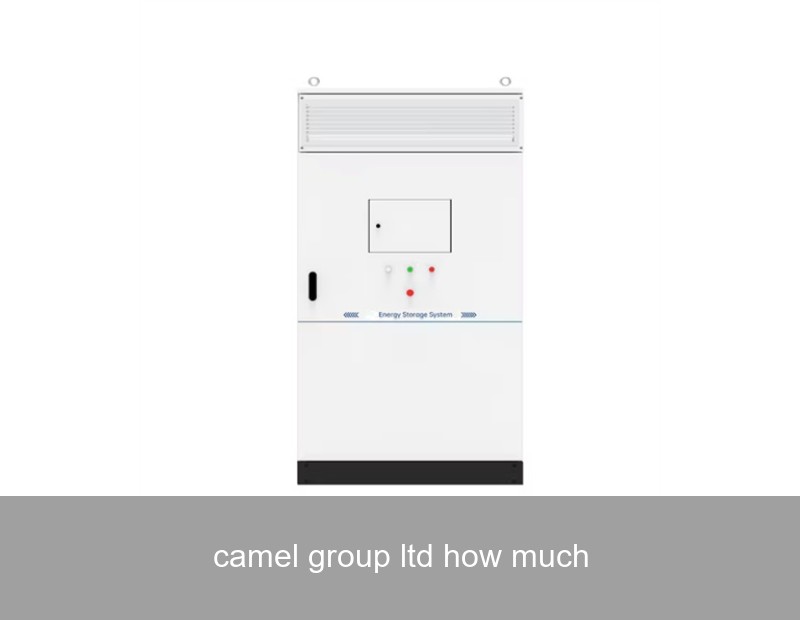
If you're a facility manager, a business owner, or simply someone keeping an eye on energy costs, you've likely seen your electricity bills become a significant line item. The volatility of energy prices, especially in markets like Europe and the U.S., has turned a simple utility cost into a major financial risk. In this context, names like Camel Group Ltd, a major player in lead-acid and advanced battery manufacturing, often come up in discussions about energy storage components. But the real question isn't just about the price of a battery cell; it's "How much can a complete, intelligent battery storage system save my operation?" The answer goes far beyond the unit cost, delving into total cost of ownership, energy independence, and strategic resilience.
Table of Contents
The Price Phenomenon: More Than Just a Battery Quote
When businesses begin exploring battery energy storage systems (BESS), the initial focus often lands on component costs. Asking "Camel Group Ltd, how much?" reflects a natural first step. However, this is akin to asking "How much is an engine?" when you need a full, reliable truck. A battery storage system is an integrated ecosystem comprising the battery racks, the critical Power Conversion System (PCS), the Energy Management System (EMS), climate controls, safety mechanisms, and sophisticated software. The true value—and the ultimate savings—are generated by how seamlessly and intelligently these components work together. A low-cost cell can lead to high long-term costs if the system around it is inefficient or unreliable.

For commercial and industrial (C&I) users, the primary drivers are rarely just the upfront capital expenditure (CapEx). The operational expenditure (OpEx) savings and revenue opportunities are paramount. This is where the conversation must shift from component price to system performance.
The Data Reality: Quantifying the Savings
Let's talk numbers. According to the U.S. Department of Energy, commercial electricity prices have seen significant fluctuations. For a medium-sized industrial facility in Germany or California with a demand charge of $20-$40 per kW, peak shaving alone can save tens of thousands annually. But savings compound through multiple streams:
- Peak Shaving: Avoid drawing expensive power from the grid during peak hours.
- Energy Arbitrage: Store cheap electricity (e.g., overnight or from solar) and use it during expensive periods.
- Demand Charge Reduction: Drastically lower the highest point of power draw, which sets a monthly fee.
- Backup Power & Resilience: Avoid costly downtime from grid outages.
- Grid Services (in some markets): Generate revenue by providing frequency regulation or capacity.
The financial model isn't theoretical. A robust BESS can achieve a return on investment (ROI) in 3-7 years, depending on local tariffs and usage patterns, after which the savings translate directly to improved profitability.
Case Study: A European Logistics Hub's Transformation
Consider a real-world example from our portfolio at Highjoule. A major logistics warehouse in the Netherlands faced an annual electricity bill exceeding €500,000, with nearly 40% attributed to demand charges and peak-time consumption. Their goal was to stabilize costs and integrate a new rooftop solar array more effectively.
Highjoule deployed a 1.2 MWh integrated storage solution featuring our advanced lithium-ion battery units and the proprietary Highjoule HEMS (Hybrid Energy Management System). The results over the first 18 months were compelling:
| Metric | Result |
|---|---|
| Annual Electricity Cost Savings | €112,000 (22% reduction) |
| Demand Charge Reduction | 35% |
| Solar Self-Consumption Increase | From 55% to over 85% |
| ROI Period (Projected) | 4.2 years |
| CO2 Footprint Reduction | Equivalent to 75 tonnes annually |
The client's question evolved from "How much does the system cost?" to "How much value is it creating?" The answer was clear: a six-figure annual impact on the bottom line and enhanced operational sustainability.
Why the Complete System Matters More Than Components
This case highlights a critical truth. The battery cells—whether from Camel Group Ltd, CATL, or others—are a crucial part, but they are the "fuel tank." The engine and brain are the PCS and EMS. A high-quality EMS, like Highjoule's, uses AI-driven forecasting to predict energy usage patterns, solar generation, and grid prices. It makes real-time decisions on when to charge, discharge, or hold, optimizing every kilowatt-hour for maximum financial return. Without this intelligence, you're leaving significant savings on the table.

Furthermore, system safety and longevity are non-negotiable. An integrated system from a single provider ensures perfect compatibility, streamlined thermal management, and comprehensive warranties. This reduces operational risk—a cost that is difficult to quantify but potentially enormous.
The Highjoule Advantage: Intelligence Built-In
Since 2005, Highjoule has specialized in delivering not just battery storage, but intelligent power solutions. We understand that our clients need a partner, not just a product. Our approach for C&I and microgrid applications focuses on three pillars:
- High-Efficiency Hardware: Our containerized and modular H-PowerStack systems are built with industry-leading cycle life and safety standards, ensuring reliability over a 15+ year lifespan.
- Proprietary Software Intelligence: The Highjoule HEMS platform is the core of our value proposition. It seamlessly integrates storage with onsite generation (solar, wind), grid connections, and building loads, executing a tailored financial strategy daily.
- Full-Service Partnership: From initial feasibility analysis and financial modeling to installation, grid compliance, and ongoing performance monitoring, we provide a turnkey service. This eliminates complexity for our clients and guarantees system performance.
For instance, a manufacturing plant in Texas using our system doesn't just have a battery bank; it has an automated asset that responds to ERCOT market signals, mitigates curtailment risks, and provides critical backup for sensitive processes—all managed remotely by our platform.
Building a Future-Ready Energy Strategy
The energy landscape is shifting from a passive, consumption-based model to an active, management-based one. Businesses are becoming prosumers—both producing and consuming energy strategically. In this new paradigm, the most insightful question isn't "How much does a component cost?" but rather:
"How much value can an intelligent energy ecosystem unlock for my specific operational and financial goals?"
This requires looking beyond the spec sheet of individual suppliers. It demands a solution that is adaptive, software-defined, and backed by deep expertise. As grid tariffs evolve and renewable penetration increases, this flexibility will become the single greatest determinant of long-term energy cost control.
So, as you evaluate your options and hear names like Camel Group Ltd in the supply chain, we invite you to consider the bigger picture. What specific energy challenges is your business facing today, and how might a truly intelligent storage system transform them from a cost center into a strategic asset?
 Inquiry
 Online Chat