


Powering a 10 HP Motor with a Solar System: A Complete Technical Guide
So, you're looking to run a 10 horsepower (HP) motor directly from the sun. That's an ambitious and brilliant goal, whether it's for an agricultural irrigation pump, a commercial workshop compressor, or an industrial ventilation fan. The concept of a dedicated solar system for a 10 hp motor is at the forefront of energy independence, moving away from costly and polluting grid or diesel power. But how do you translate 10 HP of mechanical demand into a reliable, efficient, and cost-effective solar photovoltaic (PV) setup? This guide will walk you through the essential considerations, from calculating your true energy needs to selecting the right components, including the critical role of advanced energy storage.
Table of Contents
- Understanding Your True Power & Energy Needs
- Key Components of a Robust 10 HP Solar System
- The Storage Imperative: Beyond Direct Sunlight
- A Real-World Case Study: Farming in California's Central Valley
- Highjoule Solutions for Industrial & Agricultural Solar Power
Understanding Your True Power & Energy Needs
First, let's demystify the core requirement. A 10 HP motor represents a significant mechanical output. In electrical terms, 1 HP is approximately equal to 746 Watts. Therefore, a 10 HP motor has a running electrical load of roughly 7,460 Watts, or 7.46 kW.
But here's the critical first insight: that's just the running power. Most AC motors, especially induction types common in pumps and compressors, require a much higher burst of current to start from a standstill. This starting surge or inrush current can be 4 to 8 times the running current. For our 10 HP motor, the starting demand could momentarily spike to between 30 kW and 60 kW. Your solar system's inverter must be capable of delivering this surge, or you'll need a "soft starter" to manage the inrush.
Next, we move from power (kW) to energy (kWh). How long will the motor run each day? If your irrigation pump needs to operate for 6 hours daily, the daily energy consumption is: 7.46 kW * 6 hours = ~44.76 kWh.
This 44.76 kWh is the fundamental number your solar array must produce, on average, every day to directly power the motor's operation.

Image Source: Unsplash - Solar panels in agriculture
Key Components of a Robust 10 HP Solar System
A system designed for this scale is not a simple plug-and-play setup. It's a carefully engineered power plant. Here are the core components:
- Solar PV Array (7-10 kW+): To reliably generate 44+ kWh daily, you need a significantly oversized array to account for cloudy days, dust, and system inefficiencies. In a sunny region (like Southern Europe or the Southwest US), you might need an 8-12 kW array. The exact size depends on your local solar irradiance.
- High-Power, High-Surge Inverter: This is the brain and muscle. You need a commercial/industrial-grade inverter that can output at least 7.5 kW continuously and, crucially, deliver a surge capacity exceeding your motor's starting surge (e.g., 40-50 kW for a few seconds). Three-phase inverters are typical for motors of this size.
- Motor Starter: Integrating a Variable Frequency Drive (VFD) or soft starter is highly recommended. A VFD not only manages the inrush current but also allows you to control the motor speed, which can lead to massive energy savings, especially in pump applications.
The Storage Imperative: Beyond Direct Sunlight
Here's a pivotal question: Must the motor only run when the sun is shining brightly? For many applications—like a workshop that operates all day or a pump needed at night—the answer is no. This is where energy storage transforms your system from a fair-weather solution to a 24/7 power source.
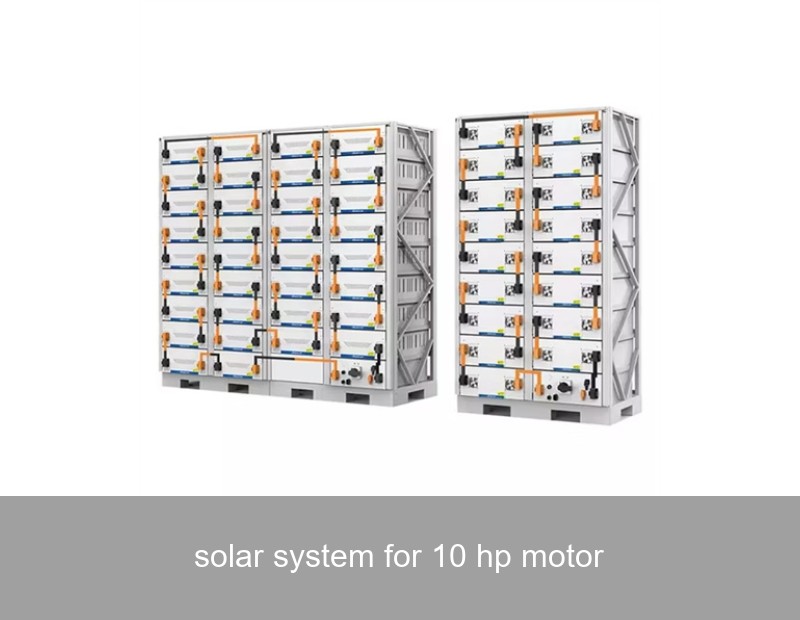
A battery energy storage system (BESS) acts as a buffer. Your solar array charges the batteries during the day. The batteries then power the motor through the inverter whenever needed, day or night. For our 44.76 kWh daily need, you'd require a battery bank with a usable capacity of at least that amount to run for one full day without sun. In practice, you might size it for 2-3 days of autonomy (90-135 kWh) to ensure reliability during prolonged poor weather.
This is where companies like Highjoule become essential partners. Highjoule's H-Series Commercial Energy Storage Systems are engineered precisely for these demanding, off-grid, and microgrid applications. Their systems integrate high-cycle-life lithium-ion batteries with advanced power conversion and energy management software. This ensures the high burst power needed for motor starts is available on demand, while also optimizing the battery's health and lifespan.
Why Battery Choice Matters for Motor Loads
Not all batteries are created equal for high-power applications. Starting a large motor requires batteries that can deliver very high discharge currents (high C-rates) without damage or voltage sag. Highjoule's battery systems use lithium iron phosphate (LFP) chemistry, known for its safety, long cycle life, and excellent power delivery capabilities, making them ideal for the harsh demands of starting and running industrial motors.
A Real-World Case Study: Farming in California's Central Valley
Let's look at a concrete example. A mid-sized almond farm in Fresno County, California, sought to eliminate its diesel costs for a critical 10 HP submersible pump used for orchard irrigation. The pump ran an average of 8 hours per day during the irrigation season.
| Parameter | Value |
|---|---|
| Motor Power | 10 HP (7.46 kW running) |
| Daily Runtime | 8 hours |
| Daily Energy Need | ~60 kWh |
| Previous Cost | $40-50/day in diesel (seasonal) |
| Solution Installed | 15 kW solar array + 80 kWh Highjoule H-Series BESS + VFD |
The results were transformative. The system was designed to fully charge the battery bank by midday and then run the pump directly from solar and battery power for the required 8 hours. The VFD allowed for optimal pump speed control based on water pressure, reducing the average power draw. The farm achieved 100% diesel displacement for this pump, with a project payback period of under 5 years considering state incentives and fuel savings. The system also provided the added benefit of silent, emission-free operation. You can explore similar agricultural success stories through resources like the California Energy Commission's programs.

Image Source: Unsplash - Energy storage unit
Highjoule Solutions for Industrial & Agricultural Solar Power
At Highjoule, we understand that powering a 10 HP motor isn't just about selling panels and batteries. It's about delivering reliable, intelligent, and sustainable power solutions for mission-critical operations. Our approach involves:
- Custom System Design: Our engineering team analyzes your specific motor characteristics (starting surge, run profile), site conditions, and operational goals to design a system that guarantees performance.
- Integrated Technology: We provide the complete ecosystem: high-efficiency solar arrays, our proprietary H-Series BESS with superior power output, and compatible high-surge inverters, all managed by our smart energy management platform (Highjoule EMP).
- Global Support: With a presence in key European and American markets, Highjoule offers local expertise for installation support, commissioning, and long-term maintenance, ensuring your solar-powered motor runs smoothly for decades.
For businesses, this transition is not merely an energy switch; it's an operational upgrade that locks in energy costs, reduces carbon footprint, and enhances resilience against grid outages or fuel price volatility.
Installation & Financial Considerations
Implementing a solar system for a 10 hp motor is a significant investment. Key steps include:
- Professional Site Audit: A must for accurate load profiling and shading analysis.
- Regulatory Compliance: Permits, grid interconnection agreements (if hybrid), and potential rebates (e.g., the U.S. Investment Tax Credit or EU green energy grants).
- Total Cost of Ownership (TCO): While upfront costs are higher than a diesel generator, the TCO over 15-20 years is typically far lower, with minimal "fuel" and maintenance costs.
The financial model shifts from an operational expense (ongoing fuel purchases) to a capital expense with a known, attractive return on investment.
What's the First Step in Your Solar Journey?
The path to powering your 10 HP motor with solar begins with a detailed understanding of your own energy profile. Have you measured the exact starting and running currents of your motor? How would the reliability of a sun-powered system impact your business or agricultural productivity compared to your current power source?
 Inquiry
 Online Chat