


Understanding Solar System Price in Nepal: A Smart Investment for Energy Independence
If you're exploring the solar system price in Nepal, you're likely looking beyond just the initial cost. You're considering a long-term investment in reliable power, energy security, and sustainability. Nepal's unique energy landscape, with its abundant sunshine yet grid challenges in remote areas, makes solar power an increasingly compelling solution. But what truly determines the price, and how can you ensure you get the best value for decades to come? This guide breaks down the factors, showcases real-world impact, and highlights how advanced technology from global leaders like Highjoule is making solar-plus-storage systems more efficient and accessible than ever.
Table of Contents
- Key Factors Influencing Solar System Prices in Nepal
- Cost Breakdown: From Panels to Power Conversion
- Beyond Price: The Long-Term Value of a Quality System
- How Highjoule's Smart Energy Solutions Add Value in Nepal
- The Future of Solar Investment in Nepal
Key Factors Influencing Solar System Prices in Nepal
The quoted solar system price in Nepal isn't a single number. It's a sum of components, labor, and long-term performance. Think of it like building a house: the foundation, materials, and craftsmanship all determine its durability and comfort.
- System Size & Energy Needs: A small residential setup for lights and charging will cost significantly less than a commercial system for a hotel or factory. The first step is always a detailed energy audit.
- Component Quality: This is where price and value diverge. High-efficiency monocrystalline panels, though slightly more expensive upfront, generate more power in Nepal's variable mountain weather compared to cheaper polycrystalline options.
- The Critical Role of Battery Storage: Given Nepal's grid instability, especially outside Kathmandu, a battery energy storage system (BESS) is often essential. The type (Lithium-ion vs. Lead-acid) and capacity form a major part of the cost but are crucial for 24/7 power.
- Installation Complexity: Rooftop access, structural requirements, and remote site logistics can affect labor costs. A professional installation ensures safety and maximizes system yield.
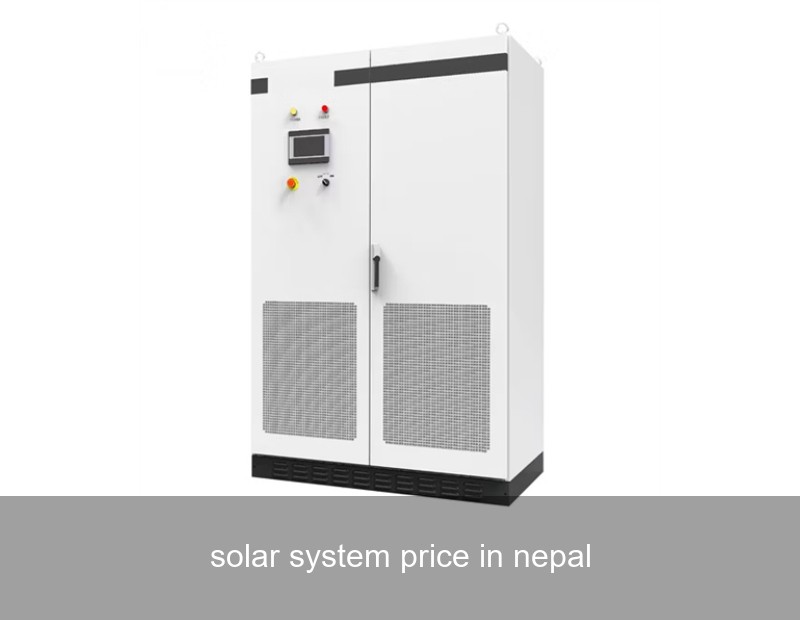
- Inverter and System Intelligence: The inverter is the brain of your solar system. Advanced hybrid inverters can manage grid, solar, and battery power seamlessly, a feature that adds value and resilience.
Cost Breakdown: From Panels to Power Conversion
To demystify the solar system price in Nepal, let's look at a typical mid-range residential system for an urban home facing daily load-shedding.
| Component | Approx. Cost Share | Why It Matters |
|---|---|---|
| Solar Panels (3-4 kW) | 25-30% | Your fuel source. Quality dictates long-term energy harvest. |
| Lithium-Ion Battery Storage (5-10 kWh) | 35-45% | Your energy insurance policy. Enables power at night and during outages. |
| Hybrid Inverter & Charge Controller | 15-20% | The system's command center. Manages energy flow efficiently. |
| Mounting, Cabling, & Protection Devices | 10% | Safety and durability. Prevents fire hazards and system damage. |
| Installation & Commissioning | 10-15% | Expertise ensures your system performs as promised for 25+ years. |
Note: These are indicative percentages. Prices fluctuate with global commodity markets and import logistics. A detailed quote from a certified installer is essential.

Credit: Photo by American Public Power Association on Unsplash - A well-installed solar array is a long-term asset.
A Real-World Case Study: Powering a Himalayan Eco-Lodge
Let's move beyond theory. Consider the Yak & Yeti Eco-Lodge in the Annapurna region (name changed for privacy). Facing 12+ hours of daily grid outages and relying on expensive, noisy diesel generators, their annual energy cost exceeded $8,000 with a significant carbon footprint.
The Solution: In 2022, they installed a 15kW solar PV system coupled with a 40kWh lithium-ion battery storage system. The upfront solar system price in Nepal for this installation was a substantial investment. However, let's look at the data:
- Diesel Displacement: The system reduced diesel generator use by over 90%.
- Financial Payback: With savings on diesel and grid power, the system's estimated payback period is 5-7 years.
- Operational Impact: The lodge now offers 24/7 reliable power for guests, runs electric water heaters, and powers its kitchen efficiently, enhancing its premium "eco" brand promise.
- Environmental Benefit: It avoids approximately 18 tons of CO2 emissions annually.
This case clearly shows that the true metric isn't just installation cost, but Cost of Energy (COE) over the system's lifetime. For the lodge, their effective COE from solar is now lower and predictable, shielding them from volatile diesel prices.
Beyond Price: The Long-Term Value of a Quality System
When evaluating solar system price in Nepal, the cheapest option often becomes the most expensive in the long run. Inferior batteries may degrade within 2-3 years, and poorly manufactured inverters can fail, leaving you with no power and unexpected replacement bills.
Value comes from:
- Durability & Warranty: Tier-1 solar panels carry 25+ year performance warranties. High-quality lithium batteries, like those in Highjoule systems, offer 10-year warranties with high cycle life.
- Energy Efficiency: A high-efficiency system generates more kilowatt-hours from the same sunlight, directly improving your return on investment.
- Smart Management: Systems with intelligent energy management can prioritize solar for critical loads, sell excess to the grid (where policies allow), and optimize battery usage, squeezing maximum value from every component.
According to a 2022 IEA report on Solar PV Supply Chains, while module prices have fallen, the balance-of-system costs and quality of integration remain key to project success.
How Highjoule's Smart Energy Solutions Add Value in Nepal
This is where Highjoule's global expertise meets local needs. As a leading provider since 2005, we don't just sell components; we deliver integrated, intelligent energy solutions. For partners and clients in Nepal, this translates to several key advantages that optimize the lifetime solar system price in Nepal equation.
Our EverVolt™ series of residential and commercial battery storage systems are built with robust, lithium iron phosphate (LFP) chemistry, known for its safety, longevity, and excellent performance in a wide range of temperatures—a perfect fit for Nepal's climate. Paired with our smart hybrid inverters, the system automatically chooses the most economical and efficient power source: solar, battery, or grid.
For larger commercial and microgrid applications, our GridSynergy™ platform allows for the orchestration of multiple energy assets. Imagine a small agricultural processing plant: our system can schedule heavy machinery operation during peak solar production, store excess energy for evening use, and only use the grid as a backup, dramatically reducing demand charges and ensuring uninterrupted operation. This level of intelligent control is what transforms a capital expense into a strategic asset.

Credit: Photo by Science in HD on Unsplash - Intelligent control systems maximize energy value.
The Future of Solar Investment in Nepal
The trend is clear. As global battery prices continue to fall (BloombergNEF reports a 2023 price drop) and solar technology becomes even more efficient, the economic case for solar-plus-storage in Nepal will only strengthen. Government policies and potential net-metering frameworks could further accelerate adoption.
The question is no longer if solar is viable, but how to build the most resilient and economical system for your specific needs. Are you ready to calculate your own path to energy independence, not just based on today's price tag, but on a lifetime of reliable, clean power?
What unique energy challenge does your home or business in Nepal face that a smart solar-plus-storage system could solve?
 Inquiry
 Online Chat