


Solar System Prices in Nigeria: Unpacking Costs and Long-Term Value
If you're exploring solar system prices in Nigeria, you're likely balancing an urgent need for reliable power with a significant investment. The initial quotes can be surprising, but what truly matters is understanding what drives these costs and the immense value a well-engineered system delivers over decades. As a global leader in advanced energy storage, Highjoule has witnessed how markets like Nigeria are transitioning from seeing solar as a simple purchase to understanding it as a foundational investment in energy independence and economic stability.
Table of Contents
- What's Behind the Price Tag? A Component Breakdown
- The Storage Factor: Why Batteries Are a Game Changer
- A Nigerian Case Study: From Diesel Dependence to Solar Security
- Looking Beyond Initial Price: Total Cost of Ownership
- Choosing the Right System for Your Needs
- The Future of Solar Energy in Nigeria
What's Behind the Price Tag? A Component Breakdown
Let's demystify the cost. A complete solar photovoltaic (PV) system price is not a single item but an ecosystem of components, each with its own cost drivers. Think of it like buying a car—the final price depends on the engine, battery, interior quality, and brand engineering.
- Solar Panels (Modules): Typically 25-35% of system cost. Prices vary by efficiency (monocrystalline is higher efficiency and cost than polycrystalline), brand, and warranty. Tier-1 panels from reputable manufacturers command a premium for proven long-term performance and degradation rates.
- Inverters: The "brain" of the system, converting DC to AC power. This accounts for 15-25% of costs. Basic string inverters are less expensive, while more advanced hybrid inverters (which integrate battery storage) or microinverters (optimizing each panel) cost more but offer greater efficiency, monitoring, and flexibility.
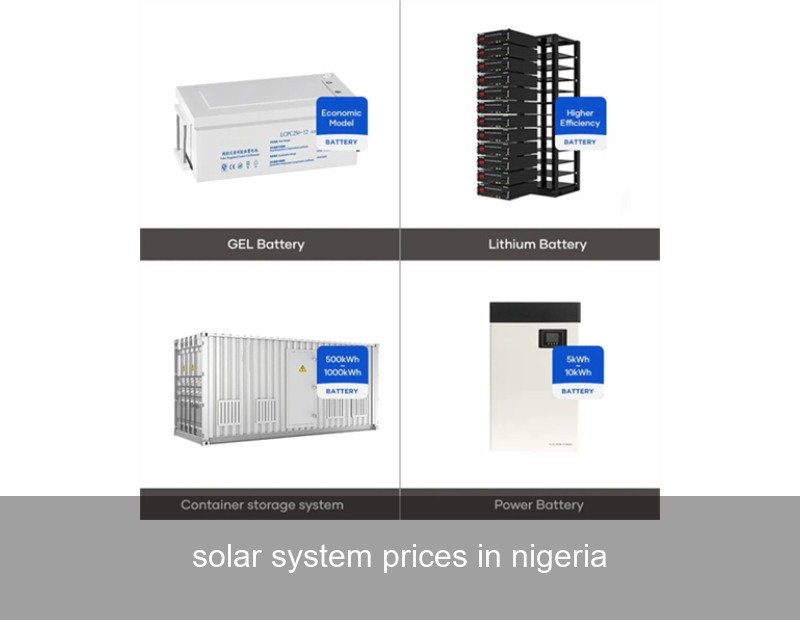
- Battery Energy Storage System (BESS): This is where the real paradigm shift happens. For areas with unreliable grids, storage is non-optional. Battery costs (15-30%+) depend on capacity (kWh) and technology. While lead-acid has lower upfront cost, Lithium-ion (like LiFePO4) offers longer lifespan, deeper cycling, and lower maintenance, providing better value over time.
- Balance of System (BOS): This includes mounting structures, cabling, conduits, fuses, and importantly, the installation labor. Quality here is critical for system safety and longevity. Skilled installation by certified professionals ensures optimal performance and avoids costly future issues.
For commercial and industrial applications, system design complexity, grid interconnection studies, and potential transformer upgrades add to the cost but are essential for scalability and compliance.
The Storage Factor: Why Batteries Are a Game Changer
In the Nigerian context, discussing solar system prices without focusing on storage is incomplete. An off-grid or hybrid system with storage ensures power is available when the sun isn't shining or during grid outages. This capability transforms solar from a supplementary power source to a primary one.
This is where companies like Highjoule bring critical expertise. As a global provider founded in 2005, we specialize in intelligent Battery Energy Storage Systems (BESS) that are engineered for durability and performance in diverse climates. Our systems, such as the Highjoule HPS Series for commercial and industrial use, integrate seamlessly with solar arrays. They feature advanced battery management systems (BMS) that maximize cycle life and safety, and intelligent energy management software that allows users to prioritize loads, track savings, and even participate in future grid services. Investing in a robust storage solution upfront may increase the initial price, but it dramatically reduces reliance on expensive, polluting diesel generators, locking in energy costs for 20+ years.

For residential and small business applications, our Highjoule Home Energy Hub provides a compact, all-in-one solution that simplifies installation and management, bringing grid independence within reach.
A Nigerian Case Study: From Diesel Dependence to Solar Security
Let's look at real numbers. A medium-sized Lagos-based manufacturing company faced crippling operational costs. Their primary power source was the unreliable national grid, supplemented by 12-14 hours per day of diesel generator use. Their annual energy spend was roughly ₦85 million (approx. $100,000 USD), with over 70% going to diesel fuel and maintenance.
In 2022, they invested in a 300 kW solar PV hybrid system with a 500 kWh Highjoule lithium-ion BESS. The initial capital outlay was significant. However, let's analyze the return:
| Cost Factor | Pre-Solar (Annual) | Post-Solar (Annual) |
|---|---|---|
| Diesel Fuel & Maintenance | ~₦60 million | ~₦5 million (backup only) |
| Grid Electricity Bills | ~₦25 million | ~₦8 million (reduced consumption) |
| System Maintenance | N/A | ~₦2 million |
| Total Annual Cost | ~₦85 million | ~₦15 million |
The project delivered an annual saving of approximately ₦70 million, yielding a payback period of under 4 years. Beyond finances, it ensured uninterrupted production, improved workplace environment by reducing noise and air pollution, and future-proofed the business against volatile diesel prices. This case exemplifies the Total Cost of Ownership advantage.
Looking Beyond Initial Price: Total Cost of Ownership
Focusing solely on the lowest solar system prices in Nigeria can be a costly mistake. The key metric is Levelized Cost of Energy (LCOE)—the average net present cost of electricity generation over the system's lifetime.
A cheaper system with inferior panels (that degrade faster) or basic inverters and lead-acid batteries (requiring replacement every 3-5 years) will have a much higher LCOE than a premium system engineered for 20+ years of service. Highjoule’s approach is to design systems with this long-term calculus in mind. Our BESS solutions, for example, use LiFePO4 chemistry known for its thermal stability and long cycle life, often guaranteeing 80% capacity retention after 6,000+ cycles. This translates to decades of reliable service, minimizing replacement costs and maximizing savings.
According to a 2023 IEA report on solar power, global solar PV costs have fallen dramatically, but the emphasis is now on system resilience and integration, where quality components pay dividends.
Choosing the Right System for Your Needs
How do you navigate this landscape? Start with a professional energy audit. Understand your load profile—when and how much power you use.
- Residential: Prioritize essential loads (lighting, refrigeration, fans) and consider future needs (AC, electric vehicles). A 3-10 kW system with a scalable battery bank is common.
- Commercial/Industrial: The focus is on maximizing self-consumption and minimizing demand charges. A tiered approach, perhaps starting with powering critical processes and expanding, can manage capital outlay. Highjoule's modular BESS designs are perfect for this, allowing capacity to be added as needs grow.
- Microgrids: For communities or large facilities, a fully independent microgrid with solar, storage, and sometimes backup generators offers complete energy sovereignty. Highjoule provides integrated control systems that intelligently dispatch power from solar, batteries, and the grid/generator for optimal cost and reliability.

The Future of Solar Energy in Nigeria
The trajectory is promising. While upfront solar system prices in Nigeria are influenced by import duties and logistics, local assembly initiatives and growing market scale are expected to bring costs down further. More importantly, financial models are evolving. Green bonds, equipment leasing, and Pay-As-You-Go (PAYGo) financing are making systems more accessible. The real value shift is the recognition of solar-plus-storage as critical economic infrastructure.
Innovation in virtual power plants (VPPs) and peer-to-peer energy trading, enabled by companies like Highjoule with our grid-interactive smart systems, could allow Nigerian solar owners to monetize their excess power in the future, turning a cost-saving asset into a revenue-generating one. A World Bank study on distributed energy highlights this potential for emerging economies.
So, as you evaluate proposals and solar system prices in Nigeria, what will be your deciding factor: the lowest upfront cost, or the highest long-term value and energy security for your home or business? What would you do with the savings from eliminating your diesel bill?
 Inquiry
 Online Chat