


Solar Systems Battery Storage: The Key to Unlocking True Energy Independence
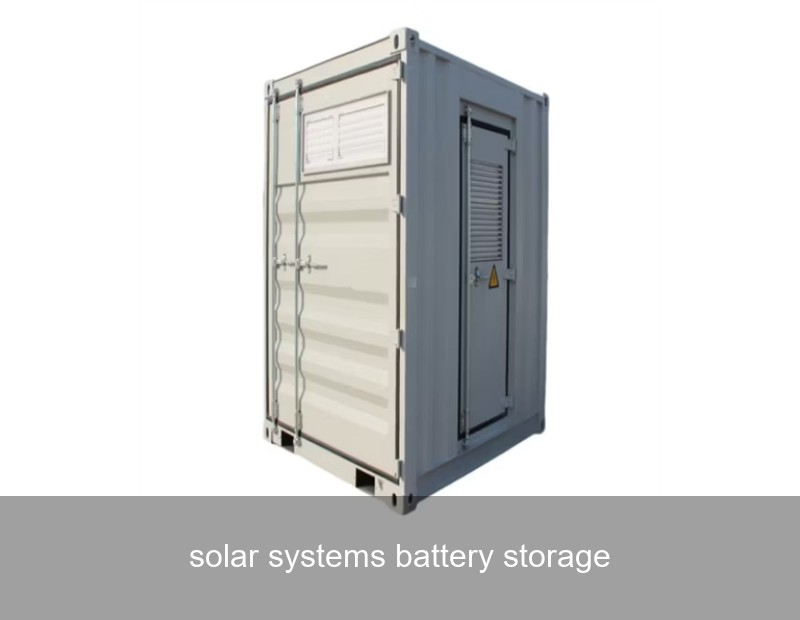
Have you ever watched your solar panels working hard on a sunny afternoon and wondered, "Where is all this extra energy going?" If you're like many solar adopters in Europe and the US, you might be feeding it back to the grid for a modest credit, only to buy it back at a higher price when the sun goes down. This common experience highlights a fundamental gap in a standard solar setup. The true potential of your solar investment isn't fully realized until you pair it with intelligent solar systems battery storage. This combination isn't just an upgrade; it's a transformation that turns your home or business into a resilient, self-sufficient energy hub.
Table of Contents
- The Solar Power Gap: Generation vs. Consumption
- How Battery Storage for Solar Systems Works: More Than Just a Backup
- The Financial Sense: ROI, Savings, and Incentives
- Real-World Impact: A Case Study from California
- Choosing the Right Battery Storage System
- Beyond the Meter: Contributing to a Smarter Grid
The Solar Power Gap: Generation vs. Consumption
Most residential and commercial energy demand peaks in the early morning and evening. Unfortunately, solar generation follows a very different curve, peaking in the middle of the day. Without storage, this mismatch creates the "duck curve" – a well-documented phenomenon where net demand plummets during sunny hours and then surges rapidly at dusk, challenging grid stability. For you, the owner, it means a significant portion of the clean energy you produce isn't used directly on-site.
Data from the U.S. Department of Energy shows that a typical home solar system without storage might only directly consume 30-50% of the electricity it generates. The rest is exported. With the gradual phase-out of lucrative feed-in tariffs in many regions, the economic argument for adding battery storage for solar systems has never been stronger.
How Battery Storage for Solar Systems Works: More Than Just a Backup
Think of your solar array as a superb energy producer and the battery system as a savvy energy manager. Here's the intelligent cycle:
- Daytime Harvest: Your solar panels generate DC electricity, which is converted to AC to power your home or business.
- Smart Storage: Any excess energy, instead of being sent to the grid, is used to charge your battery storage system.
- Evening & Peak Use: As the sun sets and utility rates often jump, your system automatically switches to draw power from the batteries, shielding you from high time-of-use charges.
- Grid Interaction: Advanced systems can be programmed for strategic grid interactions, like providing backup power during outages or participating in grid services programs.
This is where companies like Highjoule excel. Founded in 2005, Highjoule designs integrated solutions that manage this entire cycle seamlessly. Our H-Joule Nexus energy management system acts as the brain, constantly optimizing when to store, when to consume, and when to export based on your usage patterns, weather forecasts, and real-time electricity prices.

Image Source: Unsplash - A modern home with integrated solar and storage.
The Financial Sense: ROI, Savings, and Incentives
Let's talk numbers. The upfront cost of adding storage is coming down significantly, while electricity prices and grid volatility are trending up. The return on investment (ROI) stems from several key areas:
| Benefit | Description | Financial Impact |
|---|---|---|
| Increased Self-Consumption | Using your own solar energy instead of buying from the grid. | Can increase direct usage of solar power from ~40% to 80% or more. |
| Peak Shaving | Avoiding drawing power during expensive peak-rate hours. | Savings depend on local rate differentials; can be substantial in markets like California or parts of Europe. |
| Backup Power | Providing electricity during grid outages. | Value of avoided disruption for homes and businesses (critical for offices, clinics, etc.). |
| Incentives | Tax credits and rebates (e.g., US Investment Tax Credit, various EU national programs). | Can reduce net system cost by 30% or more. |
Highjoule's team specializes in helping customers navigate this financial landscape. Our analysis tools model your specific energy profile to provide a clear picture of payback period and long-term savings, ensuring your investment in solar systems battery storage makes solid economic sense.
Real-World Impact: A Case Study from California
Consider the experience of a medium-sized commercial bakery in San Jose, California. They had a 100 kW solar array but faced crippling demand charges and frequent brief outages that disrupted production. Their goal was to stabilize energy costs and ensure operational continuity.
The Solution: Highjoule installed a tailored 240 kWh H-Joule Titan battery storage system alongside their existing solar. The Titan is part of our commercial series, known for high-cyclerate lithium-ion chemistry and robust thermal management, built for demanding daily use.
The Results (12-month period):
- Demand Charge Reduction: By strategically discharging the battery during predictable peak periods, the bakery reduced its peak demand from the grid by 65%.
- Energy Cost Savings: Combined with increased solar self-consumption, overall electricity costs dropped by 41%.
- Reliability: The system provided seamless backup during three minor grid outages, preventing spoilage of in-process goods. The bakery estimated avoiding $15,000 in potential losses.
- ROI: With the federal ITC and a local incentive, the project achieved a payback period of under 5 years.
This case, documented in a report by the California Public Utilities Commission on commercial storage adoption, exemplifies the multi-faceted value proposition of integrated solar and storage.
Choosing the Right Battery Storage System
Not all batteries are created equal. Key considerations for your solar systems battery storage include:
- Capacity & Power: Capacity (kWh) is your "energy tank size," while power (kW) is how fast you can fill or empty it. You need both sized correctly for your load.
- Depth of Discharge (DoD) & Cycle Life: A battery with a 90% DoD and 6,000-cycle life will deliver far more usable energy over its lifetime than one with 80% DoD and 3,000 cycles.
- Integration & Software: The system's brain is critical. Can it learn and adapt? Does it offer user-friendly monitoring and control?
- Safety & Warranty: Look for robust safety certifications (UL, IEC) and a strong, long-term warranty that guarantees performance over time.
Highjoule's product line, from the compact H-Joule HomeVault for residences to the scalable Titan for industry, is designed with these pillars in mind. We focus on lifecycle value, not just upfront price, ensuring our systems deliver reliable performance for 15+ years.

Image Source: Unsplash - An engineer inspecting a containerized battery storage system.
Beyond the Meter: Contributing to a Smarter Grid
The story doesn't end at your property line. Widespread adoption of solar systems battery storage creates a virtual network of distributed energy resources. This "virtual power plant" can collectively support the main grid during times of extreme stress, reducing the need for fossil-fuel "peaker" plants and enhancing community resilience. In markets like Germany and parts of the US, programs already exist for aggregators to compensate homeowners for allowing their batteries to provide these grid services.
Highjoule is at the forefront of this transition. Our systems are designed with grid-service functionality in mind, ready to help our customers participate in the energy markets of the future, turning their storage asset into a potential revenue stream. It's a powerful vision: your personal energy security actively contributing to national decarbonization goals, as noted in analyses by the International Energy Agency.
 Inquiry
 Online Chat