


Solar Systems for Houses: Your Complete Guide to Smart, Independent Energy
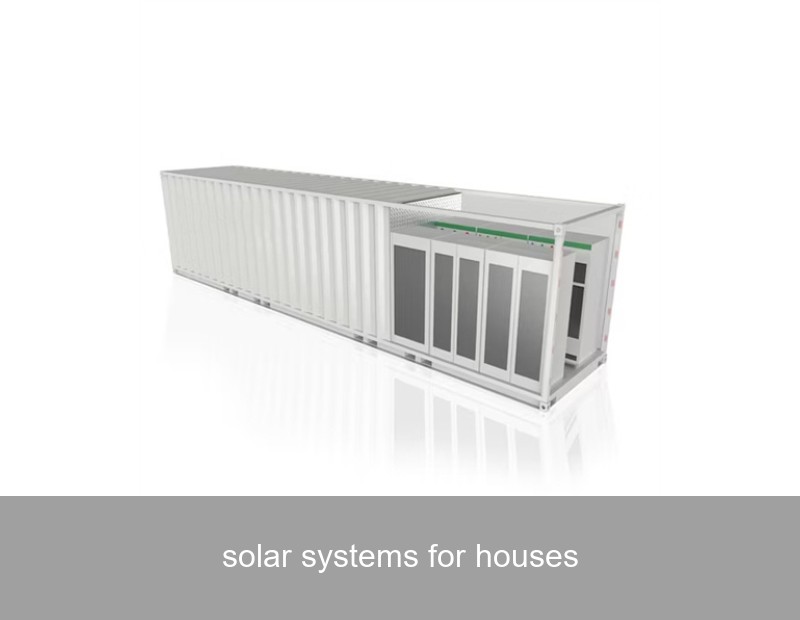
You've seen them on your neighbor's roof and heard the promises: lower bills, energy independence, a greener footprint. Modern solar systems for houses are a compelling proposition. But if you're digging deeper, you've likely hit a wall of jargon—kilowatts, inverters, battery chemistry. More importantly, you might be asking, "Will it *really* power my home when I need it most?" The truth is, a true home energy solution isn't just about panels generating power when the sun shines; it's about having that power intelligently available 24/7. This is where the conversation evolves from simple solar to a complete smart home energy system.
Why Home Solar is More Than Just Panels
The classic image of rooftop solar is changing. A decade ago, the goal was primarily to offset grid consumption during the day. Today, with increasing grid instability, extreme weather events, and sophisticated time-of-use utility rates, the objective is control. Homeowners no longer just want to generate energy; they want to manage it autonomously and efficiently. This shift is driven by a clear phenomenon: solar generation and household energy demand are often out of sync.
Image Source: Unsplash - A modern home equipped with solar panels.
Think about your own home. Your panels produce the most energy in the middle of the day, but your household's peak energy use is likely in the early morning and evening—when the sun is low or down. Without a way to capture that midday surplus, you're exporting it to the grid for minimal credit, only to buy back expensive power later. This mismatch is the fundamental challenge of modern residential solar.
The Critical Gap: Generation vs. Usable Power
Let's look at the data. According to the U.S. Department of Energy, a typical residential solar system can cover 80-100% of a home's annual electricity needs on paper. However, this assumes a perfect, constant grid acting as a virtual battery. In reality, during a grid outage, most standard solar systems shut down for safety, leaving you in the dark—even on a sunny day. This is a critical vulnerability.
The true measure of a solar system for your house is its resilience quotient: its ability to provide usable, reliable power during key moments—outages, peak rate periods, and low-generation days. This requires an integrated component that is now becoming the heart of the system: the intelligent battery storage system (BESS).
Key Components of a Resilient Home Solar System
- Solar Panels: Capture sunlight and convert it to direct current (DC) electricity.
- Inverter(s): The system's brain. Converts DC to usable alternating current (AC) for your home. Modern systems use sophisticated hybrid or multi-mode inverters.
- Battery Storage System: Stores excess solar energy for use anytime. The quality of its battery management software is what separates basic backup from intelligent energy arbitrage.
- Energy Management System (EMS): The intelligent software layer that orchestrates energy flow between panels, battery, home, and grid based on weather forecasts, usage patterns, and utility rates.
Beyond Basic Batteries: The Intelligent Storage System
Not all storage is created equal. A basic battery provides backup. An intelligent storage system, like those developed by Highjoule, provides energy intelligence. Here’s the difference:
| Feature | Basic Battery Backup | Intelligent Storage System (e.g., Highjoule) |
|---|---|---|
| Primary Goal | Provide power during grid outages | Optimize energy costs & resilience 24/7 |
| Software Intelligence | Minimal; reactive switching | Advanced EMS; learns patterns, uses weather data, integrates with smart home devices |
| Grid Interaction | Off-grid during outages only | Dynamic grid interaction; can participate in grid services (where available) and intelligently avoid peak tariffs |
| Longevity & Safety | Varies widely | Engineered with advanced thermal management and cell balancing, like Highjoule's proprietary Lithium Iron Phosphate (LFP) systems, for decade-plus lifespans and superior safety. |
This intelligence transforms your system from a cost center into an asset. It allows you to automatically use stored solar power during expensive peak-rate periods (a practice called peak shaving), ensure essential circuits stay on during extended outages, and even future-proof your home for electric vehicle charging.
Real-World Impact: A Case Study from Texas
Consider the situation in Texas, where the grid (ERCOT) faces significant strain during summer heatwaves and winter storms. In 2023, a residential community in Austin implemented a coordinated microgrid project using Highjoule's integrated solar and storage systems for houses.
The Setup: 50 homes were equipped with 8-10 kW solar arrays paired with Highjoule's HES-I Series residential storage units (each with 13.5 kWh usable capacity). The systems were configured for both individual home backup and community-level grid support.
- During a 3-day summer heatwave with grid alerts, participating homes reduced their grid draw during peak hours (4-8 PM) by an average of 94%.
- Each home saved an estimated $220-$280 on their monthly summer bill through peak shaving and self-consumption of solar.
- When a localized outage occurred due to equipment failure, homes with the system experienced zero interruption to critical loads, with the average home sustaining itself for over 72 hours on battery and solar.
This case, documented in part by the National Renewable Energy Laboratory's community resilience studies, shows the tangible value of an integrated, intelligent system beyond simple payback calculations. It provides bill certainty, comfort, and critical resilience.

Image Source: Unsplash - Professional installation of a home battery storage unit.
The Highjoule Home Solution: Integrated Intelligence
Founded in 2005, Highjoule has focused on one mission: providing intelligent, efficient, and sustainable power solutions. For homeowners, this translates into the Highjoule Home Energy Hub—a seamlessly integrated system designed to maximize the value of your solar system for your house.
Our solution is built around our flagship HES-I Series battery storage system, which features:
- Ultra-Safe LFP Chemistry: Non-toxic, long-life battery cells with minimal degradation.
- Adaptive Power Management: Our AI-driven EMS can prioritize power flows based on your habits, real-time electricity prices, and even upcoming weather.
- Scalable Design: Start with a single unit and expand your storage capacity as your needs grow (e.g., adding an EV).
- Professional Integration: We work with a certified network of installers to ensure your solar, storage, and home electrical system work in perfect harmony, with full compliance for local codes and incentives.
We don't just sell hardware; we provide a complete energy ecosystem. Our monitoring platform gives you clear, actionable insights into your generation, consumption, and savings, putting you in full control of your home's energy destiny.
Making the Decision: Is a Solar System Right for Your House?
Evaluating a solar system for your house now requires a new set of questions. Look beyond cost-per-watt of the panels and ask:
- How does the system ensure I have power during a grid outage?
- Can the software actively manage my energy to reduce my bill, not just my consumption?
- Is the storage system scalable and built with safe, durable chemistry for a 15+ year lifespan?
- Does the provider, like Highjoule, have a proven track record in engineering reliable storage systems, not just in reselling components?
The future of home energy is not just on the roof—it's in the intelligent system that manages, stores, and deploys every kilowatt-hour to your greatest advantage. It's about transforming your home into a node of resilience and efficiency.
Your Energy, Your Control
What would you power first if the grid went down tomorrow, and how would an intelligent energy system change the way you interact with and think about the power in your home?
 Inquiry
 Online Chat