


How Much Can an Autogrid Energy System Save You? A Deep Dive into Costs and Benefits
You've likely heard the buzz: "Take control of your energy!" "Achieve energy independence!" But when it comes down to it, the most pressing question for any homeowner or business considering a smart energy system is a practical one: Autogrid energy, how much? Not just the upfront price tag, but the real, long-term value. The answer isn't a simple number; it's an equation involving your energy habits, local utility rates, and the intelligence of the system you choose. Let's break down the true cost and savings potential of modern autogrid solutions.
Table of Contents
The Phenomenon: From Passive Consumer to Active Prosumer
For decades, the energy grid was a one-way street. Power flowed from a distant plant to your meter, and you paid the bill, regardless of time or cost peaks. Today, a perfect storm of rising electricity prices, frequent extreme weather events, and the rapid drop in solar panel and battery costs is changing everything. The modern "prosumer" (producer + consumer) doesn't just use energy; they generate, store, and manage it with software-driven systems often called autogrids or virtual power plants (VPPs).
An autogrid system typically integrates solar panels, a battery storage system, and sophisticated energy management software. This software is the brain. It automatically decides when to draw power from the grid, when to use solar energy directly, when to charge the batteries, and crucially, when to discharge them to avoid expensive peak tariffs or even sell energy back. This automation is key to maximizing financial returns.
The Data: Decoding the Autogrid Investment
So, how much are we talking about? Let's separate the costs from the savings and value.
Upfront & Ongoing Costs
- Solar PV Array: The fuel source. Costs vary by size and region but have fallen over 70% in the last decade (NREL, 2021).
- Battery Storage System: The heart of autonomy. A typical residential 10-15 kWh system represents a significant portion of the total investment.
- Energy Management System (EMS): The essential brain. This can be included with the battery or a separate platform.
- Installation & Grid Connection Fees: Professional installation and any utility interconnection costs.
Savings & Revenue Streams
This is where the autogrid pays for itself. Savings aren't uniform; they are amplified by intelligent software.
| Savings Mechanism | How It Works | Potential Annual Value* |
|---|---|---|
| Bill Reduction (Self-Consumption) | Using your solar power day & night, reducing grid imports. | $800 - $2,000+ |
| Peak Shaving | Avoiding usage during utility's "peak rate" hours (4-9 pm). | $300 - $1,000+ |
| Backup Power Value | Avoiding food spoilage, work disruption, or relocation costs during outages. | Priceless (or $500+ quantified) |
| Grid Services (VPP) | Allowing your system to support the grid for utility incentives. | $100 - $600+ |
*Estimates based on U.S. & EU markets with high electricity rates. Actual figures depend heavily on location, consumption, and program availability.

Image Source: Unsplash - A modern home integrating solar, storage, and EV charging, key components of an autogrid.
Case Study: A Real-World Test in California
Let's move from theory to hard numbers. A 2022 study by The U.S. Department of Energy highlighted the synergy of solar-plus-storage. But a more granular example comes from a real Highjoule residential customer in Northern California, part of a local Virtual Power Plant program.
The Setup: A 2,200 sq. ft. home with a 8.5 kW solar array, a Highjoule H2 12.8 kWh lithium iron phosphate (LFP) battery, and our proprietary Neuron EMS platform.
The Challenge: High PG&E rates, frequent Public Safety Power Shutoffs (PSPS), and a desire to maximize solar self-use.
- Electricity Bill Reduction: 92% average reduction, from ~$220/month to ~$18/month.
- Peak Shaving Savings: The Neuron software automatically discharged the battery during 4-9 pm peak windows, accounting for an estimated $450 in avoided costs.
- VPP Incentives: The homeowner enrolled in a pilot program, earning $25/month simply for allowing the utility to access a small portion of the battery's capacity during extreme grid stress.
- Outage Protection: Experienced 3 grid outages totaling 42 hours. The system seamlessly powered essential loads with zero interruption.
The Bottom Line: The total annual financial benefit (savings + incentives) exceeded $2,800. This tangible case moves the conversation from "autogrid energy how much does it cost?" to "how much value can it deliver?" and "how quickly will it pay back?"
The Highjoule Difference: Intelligence Beyond Storage
At Highjoule, we understand that a battery is just a container. The true value is unlocked by the intelligence that controls it. Since 2005, we've evolved from a battery specialist to a comprehensive smart energy solutions provider. Our answer to the autogrid energy how much question is built on delivering maximum return on investment through superior technology.
Our Core Technology: The Neuron Energy Management System
Think of Neuron as the conductor of your personal energy orchestra. It doesn't just react; it predicts and optimizes using real-time weather data, utility rate schedules, and your historical usage patterns.
- Predictive Algorithms: Forecasts solar production and household demand to make optimal charge/discharge decisions 24/7.
- Multi-Market Operation: Can be configured for various utility rate structures (time-of-use, demand charges) common in Europe and North America.
- Scalable Architecture: Our solutions work for a single-family home, a large commercial facility, or an entire microgrid.
Our Product Ecosystem
We offer integrated solutions that make the autogrid concept simple and reliable:
- H-Series Residential Storage: Our H2 (12.8 kWh) and H5 (20 kWh) battery systems feature safe, long-life LFP chemistry and are designed for easy installation and seamless integration with existing or new solar.
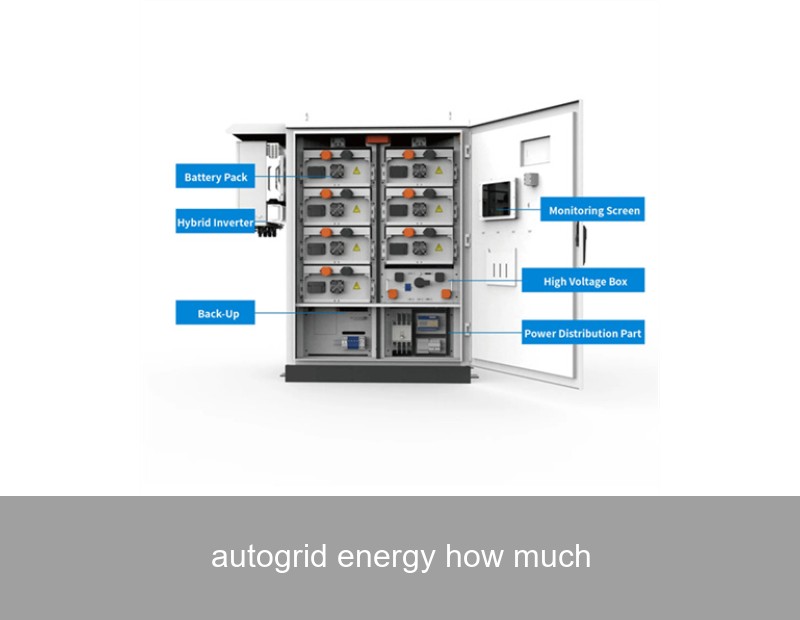
- Commercial & Industrial (C&I) Solutions: Containerized or modular battery energy storage systems (BESS) designed to slash demand charges, provide backup power, and participate in grid service markets.
- Microgrid Controllers: For campuses, communities, or critical facilities, our controller can manage a complex mix of solar, storage, and backup generators as a single, resilient entity.

Image Source: Unsplash - Representative image of a commercial-scale battery storage system.
Your Energy Future: What's Your Next Move?
The question of "autogrid energy how much" is ultimately personal. It depends on your energy goals: Is it pure financial payback? Unbreakable resilience against storms and blackouts? Reducing your carbon footprint? Or a combination of all three?
With volatile energy prices becoming the new normal and grid stability a growing concern, the cost of not having a smart energy system is also rising. The technology is proven, the economics are increasingly favorable, and the value extends far beyond dollars and cents.
So, we leave you with this: What single energy challenge—be it a shocking monthly bill, the fear of the next outage, or a sustainability target—would you want an intelligent autogrid system to solve for you first?
 Inquiry
 Online Chat