


Building a Solar-Wind-BESS Powerhouse: The Key to Unlocking 24/7 Clean Energy
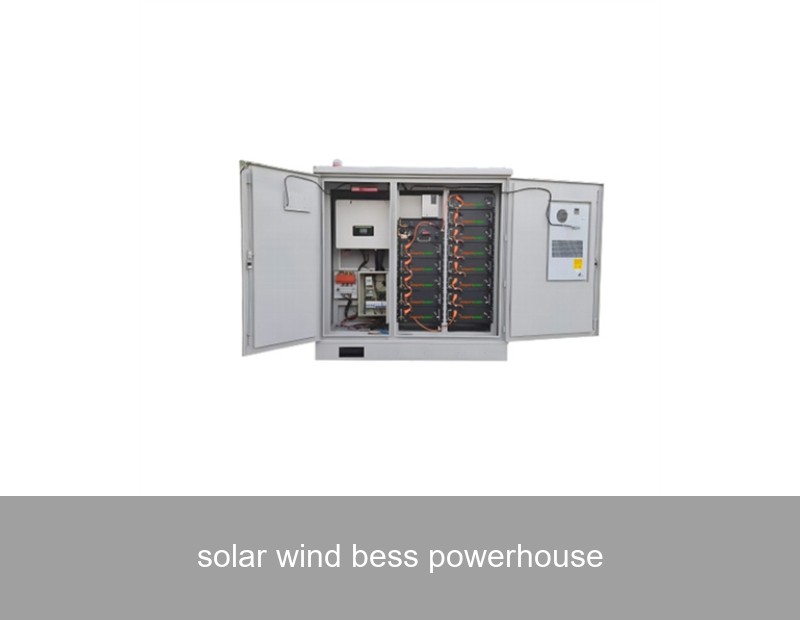
Imagine a near future where your home, business, or community is powered entirely by the sun and wind. The vision is compelling: clean, affordable, and independent energy. But then, a cloud passes overhead, or the wind dies down. The lights flicker. This intermittency—the Achilles' heel of renewables—has long been the biggest hurdle to a fully decarbonized grid. The solution, however, isn't just generating more green power; it's about mastering its flow. The true game-changer is the integrated solar wind BESS powerhouse—a sophisticated, intelligent system that doesn't just produce energy, but stores, manages, and dispatches it with precision.
For nearly two decades, Highjoule has been at the forefront of this energy evolution. Since 2005, we've moved beyond simply providing battery boxes to delivering complete, smart energy ecosystems. Our mission is to transform volatile solar and wind generation into a reliable, dispatchable powerhouse, empowering businesses, industries, and communities to take control of their energy destiny.
BESS: The Unsung Hero of the Renewable Grid
Let's break down the acronym that completes our powerhouse: BESS (Battery Energy Storage System). Think of it as the "brain and brawn" between your solar panels, wind turbines, and the electrical loads that need power. A BESS is far more than a collection of batteries. It's an integrated system comprising:
- Battery Modules: The core storage units (typically lithium-ion for their density and efficiency).
- Power Conversion System (PCS): The inverter/charger that manages AC/DC conversion.
- Energy Management System (EMS): The intelligent software brain that makes real-time decisions on charging and discharging based on weather forecasts, energy prices, and consumption patterns.
- Safety & Thermal Management: Critical systems ensuring safe, optimal operation over a long lifespan.
Without a BESS, excess solar energy produced at midday is often wasted (curtailed), and nighttime or calm periods require backup from fossil fuels. The U.S. Energy Information Administration (EIA) notes that while renewable generation is growing, its variability remains a grid integration challenge. A BESS solves this by time-shifting energy, turning a sporadic resource into a firm, predictable one.
Anatomy of a Solar-Wind-BESS Powerhouse
So, what does a fully integrated solar wind BESS powerhouse look like in practice? It's a symphony of components working in concert:
| Component | Role | Contribution to the "Powerhouse" |
|---|---|---|
| Solar PV Array | Daytime generation, peak shaving | Provides low-cost, abundant energy during daylight hours. |
| Wind Turbine(s) | Generation during night/windy periods, often complementary to solar | Diversifies generation profile, reducing reliance on a single weather pattern. |
| Battery Energy Storage System (BESS) | Energy storage, dispatch, and grid services | The stabilizing core. Stores surplus from both sources, provides power on demand, and regulates frequency. |
| Advanced Energy Management System (EMS) | Intelligent control & optimization | The "conductor." Maximizes self-consumption, optimizes for cost or carbon, and automates operations. |
This combination creates a resilient energy asset. For a commercial facility, this means drastically reducing demand charges from the grid by discharging the BESS during short periods of peak consumption. For a microgrid, it means maintaining critical operations during a utility outage. The synergy is clear: solar and wind generate the fuel, but the BESS provides the reliability and economic intelligence.

Image: A modern industrial facility combining solar generation and battery storage. Credit: Unsplash.
Case Study: Germany's Balancing Act – From Theory to Grid Reality
Europe, and Germany in particular, offers a compelling real-world example. Germany's "Energiewende" (energy transition) has led to renewables frequently supplying over 50% of the nation's electricity. However, this success brought a pressing need for grid stability.
In 2023, a large dairy cooperative in Lower Saxony faced a dual challenge: volatile energy costs and a corporate mandate to achieve 100% renewable operation for its energy-intensive cooling and processing plants. They had existing wind capacity and ample rooftop space for solar. The missing piece was flexibility.
The solution was a 12 MWh Highjoule GridMaster BESS integrated with their existing 5 MW wind farm and a newly installed 3 MW solar array. The Highjoule system's EMS was programmed with a multi-objective strategy:
- Self-Consumption Optimization: Store cheap wind power generated at night for daytime use, alongside solar.
- Primary Control Reserve (PCR) Market Participation: Use the BESS's rapid response to sell frequency regulation services to the German grid operator. This creates a significant revenue stream.
- Backup Power: Ensure critical milk cooling continues during short grid interruptions.
The data speaks for itself: Within the first year, the cooperative increased its direct consumption of self-generated renewable energy from 35% to over 80%. Revenue from grid services covered nearly 30% of the BESS's annual financing cost. Most importantly, they demonstrated that an industrial operation could become a net-positive solar wind BESS powerhouse, supporting the grid while cutting costs and carbon. This aligns with findings from the Fraunhofer ISE, which highlights the economic and grid-stabilizing value of storage in renewable-heavy systems.
The Highjoule Difference: The Intelligent Core of Your Powerhouse
At Highjoule, we understand that a solar wind BESS powerhouse is defined by its intelligence, not just its hardware. Our products, like the GridMaster for C&I applications and the HomePower for residential settings, are built around our proprietary Adaptive Core EMS.
This software platform is what transforms a simple storage system into a true energy asset. It can:
- Forecast & Optimize: Integrate hyper-local weather data to predict solar/wind generation and pre-charge batteries accordingly.
- Multi-Market Arbitrage: In deregulated markets like Texas (ERCOT) or parts of the EU, it can autonomously decide when to buy, store, sell, or consume energy to maximize financial return.
- Seamless Integration: Our systems are designed for easy integration with both new and existing solar and wind installations, providing a future-proof upgrade path.
- Unmatched Safety & Longevity: With our patented thermal management and cell-level monitoring, we ensure system safety and extend battery life, protecting your investment.
Our services extend beyond installation. We offer comprehensive energy audits, financial modeling, and ongoing performance monitoring to ensure your powerhouse delivers on its promises for decades. We partner with you to navigate incentives like the U.S. Investment Tax Credit (ITC) or European Union funding mechanisms.

Image: Advanced energy management system dashboard monitoring renewable sources and storage. Credit: Unsplash.
Is Your Business or Community Ready to Become a Solar-Wind-BESS Powerhouse?
The transition from passive consumer to active prosumer—a producer and consumer of energy—is no longer a distant dream. The technology is proven, the economics are increasingly favorable, and the need for grid resilience is more apparent than ever. Whether you're a factory manager looking to lock in long-term energy costs, a municipality aiming for energy independence, or a homeowner wanting to maximize your rooftop solar, the integrated solar wind BESS powerhouse model is the definitive answer.
The question isn't if this is the future of energy; it's when you will choose to be a part of it. What would the ability to predict and control your energy costs, while contributing to a stable, green grid, mean for your operations tomorrow? The first step is a conversation about your unique energy profile and ambitions.
 Inquiry
 Online Chat