


Understanding the Fluctuating Landscape of Global Solar Panel Prices
If you've been considering solar energy for your home or business in recent years, you've likely experienced a pleasant surprise: the steady decline in the cost of going solar. But what's driving these global solar panel prices, and what does the future hold for this critical component of the clean energy transition? As a product and technology expert at Highjoule, I've witnessed firsthand how these market dynamics don't just affect panel costs—they reshape entire energy strategies. Let's dive into the forces behind the price tags and explore what it truly means for your energy independence.
Table of Contents
The Price Plunge Phenomenon
For over a decade, the narrative around solar power has been inextricably linked to falling costs. From 2010 to 2023, the global average price of solar photovoltaic (PV) modules plummeted by over 80%. This isn't just a minor market adjustment; it's a technological and industrial revolution. The phenomenon, often described by Swanson's Law (similar to Moore's Law for chips), observed that panel prices drop roughly 20% for every doubling of cumulative shipped volume. This scale of manufacturing, primarily driven by innovation and production expansion in Asia, has made solar the most affordable source of electricity in history in many parts of the world, according to the International Renewable Energy Agency (IRENA).
However, this downward trend has recently shown signs of volatility. In 2023 and early 2024, we observed temporary price increases and supply chain recalibrations. This highlights a crucial point: global solar panel prices are no longer on a simple, predictable downward slide. They are now subject to a complex interplay of geopolitics, raw material costs, trade policies, and technological shifts.
Data: Decoding the Drivers
To understand where prices are headed, we must look at the key factors influencing them today:
- Polysilicon Costs: The price of polysilicon, the key raw material for most panels, has experienced significant swings. After a spike during post-pandemic supply crunches, prices normalized, but remain a primary cost component.
- Manufacturing Overcapacity & Innovation: Massive manufacturing scale, particularly in China, creates competitive pressure. Simultaneously, advancements like TOPCon and heterojunction (HJT) cells offer higher efficiency, sometimes at a premium, influencing average price points.
- Trade Policies and Tariffs: For markets like the U.S. and Europe, import tariffs and policies (like the U.S. Uyghur Forced Labor Prevention Act or the EU's Carbon Border Adjustment Mechanism) can add complexity and cost, aiming to reshape local supply chains.
- Logistics and Installation "Soft Costs": In Western markets, the panel itself often constitutes less than 25% of the total installed system cost. Permitting, labor, financing, and customer acquisition make up the rest, diluting the impact of pure panel price drops.
| Cost Component | Approximate Share | Notes |
|---|---|---|
| Solar Panels & Inverters | 20-30% | Subject to global commodity and trade dynamics. |
| Mounting Hardware & Electrical | 15-20% | More stable, but influenced by local material costs. |
| Installation Labor & Permits | 25-35% | Highly local, a major reason for regional price differences. |
| Sales, Marketing, Overhead | 15-25% | The "soft cost" challenge in developed markets. |
A European Case Study: Germany's Solar Surge
Let's ground this in reality with a look at Germany, a European solar leader. In 2023, Germany installed a record 14.3 GW of new solar capacity. This boom was fueled by high energy prices, strong policy support, and yes, competitive global solar panel prices. However, a local installer in Bavaria shared with me that the sheer volume of demand sometimes led to delays and minor price fluctuations for specific high-efficiency panels. The lesson? While the global market sets a baseline, local installation capacity and logistics can be the ultimate bottleneck. The success in Germany underscores that price is an entry point; reliability, quality, and a holistic system design determine long-term value.
Beyond the Panel Price: The System Cost Equation
Here's the most important insight for any energy consumer: Cheaper panels don't automatically mean a cheaper or better overall system. The true metric is the Levelized Cost of Energy (LCOE)—the total lifetime cost of the system divided by the energy it produces. A slightly more expensive, but significantly more efficient panel can produce more electricity over its life on the same roof space, yielding a lower LCOE.
Furthermore, solar panels don't operate in a vacuum. Their value is unlocked and maximized by the ecosystem they're part of: inverters, monitoring systems, and crucially, energy storage. This is where the conversation evolves from just generating cheap power to managing your own resilient energy profile.
Highjoule's Integrated Approach: Maximizing Your Solar Investment
At Highjoule, we view solar panels as the brilliant harvesters of raw energy potential. But without intelligent management and storage, a significant portion of that potential can be wasted—exported to the grid at low rates, or simply curtailed. Our role is to ensure you capture and utilize every kilowatt-hour your panels produce, regardless of global solar panel prices volatility.
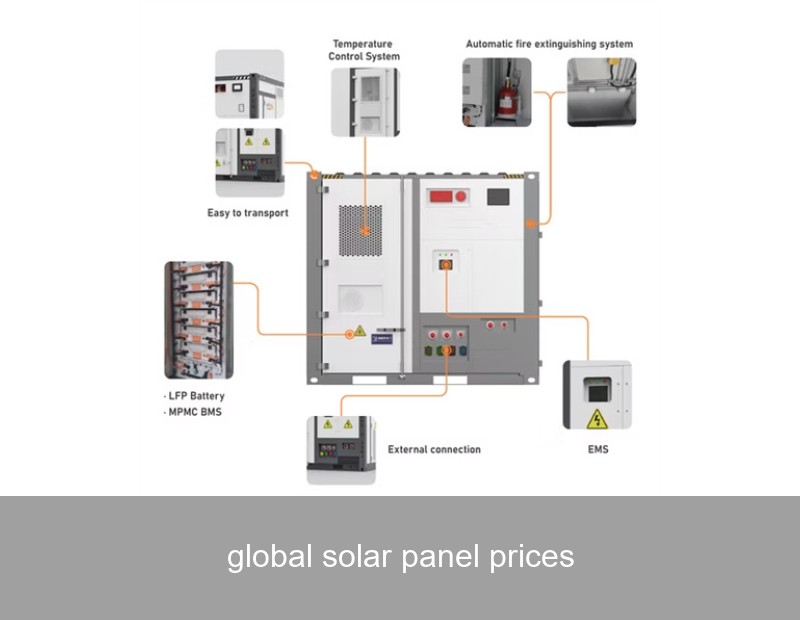
Our H-Series Commercial & Industrial Energy Storage Systems and HomePower+ residential batteries are designed specifically for this new era. They seamlessly integrate with solar arrays of any major brand. When your panels produce excess energy, instead of selling it for pennies, our systems store it for use in the evening when grid prices are high, during outages, or to power specific high-load operations in a business.

For instance, our AI-driven Energy Management Platform (EMP) doesn't just monitor production; it forecasts weather, learns your consumption patterns, and automatically optimizes when to store, use, or (if beneficial) sell energy. This turns a simple solar installation into a dynamic, profit- and resilience-optimizing asset. By focusing on total system intelligence, we help you de-risk your investment from the short-term fluctuations of panel markets, ensuring a faster and more reliable return on investment.
Future Trends and Considerations
Looking ahead, we expect global solar panel prices to remain competitive but with new layers. The push for "friend-shoring" and local manufacturing in the U.S. (driven by the Inflation Reduction Act incentives) and Europe may create a dual market: ultra-competitive standard panels from global supply chains, and potentially premium-priced, locally assembled modules with specific sustainability or supply chain credentials.
Technologies like perovskite-silicon tandem cells promise another leap in efficiency, which could shift the value proposition again. For the informed buyer, the question is shifting from "What's the price per watt?" to "What is the total cost of energy independence over 25 years, and how does storage and smart management fit in?"
Your Energy, Your Decision
The journey through the landscape of solar costs is more than a bargain hunt. It's about building a long-term partnership with technology that powers your life or business. At Highjoule, we're ready to help you navigate this landscape, not just with storage, but with a complete, intelligent energy solution. So, as you ponder your next step towards solar, we leave you with this: How will you define the true value of your solar investment—by the upfront price of the panels, or by the long-term control and savings an intelligent, integrated system can deliver?
 Inquiry
 Online Chat