


String de Paneles Solares: The Heart of Your Efficient Solar Energy System
You've seen the sleek arrays on rooftops and in fields, but have you ever wondered what truly makes a solar power system tick? At the core of every efficient photovoltaic (PV) installation lies a critical component: the string de paneles solares, or solar panel string. This isn't just about wiring panels together; it's about understanding how to orchestrate them for maximum performance, resilience, and return on investment. As energy prices fluctuate and sustainability goals become paramount, especially in markets like Europe and the U.S., optimizing your solar string design is no longer a technical niche—it's a financial and environmental imperative. Let's unravel the power of the string and explore how modern technology is pushing its potential to new heights.
Table of Contents
- What is a "String de Paneles Solares"?
- The Hidden Challenges: Why Simple Strings Fall Short
- The Data That Demands a Better Solution
- Real-World Impact: A Case Study from Southern Spain
- Beyond the Basic String: Modern Solutions for Maximum Harvest
- How Highjoule Empowers Every Solar String
- The Future of Solar Strings: Intelligence and Integration
What is a "String de Paneles Solares"?
In its simplest form, a string de paneles solares is a series of solar panels connected end-to-end, summing their voltage while the current remains constant. Think of it like connecting batteries in a flashlight. This series connection is fundamental because it boosts the voltage to a level that your solar inverter can efficiently convert into usable AC power for your home or business. A typical residential system might have one or two strings, while a large commercial solar farm comprises hundreds.
However, here's the catch: a string is only as strong as its weakest link. If one panel in that series underperforms due to shading, soiling, or a manufacturing defect, it can drag down the output of the entire string. This phenomenon, known as the "Christmas light effect," is the fundamental limitation of traditional string design. It's a challenge that installers and homeowners across sunny California and breezy German rooftops have grappled with for years.
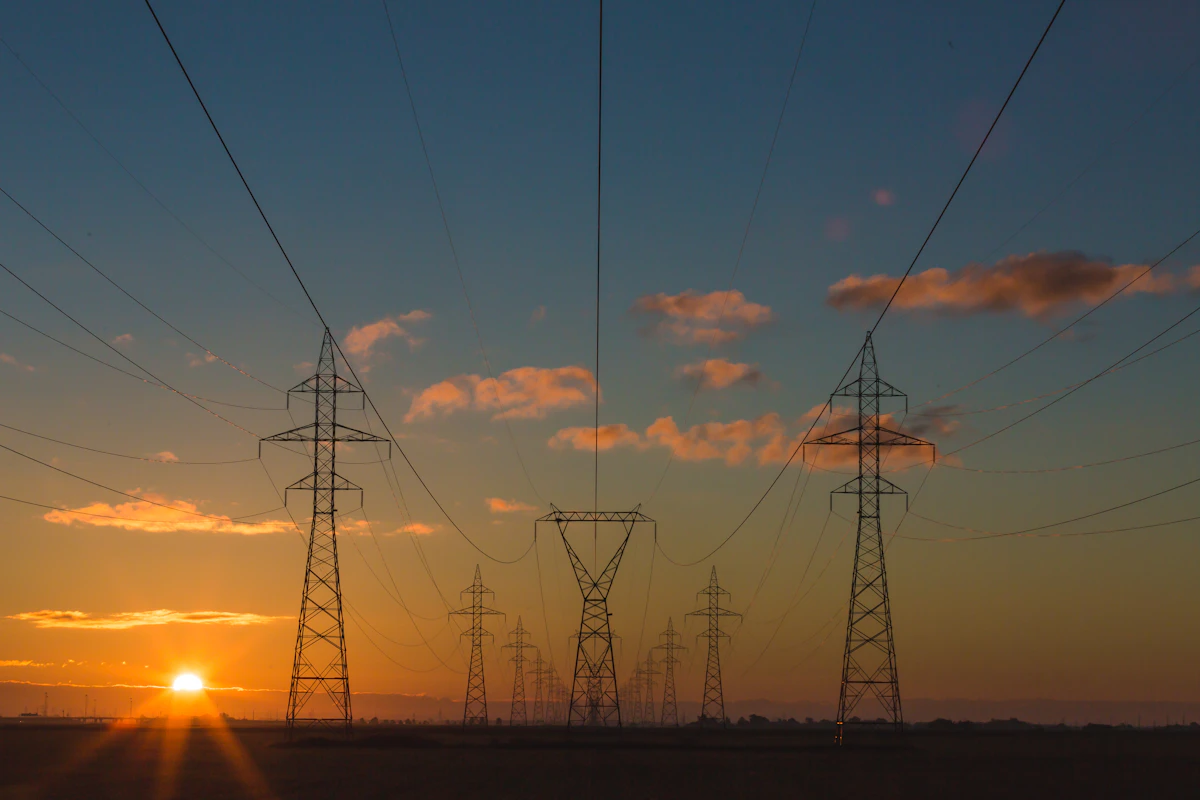
Credit: Photo by American Public Power Association on Unsplash. A typical rooftop array where panels are connected in strings.
The Hidden Challenges: Why Simple Strings Fall Short
Let's break down the main culprits that compromise a string's efficiency:
- Partial Shading: A chimney, a growing tree, or even morning dew on one panel can drastically reduce the output of the whole string.
- Module Mismatch: No two panels are perfectly identical. Slight variations in performance, exacerbated over time, lead to losses.
- Different Orientations: Complex roofs with multiple angles force compromises in string design, often grouping dissimilar panels together.
- Single Point of Failure: Traditional string inverter systems mean if the inverter fails, the entire solar production stops.
The Data That Demands a Better Solution
The impact isn't theoretical. Studies and real-world data paint a clear picture. According to the National Renewable Energy Laboratory (NREL), mismatches and suboptimal conditions can lead to annual energy losses of up to 10-25% in non-optimized string installations. In financial terms, for a medium-sized commercial system in Italy or Texas, that could translate to thousands of euros or dollars in lost savings every year. Furthermore, the levelized cost of energy (LCOE) rises when your system isn't harvesting every possible kilowatt-hour. This data underscores a critical insight: the era of "set it and forget it" solar strings is over. To truly capitalize on your investment, you need intelligence at the panel or string level.
Real-World Impact: A Case Study from Southern Spain
Consider the case of a medium-sized winery in Andalusia, Spain. They installed a 100 kW rooftop system using a traditional string inverter setup. The roof had multiple sections with slightly different orientations and was occasionally shaded by a historic structure in the late afternoon. After a year of operation, monitoring data revealed a consistent 18% underperformance compared to initial projections.
The solution wasn't to add more panels. Instead, they retrofitted the system with power optimizers on each panel—a technology that enables panel-level maximum power point tracking (MPPT). These devices decouple each panel's performance, allowing the unshaded, optimally oriented panels to operate at peak efficiency regardless of their underperforming neighbors. The result? System output increased by 15% annually, paying back the optimization investment in under 3 years. This case is a textbook example of how modernizing the string de paneles solares concept directly boosts the bottom line.
| Challenge | Traditional String Solution | Optimized String Solution (with MLPE*) |
|---|---|---|
| Partial Shading | Whole string output drops to weakest panel level | Only the shaded panel's output is reduced |
| Module Mismatch | Losses across the string | Each panel operates at its independent maximum |
| System Monitoring | Only whole-system data available | Panel-level performance monitoring and alerts |
| Safety | High DC voltage present in strings during daylight | Automatic shutdown to safe voltage at panel level |
*MLPE: Module-Level Power Electronics (e.g., power optimizers, microinverters)
Beyond the Basic String: Modern Solutions for Maximum Harvest
So, what technologies are revolutionizing the humble string? The answer lies in granular control and intelligent storage integration.
- Module-Level Power Electronics (MLPE): As seen in our case study, power optimizers and microinverters mitigate mismatch and shading losses, effectively making each panel a independent performer within the string.
- Advanced String Inverters: Modern inverters now feature multiple independent MPPT trackers. This allows you to create separate strings for different roof planes or orientations, preventing one poor-performing string from affecting others.
- DC-Coupled Storage: This is where the game changes. Instead of converting solar DC to AC and then back to DC for the battery (AC-coupling), a DC-coupled system integrates the battery directly onto the solar string de paneles solares circuit via a dedicated charge controller. This reduces conversion losses by up to 5%, a significant efficiency gain.

Credit: Photo by Kindel Media on Pexels. Modern hybrid inverters are key to integrating storage with solar strings.
How Highjoule Empowers Every Solar String
This is precisely where Highjoule's expertise transforms your solar investment. As a global leader in advanced energy storage systems, we don't just see a string de paneles solares; we see the starting point of a resilient, intelligent energy ecosystem. Our H-Stack Commercial & Industrial Battery Energy Storage System (BESS) is engineered for seamless DC-coupling with large-scale solar arrays. It captures surplus DC power directly from your solar strings with exceptional efficiency, storing it for use during peak tariff periods or at night.
For residential and smaller commercial applications, our EcoHome Integrated Storage Solution features a hybrid inverter with up to 6 independent MPPT trackers. This means you can design complex string de paneles solares layouts across various roof faces without worrying about performance penalties. Coupled with our intelligent energy management software, every kilowatt-hour from your strings is harvested, stored, and dispatched with precision, maximizing your self-consumption and grid independence.
The Future of Solar Strings: Intelligence and Integration
The evolution continues. The future string de paneles solares will be dynamic and software-defined. Imagine an AI-driven system that can virtually re-configure strings in real-time based on weather forecasts, electricity prices, and building load patterns. Pairing this with Highjoule's grid-forming storage systems creates a true microgrid—a self-sufficient energy node that can operate independently if the grid fails, a feature increasingly valued in both California (for wildfire safety) and Europe (for energy security).
The integration doesn't stop at hardware. Platforms like smart grids and virtual power plants (VPPs) will aggregate thousands of optimized solar-plus-storage systems, with each intelligently managed string de paneles solares contributing to grid stability. Your installation becomes part of a larger solution.
So, as you plan your journey to energy independence, ask yourself this: Is your solar system designed as a collection of simple strings, or is it an intelligent, adaptive, and fully optimized energy asset? The difference defines your savings, your resilience, and your contribution to a sustainable grid.
 Inquiry
 Online Chat