


Understanding the Subitron Solar Power System Price: A Smart Investment Guide
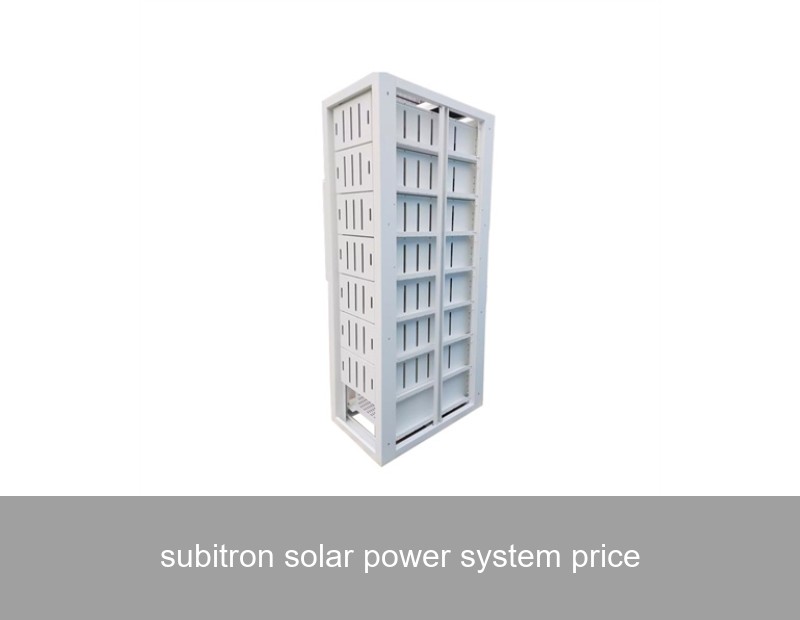
If you're exploring solar energy, you've likely encountered the term "Subitron" and are now faced with the big question: what factors influence the final Subitron solar power system price? It's a common starting point, but the conversation around cost is evolving. Today, it's less about the initial sticker shock and more about understanding the long-term value, performance, and intelligence you're buying. As energy prices remain volatile and sustainability goals become urgent, the right solar-plus-storage system isn't just an expense; it's a strategic asset. Let's demystify the pricing structure and explore what your investment truly secures for your home or business.
Table of Contents
The Real Breakdown: What You're Paying For
When you receive a quote for a Subitron solar power system, you're looking at a package that goes far beyond just panels on your roof. The total price typically integrates several core components:
- Solar Panels & Inverters: The hardware that captures and converts sunlight.
- Battery Energy Storage System (BESS): This is the heart of a modern system. It stores excess energy for use at night or during outages.
- Energy Management System (EMS): The "brain" that optimizes energy flow, deciding when to store, use, or even sell back to the grid.
- Installation & Professional Services: System design, permitting, and certified installation.
- Long-Term Service & Monitoring: Ongoing support and performance tracking.
According to the National Renewable Energy Laboratory (NREL), while solar panel costs have decreased significantly, the integration of advanced storage and smart technology represents a value-add that enhances ROI. Therefore, comparing systems on price alone is like comparing smartphones based only on battery size—you miss the critical features that define the user experience.
The Data: More Than Just Cost per Watt
The traditional metric of "cost per watt" is becoming outdated. For intelligent systems like Subitron, the focus should be on cost per kilowatt-hour of self-consumed energy. This measures how much of your own, cheap, clean energy you actually use, minimizing grid dependence. A slightly higher upfront investment in a superior storage and management system can dramatically lower this long-term metric, leading to greater savings.
Why Battery Storage is the Game-Changer in System Value
Let's address the elephant in the room: adding storage increases the initial Subitron solar power system price. But here's the perspective shift: it drastically increases the system's worth. Without storage, excess solar energy produced at midday is often exported to the grid at low rates, only for you to buy back expensive power in the evening—a phenomenon known as the "duck curve."

A high-performance battery, like those integrated into Subitron systems, flips this model. It allows you to capture that excess energy and use it on your own schedule. This is particularly crucial in markets like Europe and the U.S. with time-of-use rates and increasing grid instability. The battery isn't just a backup; it's a financial tool for arbitrage and a cornerstone of energy independence.
Case Study: A UK Business Navigating Price & Performance
Consider the real-world example of a medium-sized dairy farm in Somerset, UK. Facing unpredictable energy costs and a need for reliable refrigeration, they evaluated several solar-plus-storage solutions.
- Challenge: High daytime operational load, zero solar generation at night for milk cooling, and exposure to peak grid tariffs.
- Solution Installed: A 50kW solar array coupled with a 120kWh battery storage system featuring advanced energy management.
- Data & Outcome: Within the first year, the farm achieved 78% energy self-sufficiency. By intelligently dispatching stored solar power during peak price periods (4 pm-7 pm), they slashed their grid electricity costs by over 60%. The system also provided critical backup during two grid outages, preventing spoilage. The payback period, factoring in available incentives, was calculated at under 7 years—on a system with a 20+ year lifespan.
This case highlights that the defining metric wasn't the lowest bid, but the lowest levelized cost of energy delivered reliably. The intelligent storage component was pivotal to this result.
The Highjoule Advantage: Engineering Value Beyond the Price Tag
This is where Highjoule's expertise transforms the investment equation. As a global leader since 2005, we don't just supply components; we engineer integrated, intelligent power solutions. When you choose a system powered by Highjoule technology, the Subitron solar power system price incorporates distinct advantages:
- All-in-One Intelligence: Our systems feature seamless integration between solar, our proprietary battery storage units, and a smart EMS that learns and adapts to your consumption patterns.
- Robustness for Diverse Climates: Engineered for performance in both European and North American climates, with high cycle life and thermal stability.
- Scalability: Our modular design allows businesses and communities to start with a core system and expand storage capacity as needs grow, protecting your initial investment.
- Comprehensive Support: From initial site assessment and financial modeling to installation and 24/7 remote monitoring via our platform, we ensure your system delivers on its financial and operational promises.
We believe the true cost of a system is measured over its lifetime. A cheaper, less integrated solution may have a higher lifetime cost due to inefficiencies, shorter component lifespans, or missed savings opportunities. The U.S. Department of Energy emphasizes that integration is key to maximizing value, a principle at the core of our design philosophy.

How to Determine the Right System (and Investment) for You
So, how do you move forward? Shift the conversation from "What is the price?" to "What is the value I need?"
| Your Priority | Key Consideration | Impact on System Design & Value |
|---|---|---|
| Maximizing Bill Savings | Your local utility's rate structure (net metering, time-of-use). | Dictates battery size and EMS strategy to avoid peak rates. |
| Energy Resilience | Frequency of outages & critical loads you need to power. | Determines required battery capacity and backup power configuration. |
| Sustainability Goals | Target for carbon reduction or self-sufficiency. | Influences system sizing to cover a larger portion of your consumption. |
| Future-Proofing | Plans for EV charging or expanding operations. | Highlights the need for a scalable, modular system architecture. |
The most effective next step is to partner with a specialist who can model these variables for you. Highjoule's consultants analyze your past energy bills, site specifics, and goals to create a tailored performance and financial projection. This shows the expected payback period, lifetime savings, and ROI for a system sized and specified for your reality, not a one-size-fits-all quote.
Ready to see what your personalized path to energy independence looks like? What would a 70% reduction in your peak grid electricity costs do for your operational budget or household finances this year?
 Inquiry
 Online Chat