


Sun Store Solar for Sale: Your Guide to Buying Stored Sunshine
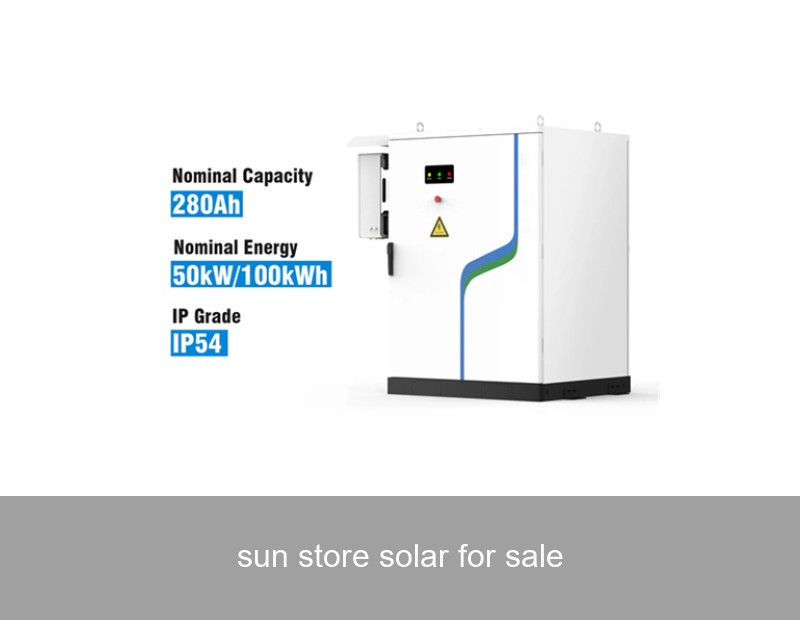
You've likely heard the buzz: solar panels are a smart investment. But what happens when the sun goes down, or on those cloudy days? That's where the game-changing concept of a "sun store solar for sale" comes in. Think of it not just as buying solar panels, but purchasing the ability to capture, store, and use your own solar energy on your own terms. It's the difference between having a solar generator that only works part-time and owning a personal, reliable power plant. For homeowners and businesses across Europe and the US, this isn't just an upgrade; it's a fundamental shift towards true energy autonomy and financial predictability.
The Energy Storage Imperative: More Than Just a Backup
The phenomenon is clear: renewable energy, particularly solar, is dominating new power installations. In 2023, solar accounted for over half of all new electricity-generating capacity added in the United States (SEIA, 2023). Europe has seen similar surges, driven by energy security concerns and climate goals. But this rapid growth presents a new challenge: intermittency. The grid was built for consistent, dispatchable power, not for peaks of sunshine and lulls at night.
This is where the data gets compelling. Without storage, a typical home solar system might send 30-50% of its generated electricity back to the grid, often at lower feed-in tariffs, only to buy expensive power in the evening. The logical step in this progression is clear: add a battery. A complete "sun store" system allows you to increase your self-consumption from 30-50% to 70-90% or more, fundamentally changing your relationship with the utility grid. It transforms solar from a partial solution into a comprehensive one.

Image: A modern home energy system combining solar generation and battery storage. Source: Unsplash
Case Study: A Berlin Bakery's Recipe for Energy Independence
Let's look at a real-world example. Bäckerei Schmidt, a medium-sized artisan bakery in Berlin, installed a 50 kW solar array in 2020. While it cut daytime costs, their high energy consumption for ovens and refrigeration before dawn and after sunset kept their bills significant. In 2022, they invested in a commercial-scale "sun store" – a 100 kWh battery energy storage system (BESS).
The results were transformative:
| Metric | Before Storage | After Storage Installation |
|---|---|---|
| Grid Energy Consumption | 65% of total need | 15% of total need |
| Self-Consumption of Solar | ~40% | ~92% |
| Monthly Energy Cost Savings | 35% (solar only) | 78% (solar + storage) |
| Backup Power for Cold Storage | None (risk of spoilage) | Full coverage through short grid outages |
The bakery now runs mostly on its own stored sunshine, protecting itself from volatile energy prices and ensuring its ovens keep running. This case exemplifies the move from passive generation to active, intelligent energy management.
Choosing the Right "Sun Store" System: Key Considerations
Not all battery storage is created equal. When evaluating a "sun store solar for sale" offering, look beyond just kilowatt-hours (kWh). Here’s what truly matters:
- Usable Capacity & Depth of Discharge (DoD): This is the actual energy you can use. A battery with a 10 kWh rating but only 9.5 kWh usable capacity and a 95% DoD is more honest and valuable than one with a 10 kWh rating but an 80% DoD.
- Power Rating (kW): How much power can it deliver at once? This determines if you can run multiple high-load appliances (like an AC, oven, and heat pump) simultaneously from the battery.
- Round-Trip Efficiency: High-quality systems, like those from Highjoule, achieve over 95%. This means for every 100 kWh you put in, you get >95 kWh back out, minimizing energy loss.
- Integration & Intelligence: The best systems are not dumb boxes. They feature advanced energy management systems (EMS) that learn your consumption patterns, integrate with time-of-use utility rates, and can even participate in grid services programs.
- Longevity & Warranty: Look for a warranty that guarantees both capacity (e.g., 70% after 10 years) and cycles. This is a long-term investment.
Highjoule's Intelligent "Sun Store" Solutions
At Highjoule, we've been pioneering advanced energy storage since 2005. We understand that a "sun store" is the intelligent brain of your energy ecosystem. Our products are designed to meet the precise needs of the European and American markets, where reliability, safety, and smart grid interaction are paramount.
For residential customers, our HomePower Stack series offers modular, scalable storage from 5 kWh to 30+ kWh. Its sleek design, UL/Certified safety standards, and integration with major solar inverters make it a top choice for homeowners seeking to maximize their solar investment. The accompanying app gives you real-time control and insights, putting your personal power plant in the palm of your hand.
For commercial and industrial (C&I) applications, our GridMax C&I solutions are in a league of their own. These containerized or modular systems, ranging from 100 kWh to multi-megawatt hours, do more than just backup power. They provide:
- Peak Shaving: Automatically discharge to avoid costly demand charges from the utility.
- Energy Arbitrage: Buy and store grid electricity when rates are low, use it when rates are high.
- Grid Services: In some markets, systems can provide frequency regulation, generating revenue for the owner.
Highjoule systems are built with lithium iron phosphate (LFP) battery chemistry, renowned for its safety, long cycle life, and stability—a non-negotiable for both home and business.

Image: A technician performing checks on a commercial battery storage system. Source: Unsplash
The Future of Energy is Stored Sunshine
The conversation is shifting. It's no longer just "how many panels can I fit on my roof?" but "how can I build a resilient, efficient, and cost-effective personal energy system?" The combination of solar PV and battery storage creates a synergy that is greater than the sum of its parts. With volatile energy prices and increasing grid instability in some regions, the value of a "sun store" extends far beyond simple payback calculations; it's about price security and operational resilience.
Governments are taking note. The U.S. Inflation Reduction Act (IRA) offers significant investment tax credits (ITC) for standalone storage, making a "sun store" an even more attractive financial proposition. Similar incentives exist across many European countries, recognizing storage's critical role in the energy transition (U.S. Department of Energy).
So, as you consider "sun store solar for sale," ask yourself this: Is your goal merely to generate green energy, or is it to truly own your power, control your costs, and build energy independence for decades to come? What would you power first if you had your own reliable reserve of sunshine, ready on demand?
 Inquiry
 Online Chat