


Unlocking Resilience and Savings: A Deep Dive into Suncity Energy Solutions
Have you ever watched your electricity bill climb with a sense of helplessness, or wondered if your business could withstand a grid outage without grinding to a halt? You're not alone. Across homes and businesses, a quiet revolution is taking place—a shift towards energy independence. At the heart of this movement are suncity energy solutions, integrated systems that combine solar generation with smart storage to create self-sustaining power hubs. But what does it truly take to move from simply having solar panels to achieving reliable, 24/7 clean energy? The answer lies not just in generation, but in intelligent storage and management.
Table of Contents
The Phenomenon: From Passive Consumer to Proactive Prosumer
For years, the model was simple: we drew power from a vast, centralized grid and paid for what we used. The rise of rooftop solar changed the game, allowing homeowners and businesses to become "prosumers"—both producing and consuming energy. However, this created a new challenge: the sun doesn't shine on demand. Excess energy produced at midday often gets sold back to the grid at low rates, while you're forced to buy back expensive power in the evening. This imbalance limits both savings and resilience. A genuine suncity energy solution solves this by making the sun's energy available on your schedule, transforming a one-way flow into a circular, controlled energy economy right on your property.

Image: A modern home energy system, combining solar generation with battery storage—the visual essence of a suncity energy solution.
The Data: Why Storage is the Non-Negotiable Piece
The numbers paint a compelling picture. According to the U.S. Department of Energy's Solar Futures Study, solar could provide up to 40% of the nation's electricity by 2035, but notes that "storage is critical to aligning solar generation with electricity demand." Let's break down the typical impact for a commercial entity:
| Scenario | Solar Only | Solar + Storage (Suncity Solution) |
|---|---|---|
| On-Site Consumption of Solar Generation | 30-50% | 70-90%+ |
| Grid Independence During Outage | None (shuts off for safety) | Hours to Full Days |
| Bill Savings Potential | Moderate (reduces daytime use) | Maximized (avoids peak tariffs, demand charges) |
This data underscores a vital point: without storage, a significant portion of your solar investment and generated clean energy is functionally wasted. The economic and operational logic for integrating storage is undeniable.
The Case Study: A German Manufacturing Plant's Transformation
Let's look at a real-world example. A mid-sized automotive parts manufacturer in Bavaria, Germany, faced volatile energy costs and stringent reliability requirements. Their existing 500 kW rooftop solar array covered only a fraction of their daytime load and did nothing for night shifts or grid instability.
In 2022, they implemented a comprehensive suncity energy solution by partnering with Highjoule. The project added a 600 kWh Highjoule H-Cube Commercial Battery Energy Storage System (BESS) alongside an upgrade to their energy management software. The results after one year were striking:
- Energy Self-Sufficiency: Increased from 25% to 82% annually.
- Cost Savings: Achieved €145,000 in annual savings by avoiding peak grid charges and optimizing self-consumption.
- Resilience: The system provided seamless backup power for critical assembly lines during two regional grid disturbances, preventing an estimated €80,000 in production downtime.
- Sustainability: Carbon footprint from grid electricity use reduced by over 70%.
This case, mirrored by many across Europe and North America, illustrates the transition from a cost center to a controlled, strategic asset. The Highjoule H-Cube system was key, with its modular design allowing for scalable capacity and its advanced thermal management ensuring safety and longevity in an industrial setting.
The Insight: The Core Components of a True Suncity Solution
So, what separates a basic solar installation from a robust suncity energy solution? It's the seamless integration of three intelligent layers:
- High-Efficiency Generation: This is the starting point—quality photovoltaic panels that maximize capture of solar irradiance.
- Advanced Storage: The heart of the solution. This isn't just about batteries; it's about a complete Battery Energy Storage System (BESS). For instance, Highjoule's residential EverHome and commercial H-Cube systems integrate lithium-ion battery packs, sophisticated power conversion systems (PCS), and built-in safety mechanisms. They are designed for thousands of cycles, ensuring the solution lasts for decades.
- Intelligent Energy Management (EMS): The brain. This software platform forecasts energy production and consumption, decides when to store or discharge energy, and can participate in grid services (where available). It's what turns hardware into a smart, money-saving asset.

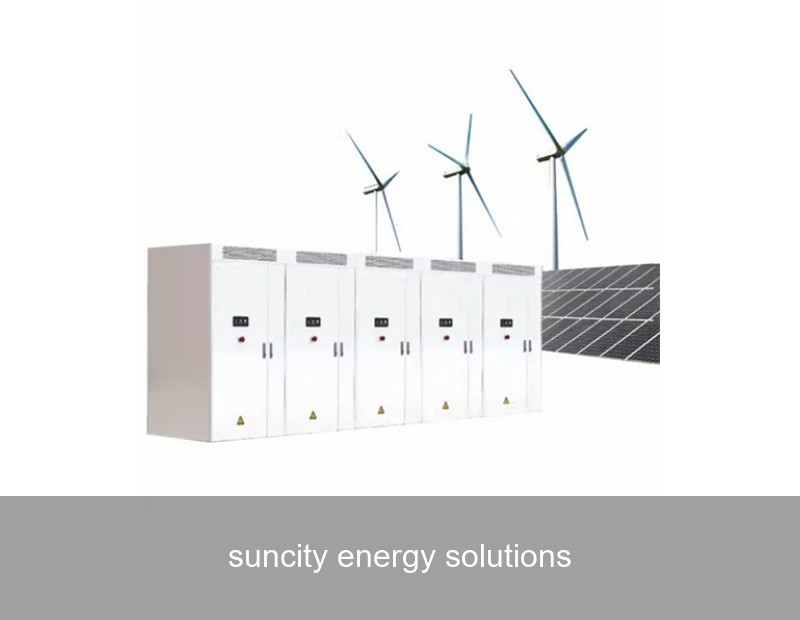
Image: The core of a modern suncity solution: a scalable, safe, and intelligent battery storage system.
Highjoule’s approach is to provide this integrated stack—from design and engineering to commissioning and long-term monitoring. Our systems are agnostic, meaning they can optimize performance for new or existing solar arrays, giving customers the freedom to build their suncity energy solution at their own pace.
Navigating Incentives and ROI
A major driver for adoption in our key markets is financial incentive. In the U.S., the Investment Tax Credit (ITC) now explicitly includes standalone storage, a game-changer for economics. In the EU, various national programs and the REPowerEU plan accelerate investment. A well-designed system typically shows a return on investment (ROI) in 5-8 years, after which it delivers nearly free electricity for the remainder of its 20+ year lifespan. The key is a detailed audit and financial modeling, which providers like Highjoule include in our initial consultancy.
The Future: What Does Energy Independence Look Like for You?
The journey toward becoming your own suncity is unique. For a suburban homeowner, it might mean powering an EV and keeping the lights on during storms. For a farm, it could be running irrigation pumps off-grid. For a hospital or data center, it's about absolute, unwavering power quality.
The technology is proven, the economics are solid, and the environmental imperative is clear. The question is no longer "if" but "how" and "when." What is the single biggest energy challenge—cost volatility, reliability concerns, or sustainability goals—that your home or business faces today, and what would solving it enable you to do tomorrow?
 Inquiry
 Online Chat