


Beyond the Grid: How Lithium Battery Technology is Powering Lebanon's Energy Future
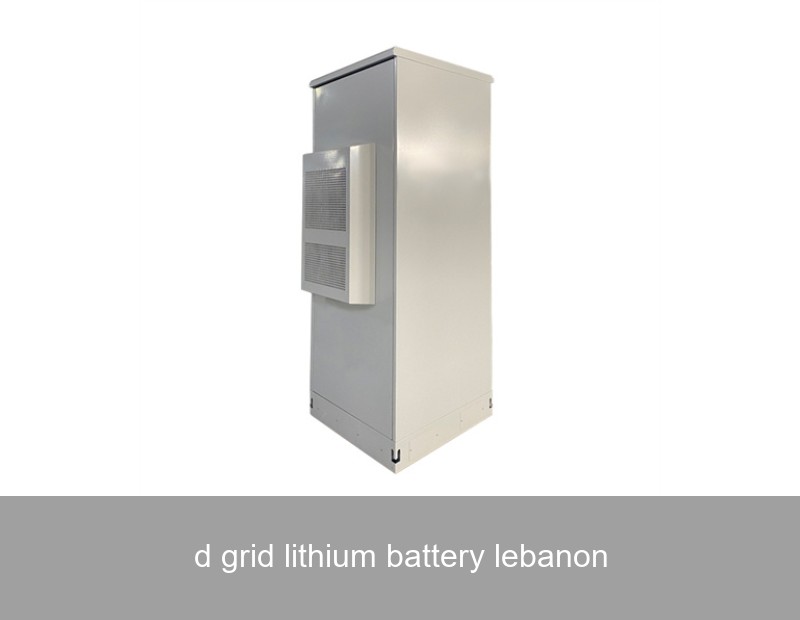
For years, Lebanon has faced a profound energy crisis. Daily power cuts, soaring generator costs, and an unstable national grid have become a wearying reality for homes and businesses alike. In this challenging landscape, a quiet revolution is taking hold. An increasing number of Lebanese are turning to a powerful, modern solution: the d grid lithium battery. This isn't just about backup power; it's about declaring energy independence and building a resilient, cost-effective electricity supply from the ground up. For a nation striving for stability, distributed energy storage systems, particularly advanced lithium-ion solutions, are becoming the cornerstone of a new, decentralized power paradigm.
Table of Contents
- The Lebanese Context: A Grid in Distress
- Why Lithium? The Technical Advantage for Off-Grid and Hybrid Systems
- Case Study: A Beirut Boutique Hotel's Journey to Energy Independence
- Designing Your d Grid Lithium Battery System: Key Considerations
- Highjoule's Role: Delivering Intelligent Storage for Lebanon's Unique Needs
- The Future Outlook: Microgrids and Community Resilience
The Lebanese Context: A Grid in Distress
To understand the surge in demand for d grid lithium battery solutions in Lebanon, one must first grasp the scale of the grid's shortcomings. According to the World Bank, in 2022, state-provided electricity was available for only a few hours per day on average, forcing over 80% of the population to rely on expensive and polluting private diesel generators. This patchwork system places a massive financial burden on families and businesses, with some spending up to 30% of their monthly income on electricity. The environmental and health toll of widespread diesel use is equally severe. This chronic instability has moved the conversation from simply seeking "backup" to building a primary power source—a personal or commercial microgrid that can operate independently of the national infrastructure.
Why Lithium? The Technical Advantage for Off-Grid and Hybrid Systems
When reliability is non-negotiable, the choice of battery chemistry is critical. While traditional lead-acid batteries have been used for decades, lithium-ion technology, especially Lithium Iron Phosphate (LFP), offers transformative benefits for d grid lithium battery applications in Lebanon:
- Longer Lifespan & Durability: Quality LFP batteries can deliver 6,000+ charge cycles while retaining most of their capacity, lasting 3-4 times longer than lead-acid under similar conditions. This is crucial in a setting where the system may cycle daily.
- Higher Depth of Discharge (DoD): You can safely use 90% or more of a lithium battery's stored energy without damaging it, compared to roughly 50% for lead-acid. This means more usable power from a physically smaller unit.
- Faster Charging: They can absorb energy from solar panels or generators much more quickly, maximizing the use of available generation windows during short grid-on or sunny periods.
- Reduced Maintenance & Space: Lithium batteries are sealed and require no watering or regular maintenance. Their high energy density means a system with substantial storage capacity can fit in a modest room or enclosure.
For a business in Beirut or a home in the mountains, these advantages translate directly into lower lifetime costs, greater reliability, and a smaller physical footprint—key factors in dense urban and varied rural environments.
Case Study: A Beirut Boutique Hotel's Journey to Energy Independence
Let's look at a real-world application. A 40-room boutique hotel in central Beirut faced monthly electricity bills exceeding $15,000, with over 80% of that going to diesel generator operators amidst 12-16 hour daily grid outages. The noise, fumes, and cost were unsustainable.
Their solution was a hybrid solar-plus-storage d grid lithium battery system:
- Installation: A 120 kW rooftop solar array coupled with a 240 kWh lithium-ion (LFP) battery storage unit and intelligent energy management system.
- Operation: During the day, solar powers the hotel and charges the batteries. As the sun sets or during grid outages, the stored battery energy seamlessly takes over, minimizing generator use to only peak demand periods or prolonged cloudy days.
- Results (18-month data): Diesel generator runtime reduced by 94%. Annual energy costs slashed by 68%. The system provided a return on investment (ROI) in under 4 years. Importantly, it ensured 24/7 power for guests, enhanced the hotel's green credentials, and insulated it from fuel price volatility.
This case exemplifies the shift from thinking about batteries as an emergency accessory to viewing them as the central hub of a modern, self-sufficient energy system.

Image Source: Unsplash - Representative image of commercial solar installation.
Designing Your d Grid Lithium Battery System: Key Considerations
Implementing a successful off-grid or hybrid system is more than just buying batteries. It requires careful design and integration. Here are the critical components:
| Component | Role in the System | Key Consideration for Lebanon |
|---|---|---|
| Lithium Battery Bank | The core energy reservoir. Determines how long you can power your loads without sun or grid. | Size for 1-2 days of autonomy. Prioritize LFP chemistry for safety and cycle life. |
| Solar PV Array | The primary fuel source. Converts sunlight into electricity to charge the batteries and power loads. | Maximize rooftop/land area to offset as much diesel/gen-set use as possible. |
| Hybrid Inverter/Charger | The system's brain and muscle. Manages energy flow between solar, batteries, grid/generator, and loads. | Must have robust generator support and grid-charging controls to adapt to Lebanon's unstable grid. |
| Energy Management System (EMS) | Intelligent software that optimizes for cost, efficiency, and battery health. | Critical for prioritizing essential loads and scheduling generator use only when absolutely necessary. |
Highjoule's Role: Delivering Intelligent Storage for Lebanon's Unique Needs
At Highjoule, we've been at the forefront of advanced energy storage for nearly two decades. We understand that a d grid lithium battery system in Lebanon isn't a standard, off-the-shelf product—it's a mission-critical infrastructure project. Our approach is to provide not just hardware, but integrated, intelligent solutions.
For the Lebanese market, we offer our H-Series Modular Lithium Battery Systems, built with stable and safe LFP chemistry. Their modular design allows a business or community to start with a foundational storage capacity and expand as needs grow. Paired with our GridShield™ Hybrid Inverters and EnergyOS™ monitoring platform, the system provides:
- Seamless Transitions: Automatic, sub-20ms switchover between power sources, ensuring no interruption to sensitive equipment.
- Generator Optimization: Smart controls only start a backup generator when battery reserves are critically low, slashing fuel consumption and maintenance.
- Remote Monitoring & Control: Owners and our technical team can monitor performance, adjust settings, and diagnose issues remotely—a vital feature for maintaining systems across different regions.
Our engineers work with local partners to conduct detailed site assessments, model energy consumption, and design a system that meets both current needs and future aspirations for energy independence. Learn more about our technology and global projects on our Technology page.

Image Source: Unsplash - Representative image of a battery energy storage system.
The Future Outlook: Microgrids and Community Resilience
The potential of d grid lithium battery technology in Lebanon extends beyond individual homes and businesses. We are seeing growing interest in community-scale microgrids—where a neighborhood, village, or commercial complex shares a centralized solar and storage resource. This model can be more cost-effective and create a resilient energy web that supports local clinics, schools, and water pumps. A report by the International Energy Agency highlights the pivotal role of distributed storage in enhancing grid resilience worldwide, a principle directly applicable to Lebanon's reconstruction efforts.
Furthermore, as the national grid undergoes necessary reforms and potential integration of renewable energy, these distributed storage assets could, in the future, provide valuable grid services. Imagine a network of thousands of behind-the-meter battery systems helping to stabilize frequency during peak demand—turning a national challenge into a collective strength.
The journey toward a stable power supply in Lebanon is complex, but the technology to build resilience from the ground up is here and proven. The question is no longer if lithium battery storage is a viable solution, but how to design and scale it effectively for your specific needs. What would energy independence look like for your home, business, or community, and what's the first step you could take to map it out?
 Inquiry
 Online Chat