


Super Lithium Ion Battery: The Engine of Our Renewable Energy Future
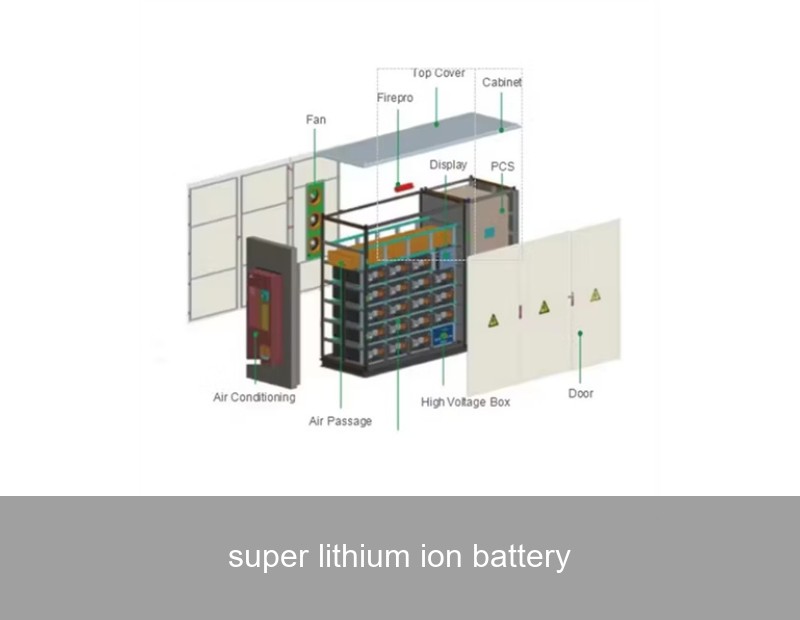
Table of Contents
If you're following the clean energy transition, you've undoubtedly heard the buzz around the super lithium ion battery. It's more than just industry jargon; it represents a pivotal leap in how we store and use electricity. From smoothing out solar power for your home to powering entire industrial facilities, these advanced energy storage systems are becoming the silent, intelligent backbone of a sustainable grid. But what exactly elevates a standard lithium-ion battery to "super" status? Let's unpack the technology that's quietly revolutionizing our power systems.
The Phenomenon: Why We're Talking About Super Batteries
Here's a common scene: a commercial building with a vast rooftop solar array. On a bright, sunny afternoon, it's producing more power than it can use, but as the sun sets and operational demand peaks, it scrambles to draw expensive power from the grid. This mismatch between renewable energy generation and consumption is the fundamental challenge of our green ambitions. Enter the super lithium ion battery. These aren't just bigger batteries; they are smarter, more resilient, and deeply integrated systems designed to solve this exact problem. They enable true energy independence, allowing businesses and homeowners to capture every kilowatt-hour their solar panels produce and use it precisely when needed.

Image Source: Unsplash - A modern energy storage system integrated with renewable generation.
The Data: What Makes a Battery "Super"?
So, what technical metrics separate a super battery from its conventional cousins? It's a combination of factors that work in concert. Let's break it down:
| Feature | Standard Lithium-Ion | Super Lithium Ion Battery | Impact for User |
|---|---|---|---|
| Energy Density | ~200-250 Wh/kg | ~300-350+ Wh/kg | More storage in less space, crucial for space-constrained sites. |
| Cycle Life | 3,000 - 5,000 cycles | 8,000 - 12,000+ cycles | Longer operational life, lower total cost of ownership. |
| Charge/Discharge Rate (C-rate) | Typically 0.5C - 1C | 2C - 4C sustained capability | Faster response to demand spikes, effective grid services. |
| Thermal Management | Passive or basic active cooling | Advanced liquid cooling & AI-driven thermal control | Enhanced safety, consistent performance in extreme climates. |
| System Intelligence | Basic BMS (Battery Management System) | AI-powered EMS (Energy Management System) | Predictive optimization, automated energy trading, peak shaving. |
The magic isn't just in a single superior cell, but in how thousands of them are orchestrated. This is where companies with deep system integration expertise, like Highjoule, create value. Since 2005, Highjoule has evolved from a battery innovator to a global provider of complete, intelligent storage solutions. Our HPS (Highjoule PowerStack) series exemplifies the super lithium ion battery concept, combining top-tier NMC or LFP cells with proprietary liquid cooling and our JouleMind AI platform. This integration ensures every cycle is optimized for longevity, safety, and maximum financial return, whether for a residential setup or a massive industrial complex.
The Case Study: A German Factory's Transformation
Let's move from theory to a tangible example. A mid-sized automotive parts manufacturer in Bavaria, Germany, faced two critical issues: skyrocketing energy costs due to volatile market prices and a corporate mandate to reduce its carbon footprint by 40% within five years. Their existing 1 MW rooftop solar system was covering only 30% of their daytime load, and excess noon-time generation was being sold to the grid at low feed-in tariffs.
In 2022, they partnered with Highjoule to implement a turnkey super lithium ion battery solution. The project included:
- A 2 MWh HPS-2000 containerized storage system.
- Deep integration with their existing solar inverters and building management system.
- Configuration of the JouleMind AI for peak shaving, solar self-consumption maximization, and participation in the German primary control reserve (PCR) market.
The results after one year were compelling:
- Energy Self-Sufficiency: Increased from 30% to 85% on average sunny days.
- Cost Savings: Achieved a 68% reduction in peak demand charges and generated €120,000 in ancillary service revenue from the grid.
- ROI: Projected payback period reduced from 7 to 4.5 years.
- Sustainability: Scope 2 emissions (purchased electricity) were cut by 74%.
This case highlights that a super lithium ion battery system is a financial asset and a strategic tool for sustainability and resilience.

Image Source: Unsplash - Engineer monitoring a large-scale BESS control system.
The Insight: Beyond the Cell - The System Matters
The Bavarian case study underscores a crucial insight: the label "super lithium ion battery" applies to the entire ecosystem, not just the electrochemical cells. You can have the best cells in the world, but with poor thermal management, they will degrade rapidly. You can have perfect cooling, but without intelligent software, you'll miss revenue opportunities.
Highjoule's philosophy is built on this holistic view. Our services encompass:
- Custom Feasibility & Design: Analyzing your load profiles, energy tariffs, and goals to size the perfect system.
- Integrated Hardware: Delivering containerized, skid-mounted, or indoor rack solutions with built-in safety and grid compliance.
- JouleMind AI Software: The brain of the operation, continuously learning and optimizing for economics and battery health.
- Ongoing Performance Management: Remote monitoring, proactive maintenance alerts, and software updates to ensure your asset performs for decades.
This approach is vital for markets like the US and Europe, where grid services markets are complex and dynamic. A system must be able to seamlessly switch between maximizing self-consumption, providing backup power during an outage, and selling frequency regulation services to the grid operator—all within the same day.
The Future Landscape of Energy Storage
The trajectory is clear: storage will move from an optional add-on to the default partner for any distributed energy resource. We are already seeing the rise of virtual power plants (VPPs), where thousands of decentralized super lithium ion battery systems are aggregated to act as a single, dispatchable power plant. This democratizes grid stability and creates new revenue streams for prosumers.
Furthermore, chemistry innovations like silicon-anode or solid-state technologies promise even higher energy densities on the horizon. However, their success will equally depend on the system-level engineering to harness their potential safely and reliably—an area where established system integrators like Highjoule continue to invest heavily in R&D.
Your Energy, Your Move
The conversation about energy is shifting from mere consumption to active management. The super lithium ion battery is the tool that enables this shift. Whether you're a homeowner tired of being at the mercy of utility rate hikes, a factory manager tasked with cutting costs and carbon, or a developer building the resilient microgrids of tomorrow, the question is no longer if storage is needed, but how to implement it most effectively.
What specific energy challenge—be it unpredictable demand charges, renewable curtailment, or the need for backup power—is currently constraining your operations or budget, and how might an intelligent storage system transform that constraint into an opportunity?
 Inquiry
 Online Chat