


Supercapacitor Graphene Battery: The Powerhouse for a Renewable Energy Future
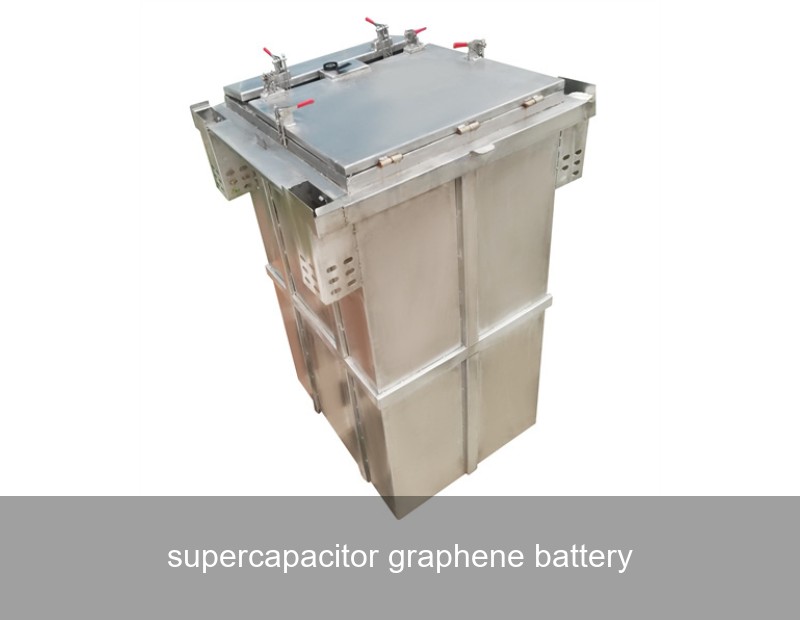
Imagine a world where your electric vehicle charges in minutes, your home solar system stores excess power for weeks without loss, and power grids handle peak demand seamlessly. This isn't science fiction; it's the emerging reality powered by a revolutionary technology: the supercapacitor graphene battery. This hybrid energy storage solution is poised to overcome the limitations of traditional lithium-ion batteries and conventional capacitors, offering a unique blend of high power, rapid charging, and long cycle life. For businesses and homeowners navigating the energy transition, understanding this technology is key to unlocking unprecedented efficiency and resilience. As a leader in advanced energy storage, Highjoule is at the forefront of integrating such cutting-edge materials into practical, reliable solutions for a sustainable world.
Table of Contents
- The Power Dilemma: Batteries vs. Capacitors
- Graphene: The Game-Changer in Energy Storage
- How a Supercapacitor Graphene Battery Works
- Real-World Applications and a Case Study
- Highjoule's Role in Advanced Storage Solutions
- The Future and Its Challenges
The Power Dilemma: Batteries vs. Capacitors
For decades, energy storage has been a tale of two devices. On one side, we have batteries—excellent at storing large amounts of energy (high energy density) but relatively slow to charge and discharge, and they degrade over time. On the other, supercapacitors can deliver and absorb massive bursts of power almost instantly (high power density) and last for millions of cycles, but they can't store much energy for long durations. It's like comparing a marathon runner (battery) to a sprinter (capacitor). The renewable energy sector desperately needs an athlete who excels at both.
This gap creates real problems. An electric bus can't recharge during a 5-minute passenger stop with standard batteries. A wind farm can't smooth out a sudden gust without a storage system that reacts in milliseconds. This is where the hybrid concept of a supercapacitor graphene battery shines, merging the best of both worlds.
Graphene: The Game-Changer in Energy Storage
Enter graphene, a material that seems ripped from a superhero comic. It's a single layer of carbon atoms arranged in a honeycomb lattice, and it holds remarkable properties: it's incredibly strong, highly conductive, and has a vast surface area. When used in supercapacitors, graphene's surface area allows for more charge to be stored electrostatically. When integrated into battery electrodes, its conductivity enhances charge transfer, speeding up reactions.
Think of graphene as the ultimate highway system for electrical ions. In a traditional battery, ions navigate crowded, winding roads, causing congestion (heat) and road damage (degradation). In a graphene-enhanced system, ions zip along multi-layered, ultra-smooth expressways. This translates directly to faster charging, higher power output, and improved longevity. Research institutions like the University of Manchester's National Graphene Institute continue to pioneer its applications.
Image: A conceptual representation of graphene's structure. Source: Unsplash (Scientific imagery)
How a Supercapacitor Graphene Battery Works: A Synergistic Design
A true supercapacitor graphene battery isn't just a mix of parts; it's a cleverly engineered system. Typically, it combines a graphene-based supercapacitor electrode with a battery-type electrode (like lithium-ion) in a single cell or intelligently couples two separate devices in one system.
- The Supercapacitor Arm (Graphene-based): Handles rapid bursts. During regenerative braking in an EV, it captures energy in seconds. During a grid frequency dip, it injects power instantly.
- The Battery Arm: Provides the steady, long-term energy base. It supplies power for cruising in an EV or covers the night-time load for a solar home.
The management system is the brain, seamlessly directing energy to and from the right component based on demand. This synergy reduces stress on the battery, dramatically extending its life while ensuring the system never lacks for instantaneous power.
Real-World Applications and a Case Study
The potential applications are vast:
- Transportation: Ultra-fast charging for EVs, buses, and trams; capturing regenerative braking energy.
- Renewable Integration: Smoothing the intermittent output from solar and wind farms.
- Microgrids & Industry: Providing backup power for critical facilities and stabilizing voltage for heavy machinery.
Case Study: Port of Rotterdam - Grid Stability and Crane Efficiency
Let's look at a concrete example from Europe. The Port of Rotterdam, one of the world's busiest, faces a dual challenge: its massive container cranes (ship-to-shore and RTGs) generate huge power spikes and regenerative energy during lowering that can destabilize the local grid, and they need reliable backup power. A pilot project implemented a hybrid energy storage system combining lithium-ion batteries with graphene-enhanced supercapacitors.
The results were telling:
| Metric | Performance |
|---|---|
| Peak Power Shaving | Reduced grid demand spikes by over 30% |
| Regenerative Energy Capture | Over 95% of braking energy recovered (vs. ~70% with batteries alone) |
| Response Time | Supercapacitor arm responded in under 100 milliseconds |
| Battery Cycle Life | Projected lifespan increased by reducing high-current stress on batteries |
This synergy allowed the port to lower its power capacity fees, reduce diesel generator use, and move toward its sustainability goals. It's a prime example of how hybrid systems solve real economic and technical problems. You can explore more on microgrid applications via the National Renewable Energy Laboratory (NREL).

Image: Container cranes at a modern port. Source: Unsplash
Highjoule's Role in Advanced Storage Solutions
At Highjoule, we monitor and evaluate emerging technologies like graphene-based storage not as isolated gadgets, but as potential components within our holistic energy management architecture. Our strength lies in integrating the right storage technology for the specific application. While pure supercapacitor graphene batteries are still scaling commercially, the principles of hybridized storage are already in our DNA.
For instance, our Highjoule H-Series Commercial & Industrial (C&I) systems are designed with modularity in mind. They can be configured to pair high-power and high-energy storage units, managed by our proprietary Adaptive Grid Intelligence (AGI) software. This platform intelligently dispatches power, deciding in real-time whether a load demand is best served by the rapid-response component (akin to a supercapacitor's role) or the long-duration battery bank. For a factory with heavy machinery or a data center needing flawless backup, this means optimal performance, reduced wear on core batteries, and significant cost savings.
Our approach ensures that when graphene-based technology reaches full commercial maturity, it can be seamlessly incorporated into our solutions, giving our clients in Europe and North America a future-proof pathway to even greater efficiency.
The Future and Its Challenges
The journey ahead for supercapacitor graphene batteries is exciting but requires navigation. Scaling up the production of high-quality, cost-effective graphene is an ongoing challenge. Furthermore, perfecting the cell integration and manufacturing processes at a competitive price point is crucial for widespread adoption. However, the trajectory is positive, with continuous research driving down costs and improving performance.
The real question isn't *if* these hybrids will become mainstream, but *when* and *in what form*. They represent a fundamental shift from seeking a single "perfect" battery to engineering intelligent, composite storage systems that match the complex demands of our modern grid and transport systems.
Your Energy Ecosystem
Is your business or community project facing challenges with peak demand charges, integrating renewables, or needing millisecond-response backup power? What aspect of your current energy storage setup feels like the weakest link—is it speed, capacity, or longevity?
 Inquiry
 Online Chat