


Unlocking Greater Energy Independence: Your Guide to Choosing a Supplier of 500W Panel
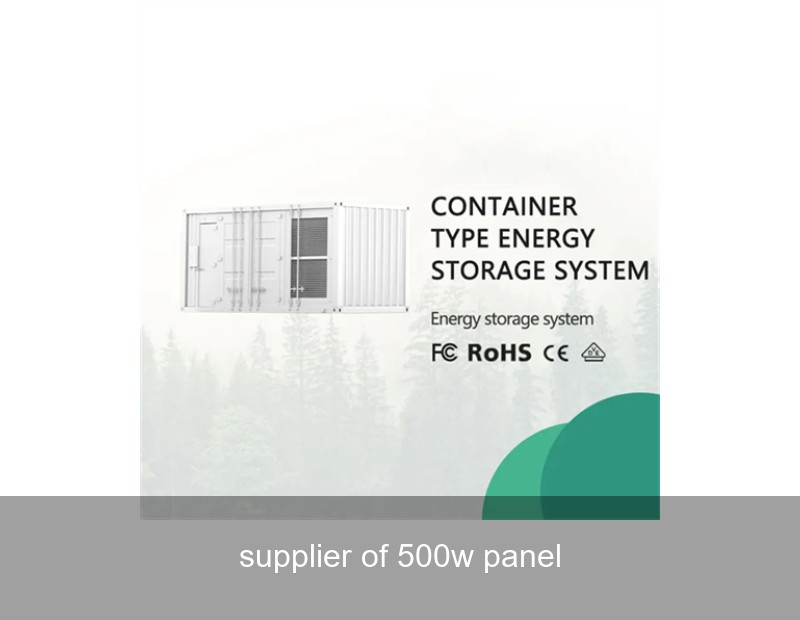
If you're exploring solar options for your home or business, you've likely encountered a new class of high-performance products: the 500-watt solar panel. It's more than just a bigger number; it represents a significant leap in photovoltaic technology. But what does it truly mean for your energy goals, and crucially, how do you select the right supplier of 500W panel technology who can deliver on its promise? As a leader in advanced energy storage and solar integration, Highjoule is here to demystify this powerful technology and explain why the partnership you choose is as critical as the panels themselves.
Why the 500W Panel is a Game-Changer
Let's start with a simple analogy. Imagine you need to cover your roof with tiles. You could use many small tiles, which requires more individual pieces, more fasteners, and more labor. Or, you could use larger, more efficient tiles that cover the same area with fewer components. The 500W panel operates on a similar principle. By packing more high-efficiency solar cells (often using advanced N-type TOPCon or heterojunction technology) into a standardized frame, these panels generate more electricity per square meter.
The primary benefit? Space and cost efficiency. To achieve a desired system size—say, a 10kW array—you need significantly fewer 500W panels than you would with conventional 400W models. This translates to:
- Reduced Balance of System (BOS) costs: Fewer racking components, fewer electrical connections, and less installation labor.
- Optimized use of limited space: Perfect for commercial roofs or residential properties where unshaded area is a premium.
- Lower system complexity: A simpler layout with fewer points of potential failure.

Image Source: Unsplash - Representative image of modern solar panels.
The Data Behind the Power: Efficiency & ROI
Moving from phenomenon to hard data, the value proposition of 500W panels becomes crystal clear. According to the National Renewable Energy Laboratory (NREL), the average efficiency of commercial solar panels has steadily climbed, with premium models now consistently exceeding 21%. The latest 500W+ panels often push this to 22-23%.
Let's break this down with a comparative table for a typical commercial installation:
| System Parameter | Using 400W Panels | Using 500W Panels (Highjoule Grade) |
|---|---|---|
| Target System Size | 100 kW | 100 kW |
| Panels Required | 250 | 200 |
| Estimated Racking/Mounting Cost | $18,000 | $14,500 |
| Estimated Installation Labor Time | 180 hours | 145 hours |
| Annual Energy Production (Avg. EU/US) | ~125,000 kWh | ~127,500 kWh (higher due to better low-light performance) |
As you can see, the upfront savings on hardware and labor are substantial. But the real magic happens over time. The higher energy yield, coupled with reduced maintenance needs, accelerates your return on investment and boosts your long-term energy savings.
A Real-World Case Study: From Challenge to Solution
Data is compelling, but real-world application is convincing. Consider a recent project we completed for a medium-sized dairy farm in Bavaria, Germany. The farmer, Herr Schneider, had two clear objectives: maximize energy generation on his large but partially shaded barn roof to power his cooling systems, and reduce his crippling grid dependency.
The Challenge: The usable roof area was limited by skylights and ventilation units. A standard panel system would not have met his energy needs.
The Highjoule Solution: We designed a system using our integrated high-efficiency 500W panels. Their higher power density allowed us to fit a 75kW system into the constrained space. Crucially, we paired it with a Highjoule HI-Stack Commercial Battery System and our intelligent energy management platform.
The Result:
- Energy Independence: The system now meets 85% of the farm's annual electricity demand.
- Peak Shaving: The battery stores excess solar energy from the high-output panels, releasing it during high-cost evening periods, saving an estimated €8,200 annually on energy bills.
- Reliability: During a recent grid outage, the battery backup kept the critical milk cooling systems online, preventing spoilage and thousands of euros in losses.
This case underscores that choosing a supplier of 500W panel systems isn't just about buying hardware; it's about finding a partner who understands holistic energy solutions. The IEA highlights that system integration is key to maximizing renewable value, a principle we build into every Highjoule project.
The Highjoule 500W Solution: More Than Just a Panel
At Highjoule, we don't just source and supply panels; we engineer complete, optimized energy ecosystems. When you partner with us for your 500W panel needs, you're accessing a synchronized suite of technologies:
- Curated Panel Portfolio: We select only tier-one, high-efficiency 500W+ panels with proven degradation rates and robust warranties, ensuring decades of reliable performance.
- Intelligent Storage Synergy: Our battery systems, like the HI-Stack for commercial use or the HI-Home series for residences, are specifically designed to handle the high charging currents from large-format panels efficiently and safely.
- Smart Energy Management: The Highjoule Hub software acts as the brain, dynamically directing solar energy where it's needed most—to your appliances, to your battery, or back to the grid—maximizing self-consumption and financial return.

Image Source: Unsplash - Representative image of a home energy system.
This integrated approach is what sets a true solution provider apart from a simple equipment vendor. We ensure every component, from the supplier of 500W panel to the inverter and battery, communicates flawlessly for peak system health and output.
The Future of Solar: What High-Power Panels Mean for You
The trend towards higher-wattage panels is irreversible, driven by relentless innovation. For you, the energy consumer or business owner, this is unequivocally good news. It means more power, more savings, and a faster path to sustainability from the same footprint. The barrier is no longer technology, but knowledge and implementation.
So, as you evaluate potential partners, ask them not just for a quote on 500W panels, but for a detailed proposal on how those panels will integrate with your unique energy profile, your consumption patterns, and your long-term resilience goals. Do they offer smart storage to capture that extra power? Do they provide monitoring to guarantee performance? In short, are they building you a system, or just selling you parts?
What specific energy challenge on your property—be it a space constraint, a demand charge issue, or a desire for absolute backup power—could a strategically designed high-power solar and storage system solve for you today?
 Inquiry
 Online Chat