


Choosing the Right Supplier of Battery Manufacturing for Your Energy Storage Project
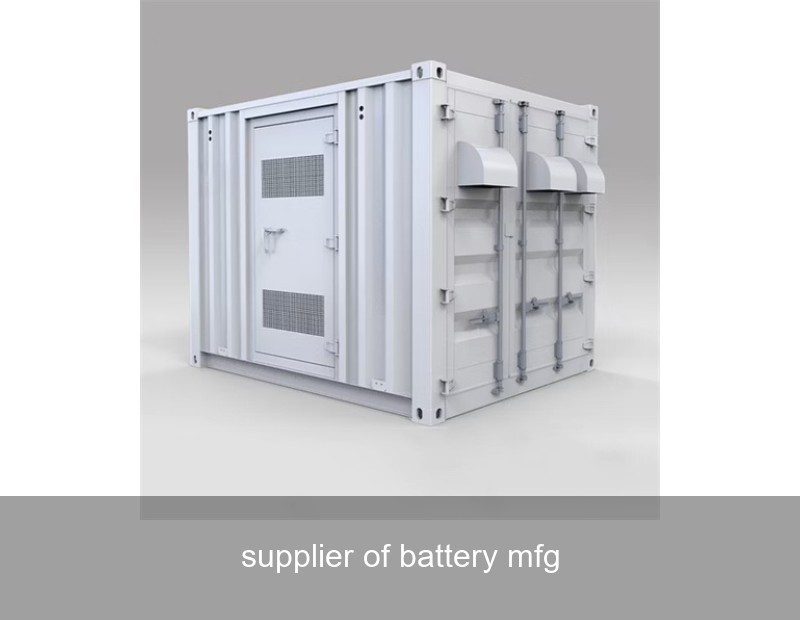
You're looking to build a solar-plus-storage system for your business or community. You've crunched the numbers, the ROI looks promising, and you're ready to move forward. But then comes a critical, make-or-break decision: selecting your supplier of battery manufacturing. This isn't just about buying a component; it's about choosing a long-term partner for your energy resilience. The market is flooded with options, from low-cost commodity cells to integrated, intelligent systems. The wrong choice can lead to safety risks, underperformance, and a stranded asset. So, how do you navigate this complex landscape and find a partner that delivers not just a battery, but peace of mind?
Table of Contents
- The Core Problem: More Than Just a Commodity
- Key Differentiators in a Top-Tier Supplier
- Case Study: The German Industrial Park
- Beyond the Cell: The System Integration Imperative
- Questions to Ask Your Potential Supplier
The Core Problem: More Than Just a Commodity
Many project developers make the initial mistake of sourcing batteries like they would source steel or concrete—prioritizing upfront cost per kilowatt-hour (kWh) above all else. This commodity mindset overlooks the fundamental truth: a battery energy storage system (BESS) is a dynamic, electro-chemical asset with a brain. Its performance, safety, and lifespan are dictated by a complex interplay of cell chemistry, thermal management, power conversion, and, crucially, the software that governs it all.
Consider this data point: a 2023 study by National Renewable Energy Laboratory (NREL) highlighted that the levelized cost of storage (LCOS) is influenced more by cycle life, round-trip efficiency, and degradation rates than by bare cell cost. A cheaper battery that degrades 30% faster can become far more expensive over a 10-year period.

This is the phenomenon we see too often: a focus on the sticker price obscures the total cost of ownership. The real question shifts from "What's the cheapest battery?" to "Which supplier of battery manufacturing provides the most value and reliability over the entire lifecycle of my project?"
Key Differentiators in a Top-Tier Supplier
So, what separates a true partner from a simple vendor? Look for these non-negotiable pillars:
- Vertical Integration & Cell Technology Control: The best suppliers have deep expertise in, and often control over, the core cell chemistry and manufacturing. This allows for rigorous quality control, tailored cell design for specific applications (like high-cycle frequency vs. long-duration storage), and direct accountability.
- Proven Safety Architecture: Safety isn't a feature; it's the foundation. Inquire about multi-layered protection systems—from cell-level fuses and robust battery management system (BMS) algorithms to advanced thermal runaway detection and suppression at the rack or container level.
- Advanced, Adaptive Software: The hardware stores energy; the software unlocks its value. A sophisticated energy management system (EMS) should enable smart cycling, grid services participation, predictive maintenance, and seamless integration with renewable sources.
- Performance Warranty & Bankability: A strong, transparent warranty backed by real-world performance data is crucial. It's a sign of confidence in the product. Furthermore, the supplier's reputation affects the "bankability" of your entire project, influencing financing terms and insurance costs.
Case Study: The German Industrial Park
Let's ground this in reality with a project from our own portfolio at Highjoule. A large industrial park in North Rhine-Westphalia, Germany, faced volatile energy costs and grid capacity constraints. Their goal was to maximize consumption of their on-site solar PV and provide backup power for critical processes.
The Challenge: They needed a system that could handle 400+ full cycles per year, respond to intra-day price signals, and guarantee 99% availability. Several suppliers of battery manufacturing offered low-cost containerized solutions, but their performance warranties were vague on degradation under such intensive use.
The Highjoule Solution: We deployed a 2.4 MWh Highjoule H-IQ Commercial system. Key to our proposal was our CellTrust™ technology, which uses proprietary algorithms in the BMS to balance and condition cells individually, reducing stress and uneven aging. Our performance guarantee explicitly covered the high-cycle regime.
The Data-Driven Outcome (18 Months Post-Installation):
| Metric | Result | Impact |
|---|---|---|
| Actual Cycle Efficiency | 94.5% | Higher yield from solar generation |
| Capacity Retention | 98.2% of original | Exceeding warranty trajectory, preserving asset value |
| Grid Cost Reduction | 34% | Direct bottom-line savings |
| FTR Participation Revenue | €42,000 annually | Added income stream via grid balancing |
This case illustrates that the right supplier of battery manufacturing delivers measurable, long-term economic advantages, turning a capital expense into a strategic investment.
Beyond the Cell: The System Integration Imperative
Even the world's best cells can fail in a poorly designed system. Integration is where many projects stumble. The inverter must communicate flawlessly with the BMS. The cooling system must maintain optimal temperature across all cells, not just an average. The enclosure must protect against environmental hazards.
A truly capable supplier of battery manufacturing takes full system responsibility. They design, test, and commission the entire power block—battery racks, PCS, HVAC, fire safety, and controls—as a unified, optimized entity. This single-point accountability eliminates finger-pointing between component vendors and ensures system-level performance guarantees are met.

The Highjoule Approach: Intelligence from Cell to Cloud
At Highjoule, founded in 2005, we've built our reputation on this philosophy of integrated intelligence. We don't just supply batteries; we provide certified, turnkey energy storage solutions for commercial, industrial, residential, and microgrid applications. Our role as a supplier of battery manufacturing is defined by three layers of intelligence:
- Hardware Intelligence: Our systems feature industry-leading LiFePO4 cells, selected for safety and longevity, managed by our patented CellTrust™ BMS. Our modular design allows for easy scaling and maintenance.
- System Intelligence: Every Highjoule system comes with our H-IQ Controller, an onboard EMS that autonomously optimizes charge/discharge cycles for your specific economic goals—be it self-consumption, peak shaving, or grid services.
- Cloud Intelligence: Optional connectivity to our Highjoule Apex Platform provides fleet-level monitoring, performance analytics, remote updates, and predictive maintenance alerts, giving you a dashboard view of your energy resilience.
This end-to-end control allows us to stand behind our products with some of the industry's most comprehensive warranties and performance guarantees, a key reason we've become a trusted partner from Europe to North America.
Questions to Ask Your Potential Supplier
Before you sign a contract, have a frank conversation. Here are essential questions to pose:
- "Can you provide third-party test reports (e.g., from UL or DNV) for the specific cell model and full system you're proposing?"
- "What is the exact degradation profile under my projected usage pattern? How is this modeled and guaranteed?"
- "What is the protocol for thermal runaway containment, and can you share the test results?"
- "Who is responsible for the system integration and interoperability with my existing inverters/energy assets?"
- "What data access and control do I have? Is the software proprietary or open-protocol?"
The journey to energy independence is complex, but it starts with a single, well-informed choice. As you evaluate potential partners, ask yourself this: Are you looking for a box of batteries, or are you seeking a foundational technology partner that will evolve with your energy needs for the next decade and beyond?
 Inquiry
 Online Chat