


Choosing Your Trusted Supplier of BESS Line: A Guide to Powering a Sustainable Future
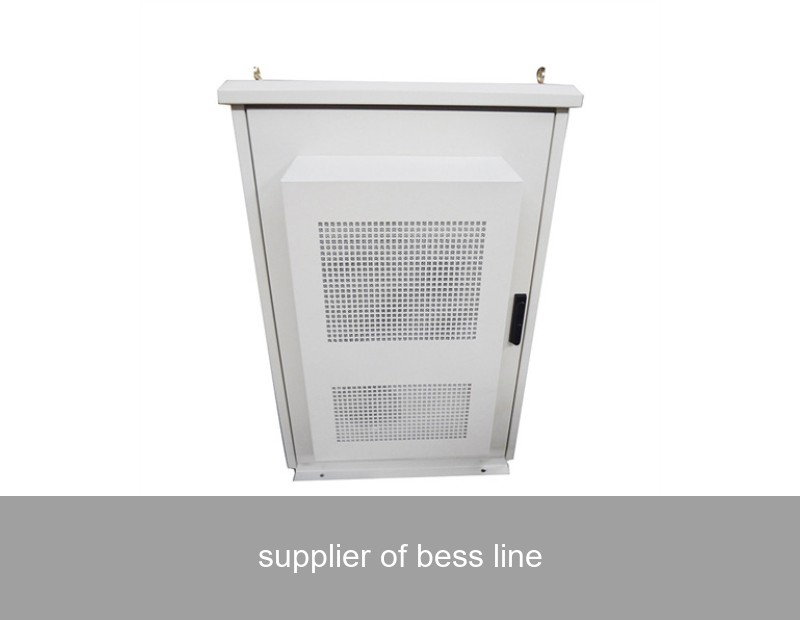
As the world accelerates its transition to renewable energy, a critical challenge emerges: the sun doesn't always shine, and the wind doesn't always blow. This intermittency creates a pressing need for reliable energy storage. For businesses, communities, and grid operators, the solution increasingly lies in Battery Energy Storage Systems (BESS). However, selecting the right supplier of BESS line is not merely a procurement decision; it's a strategic partnership for energy resilience and financial performance. This article will guide you through the key considerations, showcasing why expertise, safety, and intelligent software are the true cornerstones of a valuable BESS partnership.
Table of Contents
- The BESS Imperative: More Than Just Batteries
- Key Criteria for Your BESS Supplier
- Case Study: Peak Shaving for a Texas Manufacturing Plant
- The Highjoule Approach: Engineered for Reliability
The BESS Imperative: More Than Just Batteries
Think of a BESS as the "brain and brawn" of modern energy management. It's far more than a simple bank of batteries. A complete BESS line includes the battery racks (often using lithium-ion phosphate or LFP chemistry for safety), power conversion systems (PCS or inverters), thermal management, fire suppression, and, most crucially, an advanced energy management system (EMS). This integrated system can store excess solar or wind energy, discharge it during peak hours to reduce demand charges, provide backup power, and even offer grid stabilization services. According to the International Energy Agency (IEA), global energy storage capacity is set to multiply exponentially, with grid-scale batteries leading the charge. This surge makes the choice of your technology partner more significant than ever.

Image: A professional technician performing maintenance on a utility-scale BESS. Choosing a supplier with robust service protocols is key for long-term operation.
Key Criteria for Evaluating Your Supplier of BESS Line
So, what separates a leading supplier of BESS line from a mere equipment vendor? Let's break down the essential pillars.
System Safety & Certification: The Non-Negotiable Foundation
Safety is paramount. A reputable supplier designs safety into every layer, from cell selection to system architecture.
- Cell Chemistry: Preference for inherently stable LFP chemistry.
- Certifications: Systems should carry essential international certifications like UL 9540 (energy storage systems), UL 1973 (batteries), and IEC 62619. For the European market, CE marking is mandatory.
- Design Features: Look for multi-level protection (electrical, thermal, battery management system (BMS) monitoring), and integrated fire detection and suppression systems within enclosures.
Technology & Seamless System Integration
The best suppliers offer flexible, scalable solutions that can integrate with existing infrastructure, whether it's a new solar array, a legacy manufacturing plant, or a microgrid. Key questions to ask:
| Feature | Why It Matters |
|---|---|
| Scalable Architecture | Allows you to start with a needed capacity and expand cost-effectively as demands grow. |
| Grid-Forming Capability | Advanced inverters can "form" a grid, essential for microgrids and areas with weak grid infrastructure. |
| AC or DC Coupling | Determines how the BESS connects with solar PV; DC-coupling can be more efficient for new solar+storage projects. |
The Intelligence Layer: BESS Software & Controls
Hardware stores energy, but software unlocks its value. The EMS is the brain, optimizing every charge and discharge cycle for maximum economic return. A top-tier supplier of BESS line provides sophisticated, often AI-driven, software that can:
- Forecast energy generation and consumption.
- Automatically participate in demand charge management (peak shaving).
- Arbitrage energy by buying low-cost power and selling during high-price periods.
- Provide frequency regulation services to the utility grid (where markets exist).
Lifecycle Support & Long-Term Partnership
A BESS is a 10-15 year investment. Your supplier must be a partner for its entire lifecycle. This includes comprehensive warranty terms, remote monitoring, predictive maintenance services, and readily available technical support. Ask about their service network in your region—can they provide timely on-site support if needed?
Case Study: Highjoule BESS for Peak Shaving at a Texas Manufacturing Plant
Let's look at a real-world application. A mid-sized automotive parts manufacturer in Texas faced crippling monthly demand charges from their utility, often making up over 30% of their electricity bill. Their energy profile showed sharp, short-duration peaks during high-production cycles.
The Solution: Highjoule, as their chosen supplier of BESS line, deployed a 500 kW / 1 MWh containerized BESS alongside their existing facility. The system was AC-coupled, requiring minimal disruption to their operations. Highjoule's AI-powered energy management system was programmed with the specific goal of peak shaving.
- Demand Charge Reduction: The system successfully clipped peak loads, reducing the facility's peak demand by an average of 22%.
- Financial Impact: This translated to an annual savings of approximately $85,000 on their electricity bills.
- ROI: The project achieved a simple payback period of just under 5 years, with decades of continued savings ahead.
- Added Resilience: The system is also configured to provide critical backup power to essential loads during grid outages, a valuable bonus in Texas' sometimes volatile grid environment.

Image: Modern industrial facilities are prime candidates for BESS to manage energy costs and increase sustainability.
The Highjoule Approach: Your Partner in Advanced Energy Storage
At Highjoule, with nearly two decades of experience since 2005, we embody the principles of a full-service supplier of BESS line. We don't just sell components; we deliver turnkey, intelligent power solutions. Our product lines for commercial, industrial, and microgrid applications are built on three pillars:
1. Highjoule H-Series Commercial & Industrial Systems: These scalable, containerized or skid-mounted solutions are engineered for durability and safety. Featuring our proprietary BMS and UL 9540-certified design, they are the workhorses for demand charge management, solar time-shift, and backup power.
2. Highjoule Apex Energy Management Software: This is the intelligence hub. Apex uses machine learning to analyze your load patterns, weather data, and utility rates to autonomously optimize system dispatch for maximum financial return. You can monitor and control everything via a user-friendly dashboard.
3. Highjoule 360° Support: From initial site assessment and financial modeling to installation, commissioning, and 24/7 remote monitoring, our team supports you throughout the project lifecycle. Our global service network ensures you have a local partner.
We understand that every site has unique needs. Whether it's integrating with a complex industrial process, designing a resilient microgrid for a community, or simply maximizing the ROI of a rooftop solar array, our solutions are tailored to deliver tangible value.
 Inquiry
 Online Chat