


Unlocking Grid Independence: The Strategic Power of a PV 12000 Energy Storage Cabinet
Imagine a bright, sunny afternoon. Your commercial solar array is producing more clean energy than your facility can possibly use. Yet, in just a few hours, as the sun sets and operational demand peaks, you'll be drawing expensive power from the grid. This daily mismatch between solar generation and energy consumption is a universal challenge for businesses and utilities alike. The solution? Scaling up storage capacity to truly bridge that gap. This is where high-capacity, containerized systems like a PV 12000 energy storage cabinet transition from an interesting concept to a strategic asset. Let's explore how this substantial storage capacity is redefining energy management for commercial, industrial, and utility-scale applications.
The Modern Grid Challenge: From Sun-Drenched to Power-Deprived
The renewable energy transition is in full swing. Solar panels are more efficient and affordable than ever. However, the inherent intermittency of solar power—its generation doesn't always align with demand—creates a significant integration challenge. According to the International Energy Agency (IEA), the global capacity of grid-scale battery storage needs to expand dramatically to support net-zero goals, with growth focused on multi-hour storage solutions. This isn't just about storing a little energy; it's about storing massive amounts to shift usable solar power from day to night, from summer to winter, and to provide critical grid services. The "PV 12000" specification, denoting a system with approximately 12,000 kilowatt-hours (kWh) of usable energy capacity, sits squarely in this crucial multi-hour to daily storage domain.
What is a PV 12000 Energy Storage Cabinet?
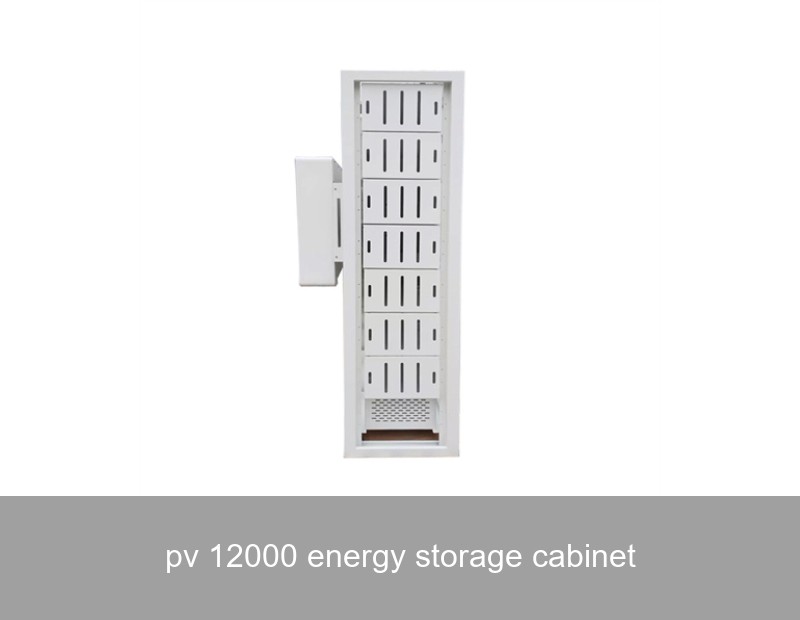
Let's demystify the term. A PV 12000 energy storage cabinet is not a single giant battery. It's a sophisticated, large-scale energy storage system (ESS) typically configured in a standardized containerized format for easy deployment and scalability.
- PV: Stands for Photovoltaic, indicating the system is designed to integrate seamlessly with solar power generation.
- 12000: Refers to the nominal energy storage capacity, usually in the range of 12,000 kWh (or 12 MWh). This is the amount of electrical energy the system can store and dispatch.
- Energy Storage Cabinet: In this context, it describes the containerized, all-in-one enclosure that houses the battery racks, power conversion systems (PCS), thermal management, fire suppression, and energy management software.

Image Source: Unsplash - Representative image of a containerized energy storage system.
Think of it as a colossal, intelligent power bank for a factory, a commercial complex, or a community microgrid. Companies like Highjoule specialize in engineering these turnkey systems, integrating high-cycle-life lithium-ion battery cells (like Lithium Iron Phosphate or LFP) with advanced power electronics to create a reliable, safe, and high-performing asset.
Why the 12,000 kWh Scale Matters: Data, Not Guesswork
The shift from smaller residential systems (10-30 kWh) to this utility-scale capacity unlocks transformative economic and operational benefits. The impact is best understood through data-driven applications:
| Application | How a 12,000 kWh System is Used | Direct Benefit |
|---|---|---|
| Commercial Peak Shaving | Discharges during daily 4-6 hour utility peak rate windows to avoid high demand charges. | Can reduce electricity bills by 20-40% by flattening the demand curve. |
| Solar Self-Consumption Maximization | Stores excess solar generation from midday for use in the evening and overnight. | Can increase onsite consumption of solar power from ~30% to over 80%. |
| Industrial Backup Power | Provides seamless transition to backup power for critical processes during grid outages. | Ensures business continuity and prevents costly production halts. |
| Grid Services (Frequency Regulation) | Rapidly injects or absorbs power to help maintain grid frequency stability. | Creates a new revenue stream for the asset owner. |
For a medium-sized manufacturing plant with an average demand of 2 MW, a 12,000 kWh system represents 6 full hours of operational energy. This isn't just backup; it's operational shifting that fundamentally changes the economics of energy procurement.
Case Study: Peak Shaving for a German Automotive Supplier
Consider a real-world scenario from our work at Highjoule. A mid-tier automotive parts supplier in Bavaria, Germany, faced steep "Netzentgelt" (grid fees) and peak demand charges that comprised nearly 35% of their annual electricity cost. Their 1.8 MW rooftop PV system covered their base load but left them exposed during morning and evening peaks.
The Solution: Highjoule deployed a containerized PV energy storage system with a usable capacity of 11,500 kWh and a power rating of 2.5 MW. Integrated with our AI-driven Energy Management System (EMS), the system was programmed to strategically discharge during predefined peak windows and store excess midday solar.
The Data-Backed Outcome (First 12 Months):
- Demand Charge Reduction: Peak grid draw was reduced by 68%, saving over €185,000 annually in demand charges alone.
- Solar Self-Consumption: Increased from 41% to 89%, drastically reducing residual power purchases.
- ROI Timeline: Projected payback period of under 6 years, with a system design life exceeding 15 years.
This case underscores that a PV 12000 energy storage cabinet is a capital investment with a clear, quantifiable return, not just an environmental statement.
Beyond the Basics: The Intelligent Core of Modern Storage
The true value of a modern system lies beyond its raw kWh capacity. The "brain" of the system—the Energy Management System—is what transforms a battery bank into a strategic grid asset. Highjoule's EMS uses predictive algorithms based on weather forecasts, historical load patterns, and real-time electricity pricing (in deregulated markets) to optimize every charge and discharge cycle for maximum financial return. This intelligence allows a single asset to perform multiple value-stacking functions: maximizing self-consumption, executing peak shaving, and even participating in grid-balancing programs when permitted.
The Highjoule Solution: Engineered for Performance and Longevity
At Highjoule, with nearly two decades of experience, we understand that a PV 12000 energy storage cabinet must be built for relentless daily cycling and decades of service. Our H-Stack Commercial series, which includes configurations at this scale, is designed with this ethos.

Image Source: Unsplash - Technician performing checks on an energy storage system's control unit.
- Cell Chemistry: We prioritize Lithium Iron Phosphate (LFP) chemistry for its superior safety profile, long cycle life (typically 6,000+ cycles), and thermal stability.
- Thermal Management: A proprietary liquid cooling system ensures every battery cell operates within an optimal temperature range, which is the single biggest factor in extending system lifespan and maintaining performance.
- Safety by Design: Our cabinets feature multi-layer protection: cell-level fusing, module-level monitoring, advanced gas detection, and integrated fire suppression, all compliant with stringent international standards like UL 9540 and IEC 62619.
- Grid-Forming Capability (Optional): For microgrid applications, our inverters can be configured to "form" a stable grid, allowing critical operations to continue completely isolated from the main utility grid.
Our service model extends from initial feasibility and financial modeling to turnkey installation, grid connection support, and 24/7 remote monitoring via our Highjoule Pulse platform.
The Future Outlook: More Than Just Backup Power
The role of large-scale storage is rapidly evolving. As noted by the National Renewable Energy Laboratory (NREL), storage is key to enabling high penetrations of renewable energy. We are moving towards a future where aggregated fleets of storage systems, like distributed 12,000 kWh units, act as virtual power plants (VPPs), providing capacity and stability to the grid more efficiently than legacy peaker plants. This creates a compelling dual-revenue model for asset owners: internal savings and external market participation.
Is your organization ready to analyze how a strategic storage investment could not only cut your energy costs but also future-proof your operations against grid volatility and contribute to a more resilient energy network? What would shifting 10,000 kWh of energy daily do for your bottom line?
 Inquiry
 Online Chat