


Finding the Right Supplier of CATL Storage: Your Guide to Advanced Battery Systems
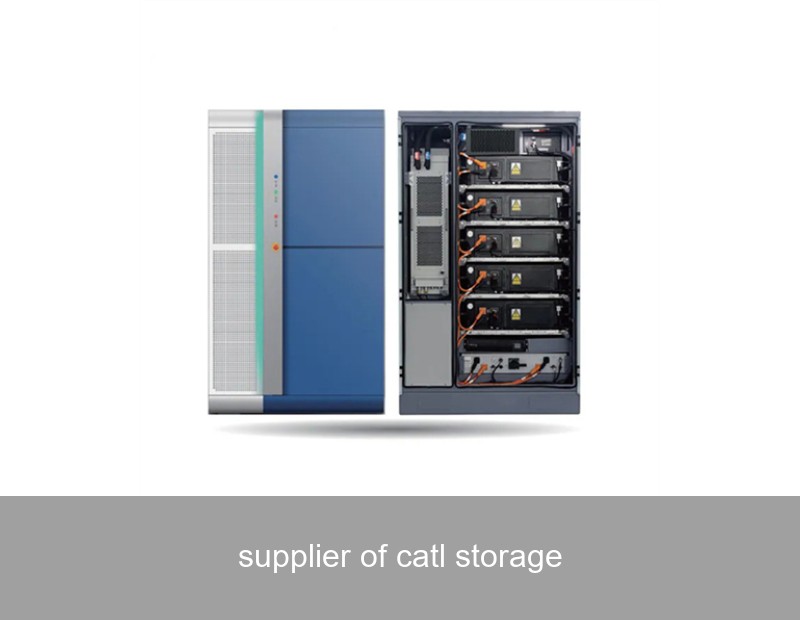
If you're exploring energy storage solutions, you've likely come across the term "CATL storage." As the world's leading lithium-ion battery manufacturer, Contemporary Amperex Technology Co. Limited (CATL) sets a high benchmark for performance and safety. But here's a crucial insight: the battery cells are just one part of the equation. The true value of a supplier of CATL storage lies in their ability to integrate these superior cells into a complete, intelligent, and reliable Battery Energy Storage System (BESS). This article will guide you through what to look for and how the right system integrator transforms premium components into a resilient power asset for your business or home.
Table of Contents
- The Phenomenon: More Than Just Batteries
- The Data: Why System Integration is Key
- The Case Study: A German Manufacturing Plant
- The Insight: Choosing Your Technology Partner
- The Highjoule Approach: Intelligence Meets CATL Hardware
- Your Next Step
The Phenomenon: Why a "Supplier of CATL Storage" is More Than a Vendor
Imagine purchasing a Formula 1 engine and bolting it onto a standard car chassis. You have incredible power, but without the matching transmission, suspension, and electronics, you won't win any races—and you might even cause a breakdown. Similarly, sourcing CATL cells directly or from a basic reseller without expert system integration is a high-risk proposition. A true supplier of CATL storage acts as your engineering partner, providing the crucial "chassis" and "onboard computer" that ensure the cells operate safely, efficiently, and for their intended lifespan. They deliver a turnkey solution, not just a commodity.
The Core Components Beyond the Cell
A complete BESS comprises several critical subsystems:
- Battery Management System (BMS): The brain of the operation. It monitors each cell for voltage, temperature, and state of charge, ensuring balance and preventing dangerous conditions.
- Power Conversion System (PCS): The interpreter. It converts the battery's direct current (DC) to the alternating current (AC) used by your building or grid, and vice versa for charging.
- Thermal Management: The climate control. CATL cells perform best within a specific temperature range. A proper system uses liquid or air cooling to maintain this.
- Energy Management System (EMS): The strategist. This software platform controls when to charge, discharge, or idle based on energy prices, consumption patterns, and grid signals.
Neglecting any of these is like building a house on a shaky foundation.
The Data: The Integration Advantage in Numbers
The difference between a well-integrated and a poorly-integrated system shows up clearly in performance metrics. Let's look at the data.
| Performance Metric | Basic Cell Reseller | Expert System Integrator |
|---|---|---|
| Round-Trip Efficiency | ~85% | >90% |
| System Lifespan (Cycles) | 4,000 - 5,000 | 6,000+ (to 80% capacity) |
| Safety & Compliance | Cell-level only | Full system certification (UL, IEC, etc.) |
| Warranty & Support | Limited, cell-focused | Comprehensive, system-wide |
These numbers matter. A 5% difference in efficiency means significantly more saved energy over 15+ years. Thousands of extra cycles translate to years of additional service. According to a report by the National Renewable Energy Laboratory (NREL), system design and integration are among the top factors influencing the levelized cost of storage (LCOS). The right partner minimizes this cost.

Image: A professionally integrated BESS ensures safety, serviceability, and performance. (Source: Unsplash)
The Case Study: Peak Shaving for a Bavarian Automotive Parts Factory
Let's make this concrete with a real-world application. A mid-sized automotive supplier in Bavaria, Germany, faced steep "capacity charges" from their utility—fees based on their highest 15-minute power draw (peak demand) each month. Their goal: reduce these peaks to cut costs.
The Challenge: Irregular high-power machinery spikes created unpredictable demand peaks, making simple scheduling ineffective.
The Solution: They partnered with Highjoule as their supplier of CATL storage. Highjoule installed a 500 kWh / 750 kW containerized BESS using CATL's latest LFP (Lithium Iron Phosphate) cells. The key was Highjoule's proprietary Adaptive EMS, which uses real-time load forecasting and AI to dispatch the battery milliseconds before a potential peak.
- Peak Demand Reduction: 22% average monthly reduction.
- Annual Cost Savings: €68,000 in reduced capacity charges.
- Additional Revenue: The system participates in the German primary control reserve market during idle periods, generating an estimated €15,000 annually.
- ROI Timeline: Projected payback period of under 7 years, with a system warranty of 10 years.
This case shows how intelligence layered on top of quality hardware creates multi-layered value. It wasn't just a battery; it was an automated energy asset.
The Insight: What to Look for in Your Storage Partner
Choosing a supplier is a long-term decision. Here are the non-negotiables:
- Proven System Integration Expertise: Ask for detailed system diagrams and certifications. Do they design the BMS/PCS integration in-house?
- Native Software Intelligence: Can their EMS handle complex, value-stacking applications (peak shaving, arbitrage, grid services) automatically?
- Full-Cycle Support: Do they offer site assessment, design, grid connection support, long-term maintenance, and performance monitoring?
- Technology Agnosticism (Within Reason): While focusing on CATL, the best integrators choose the optimal cell chemistry (like CATL's LFP for safety and cycle life) for your specific use case, not just what's in stock.
The Highjoule Approach: Where CATL's Hardware Meets Our Intelligence
At Highjoule, we've built our reputation as a trusted supplier of CATL storage by focusing on the synergy between world-class hardware and intelligent software. Our systems are built around CATL's robust LFP battery cells, known for their exceptional safety profile and long cycle life—a perfect match for demanding daily cycling in commercial and industrial settings.
Our value is unlocked through the Highjoule Energy Operating System (EOS). Think of it as the central nervous system for your energy assets. EOS doesn't just react; it predicts and optimizes. By analyzing weather forecasts, energy price curves, and your historical consumption data, it makes proactive decisions to maximize your financial return and energy independence.
Our product portfolio includes:
- H-Series Commercial & Industrial Systems: Scalable from 100 kWh to multi-megawatt-hour configurations, in cabinet or containerized formats, designed for peak shaving, backup power, and renewable integration.
- M-Series Microgrid Controllers: For sites that combine solar, storage, and generators, our controller seamlessly manages these assets for resilience and cost savings.
- Homescale Solutions: Integrated solar-plus-storage systems that allow homeowners to maximize self-consumption of solar power and provide backup during outages.
We handle everything from initial consultancy and financial modeling to installation, grid compliance, and 24/7 remote monitoring. As your partner, we ensure the CATL cells inside our systems deliver on their full promise for decades. For a deeper dive into LFP technology, the U.S. Department of Energy's resources on lithium-ion battery safety provide excellent context on why chemistry choice matters.

Image: Centralized monitoring and control, like Highjoule's EOS platform, is critical for system performance. (Source: Unsplash)
Your Next Step
The journey to a smarter, more resilient energy supply starts with the right questions. You now know that the key isn't just finding a supplier of CATL storage, but finding the right technology partner. What specific energy challenge—be it unpredictable demand charges, renewable energy curtailment, or the need for backup power—is costing your business the most today, and how could a smart, integrated storage system turn that challenge into an opportunity?
 Inquiry
 Online Chat