


Beyond Backup: Choosing the Right Supplier of Data Power for Uninterrupted Operations
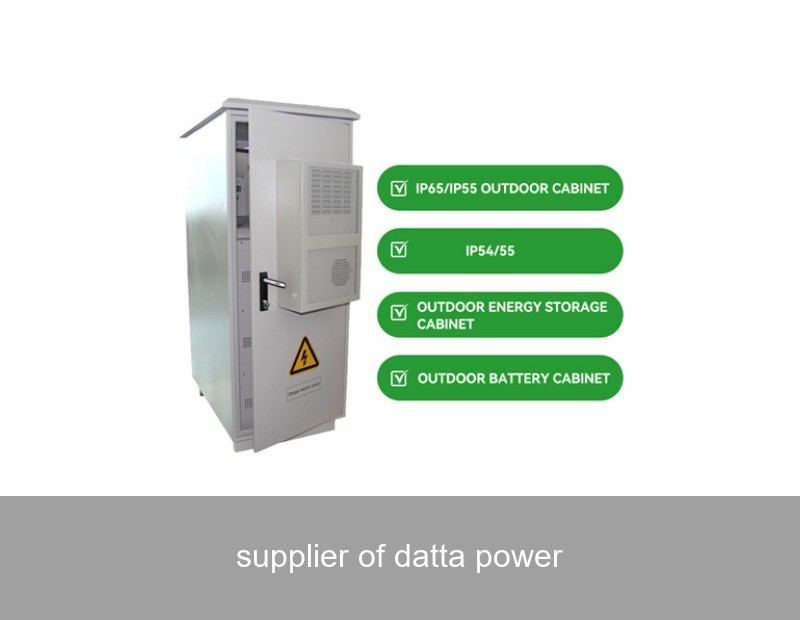
Imagine a world where every click, every stream, and every automated process simply stops. For businesses today, that's not a scene from a sci-fi movie; it's a real risk tied to one critical resource: data power. This isn't just about having electricity in the socket. Data power is the guaranteed, clean, and intelligent energy that fuels data centers, telecom hubs, industrial IoT networks, and any facility where downtime is measured in millions, not minutes. As our reliance on digital infrastructure deepens, the role of a specialized supplier of data power transforms from a utility provider to a strategic partner in business continuity. In this article, we'll explore why this shift is happening and how choosing the right partner can future-proof your most critical operations.
The Silent Crisis: Unreliable Grids and Skyrocketing Costs
Let's face the reality. From California to Cologne, aging electrical grids are struggling under the weight of climate change and surging demand. The U.S. Energy Information Administration (EIA) notes that the frequency and duration of power interruptions have been a persistent concern for decades (source). In Europe, geopolitical tensions have exposed vulnerabilities in energy security, leading to volatile prices. For a data center operator or a manufacturing plant running 24/7, a two-hour grid outage isn't an inconvenience—it's a catastrophic event with cascading financial and reputational damage.
The phenomenon is clear: the traditional, one-way grid is no longer sufficient for mission-critical loads. The data reveals the scale: a single data center can consume power equivalent to tens of thousands of homes. The case for a new approach is built on the simple insight that to protect your data and digital processes, you must first protect and control the power that feeds them.

Credit: Unsplash / @lukechesser - Modern data centers require a constant, high-quality power supply.
Why Your Choice of a Supplier of Data Power is Critical
Moving beyond simple diesel generators, a modern supplier of data power provides an integrated ecosystem. It's the difference between buying a battery and investing in a brain for your energy system. Here are the four pillars that separate basic providers from strategic partners.
Reliability & Uptime: The Non-Negotiables
The core promise is seamless uptime. Advanced Battery Energy Storage Systems (BESS) coupled with intelligent inverters can provide sub-20 millisecond switchover from grid to backup power—far faster than any traditional generator. This ensures that servers don't crash and production lines don't halt.
Efficiency: Every Watt Counts
Energy loss is financial loss. High-efficiency power conversion and storage are paramount. Look for systems with round-trip efficiency (RTE) above 95%, meaning almost all the energy you put into storage is available for use. This directly slashes operational expenses (OpEx).
Intelligence: The Brain Behind the Power
Modern systems use AI-driven energy management software (EMS). This "brain" can predict load patterns, perform peak shaving (reducing draw during expensive tariff periods), and even integrate with on-site renewables like solar PV. It's not just storing power; it's optimizing its use for cost and carbon savings.
Scalability: Growing With Your Data Demands
A solution must be modular. As your data needs grow from racks to rows, your power system should scale effortlessly without requiring a complete overhaul. A flexible architecture is key to long-term planning.
The Highjoule Solution: Engineered for the Data-Driven World
At Highjoule, with nearly two decades of experience since 2005, we've built our reputation on being more than just a supplier of data power; we are architects of energy resilience. Our solutions are designed specifically for the high-availability demands of commercial, industrial, and critical infrastructure.
Our flagship product, the H-Joule Quantum BESS, is a prime example. It features industry-leading lithium-iron-phosphate (LFP) battery chemistry for safety and longevity, coupled with our proprietary NeuroGrid EMS. This platform doesn't just react to outages; it proactively manages energy flow. It can:
- Automate Peak Shaving: Draw from stored energy during high-cost utility rate periods, dramatically reducing demand charges.
- Enable Renewable Integration: Smooth out the intermittent nature of solar or wind power, allowing you to create a greener, more self-sufficient power profile.
- Provide Grid Services: In some markets, our systems can participate in demand response programs, creating a new revenue stream for our clients.
For a large data center or manufacturing plant, this translates into a robust, multi-layered defense against downtime and energy price volatility, all while progressing toward sustainability goals.
| Feature | Traditional Diesel Generator | Highjoule Quantum BESS with NeuroGrid |
|---|---|---|
| Response Time | Seconds to minutes | Milliseconds (<20ms) |
| Operational Noise & Emissions | High (noise, fumes) | Silent & Zero On-Site Emissions |
| Primary Function | Emergency backup only | Backup + Daily Cost Optimization + Renewable Integration |
| Maintenance | High (fuel, engine upkeep) | Low, remote monitoring |
| Lifespan & TCO | Higher long-term cost | Superior lifespan, lower Total Cost of Ownership |
Case Study: A European Data Center's Journey to Resilience
Let's look at a real-world application. A major colocation data center in Frankfurt, Germany—a key European hub—faced a dual challenge: ensuring "five-nines" (99.999%) uptime for its clients while contending with some of the highest industrial electricity rates in Europe and increasing grid instability.
The Phenomenon: Grid congestion and price spikes were eroding profitability and adding risk.
The Data & Solution: The facility's peak demand charges accounted for over 30% of its monthly energy bill. In 2022, they partnered with Highjoule to deploy a 2 MWh / 1 MW Quantum BESS. The system was integrated behind-the-meter with their existing infrastructure.
The Outcome: Our NeuroGrid EMS was programmed for aggressive peak shaving and demand charge management. Within the first year of operation:
- Demand Charge Reduction: Achieved a 22% reduction in peak demand charges.
- ROI Timeline: Projected return on investment in under 4 years based on savings alone.
- Enhanced Resilience: Gained 2+ hours of full-load backup capacity, seamlessly bridging shorter grid outages and allowing generators more time for a controlled start if needed.
This case exemplifies the dual role of a modern supplier of data power: a tool for immediate financial benefit and a pillar of long-term operational security. The International Energy Agency (IEA) highlights the crucial role of storage in modern, secure electricity systems (source).

Credit: Unsplash / @americanpublicpower - An engineer inspecting a large-scale battery storage installation.
Future-Proofing Your Operations
The energy landscape is evolving towards decentralization and digitalization. Technologies like vehicle-to-grid (V2G) and advanced microgrids are on the horizon. A forward-thinking supplier of data power like Highjoule designs systems with this future in mind. Our platforms are software-upgradable, allowing clients to adopt new functionalities as the market and regulations evolve.
Choosing the right partner means asking the right questions: Can your power system participate in future energy markets? Is it agnostic enough to work with next-generation battery chemistries? Does it provide actionable data to inform your broader ESG (Environmental, Social, and Governance) reporting?
Is your current power strategy merely a cost center, or is it ready to become a strategic asset for resilience and savings? We invite you to connect with Highjoule's experts for a personalized assessment of your data power needs. What would a 20% reduction in your energy demand charges do for your bottom line this year?
 Inquiry
 Online Chat