


Proyecto Energía Solar Fotovoltaica: Your Blueprint for a Sustainable and Resilient Energy Future
Imagine a future where your home or business is powered by clean, abundant sunlight, your energy bills are predictable, and you're insulated from grid outages and volatile energy prices. This isn't a distant dream; it's the tangible reality delivered by a well-executed proyecto energía solar fotovoltaica (photovoltaic solar energy project). For homeowners and businesses across Europe and the US, transitioning to solar is no longer just an environmental statement—it's a strategic financial and operational decision. However, the gap between the idea and its successful realization hinges on one critical factor: a comprehensive, expertly designed project plan. This article will guide you through the essential components of a successful solar project and how modern energy storage transforms it from a simple power generator into a resilient energy asset.
Table of Contents
- The Phenomenon: Solar Adoption is Booming, But Challenges Remain
- The Data: Why Storage is the Game-Changer for Solar ROI
- A Real-World Case Study: The Spanish Agri-Business
- The Highjoule Blueprint: Key Phases of a Successful Solar Project
- Beyond Installation: The Future is Intelligent Energy Management
The Phenomenon: Solar Adoption is Booming, But Challenges Remain
The surge in solar installations is undeniable. Driven by climate goals, compelling economics, and energy security concerns, both the European Union and the United States have seen record-breaking growth. However, many early adopters of solar panels are now facing a new set of questions. What happens when the sun isn't shining? How can I maximize the use of the clean energy I produce? This is where the traditional proyecto energía solar fotovoltaica evolves. Today, a forward-thinking project doesn't stop at the inverter; it integrates intelligent battery energy storage systems (BESS) as its core component. This combination addresses the intermittent nature of solar power, turning a time-bound energy source into a 24/7 power solution.

Image Source: Unsplash - A modern commercial solar installation, the first step in a comprehensive energy project.
The Data: Why Storage is the Game-Changer for Solar ROI
Let's talk numbers. A solar-only system might cover 30-50% of a typical home's total electricity needs directly. The rest is exported to the grid, often at a lower price than the cost to import it later. For businesses with time-of-use rates, this discrepancy is even more pronounced. According to the International Renewable Energy Agency (IRENA), coupling solar PV with storage can increase the share of self-consumed solar electricity from 30-50% to over 70-90%. This directly translates to higher savings and a faster return on investment (ROI).
This is precisely where Highjoule's expertise becomes invaluable. As a global leader in advanced energy storage since 2005, we don't just provide batteries; we provide the intelligence that maximizes your solar investment. Our H-Joule Nexus residential and H-Joule Matrix commercial storage systems are engineered to seamlessly integrate with any solar installation. They store excess solar energy not just for use at night, but to strategically avoid peak grid charges, provide backup power during outages, and even participate in grid services where available.
A Real-World Case Study: The Spanish Agri-Business
Consider the case of a mid-sized fruit packaging and cold storage cooperative in the Valencia region of Spain. Their existing 250 kWp rooftop solar system covered only a fraction of their daytime energy needs and did nothing for their 24/7 refrigeration load. High energy costs, especially during evening peak hours, were eroding their profitability.
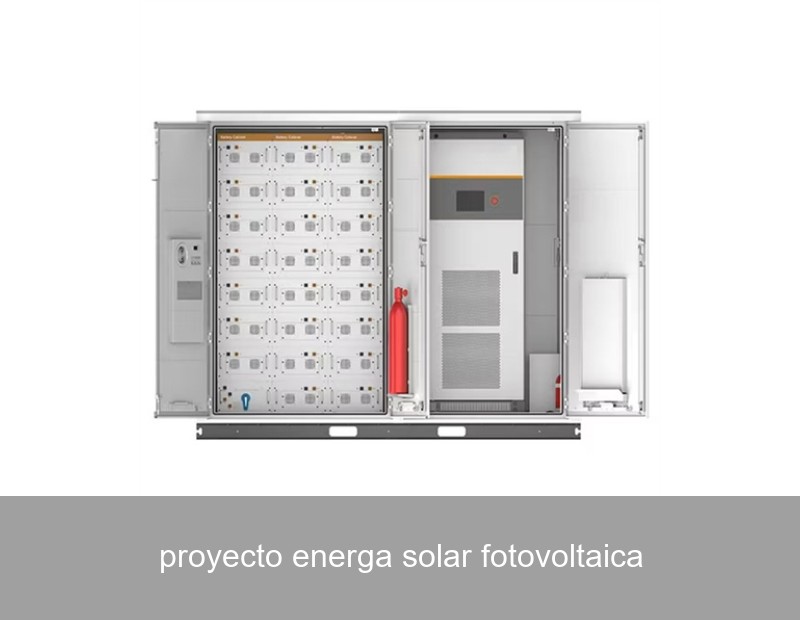
Their upgraded proyecto energía solar fotovoltaica included a Highjoule H-Joule Matrix 500 battery storage system with a capacity of 500 kWh. The results, monitored over 12 months, were transformative:
| Metric | Before Highjoule Storage | After Highjoule Storage |
|---|---|---|
| Solar Self-Consumption | 41% | 89% |
| Grid Energy Import (Peak Hours) | 75 MWh/month | 12 MWh/month |
| Annual Energy Cost Savings | Baseline | €68,000+ |
| Backup Power for Critical Cold Storage | 0 hours (Reliant on Grid) | Up to 8 hours |
The project paid for itself in under 5 years and fundamentally de-risked their operations from grid instability. This is a prime example of how a solar project, when designed with integrated storage from the start, delivers compounded value.
The Highjoule Blueprint: Key Phases of a Successful Solar Project
So, what does a modern, holistic solar-plus-storage project look like? Let's break it down into key phases.
Phase 1: In-Depth Consultation & Energy Audit
Every successful project begins with understanding. We analyze your historical energy consumption (load profile), site specifics, local weather patterns, utility rates, and your specific goals—be it savings, resilience, or sustainability.
Phase 2: System Design & Engineering
This is where technical expertise is paramount. Our engineers design a system that optimally sizes the solar array and the battery storage. For instance, our H-Joule Home system uses sophisticated algorithms to model the best configuration for a household, while our Microgrid Controller can design islandable systems for industrial campuses.
Phase 3: Technology Integration & Installation
High-quality components installed correctly are non-negotiable. Highjoule's storage systems are known for their modularity and safe, lithium iron phosphate (LFP) chemistry. They integrate smoothly with leading solar inverter brands, ensuring a plug-and-play experience for certified installers.

Image Source: Unsplash - Professional installation of a modern battery storage unit, a key phase in the project.
Phase 4: Commissioning & Smart Energy Management
Turning the system on is just the beginning. The Highjoule EnergyOS platform is the brain of the operation. Via an intuitive app, users can monitor production, consumption, and storage in real-time, set preferences (like "always keep 30% backup for outages"), and even receive performance alerts. This transforms users from passive consumers into active energy managers.
Beyond Installation: The Future is Intelligent Energy Management
The final piece of the puzzle is long-term performance and adaptability. A proyecto energía solar fotovoltaica is a long-term asset. The U.S. Department of Energy emphasizes the importance of ongoing monitoring for maintaining optimal efficiency. Highjoule's systems include remote diagnostics and over-the-air software updates, ensuring your system continuously improves and adapts to new utility programs or changing energy needs.
For larger commercial and microgrid applications, this intelligence scales further. Our systems can be configured to perform peak shaving, demand charge management, and participate in virtual power plants (VPPs), creating an additional revenue stream. This elevates the project from a cost center to a strategic, income-generating asset on your balance sheet.
As you contemplate your own journey toward energy independence, ask yourself this: Is your goal simply to install solar panels, or is it to fundamentally change how you generate, consume, and think about energy? The design of your initial proyecto energía solar fotovoltaica will determine that outcome. What specific energy challenge—be it unpredictable bills, reliability concerns, or sustainability targets—is most critical for you to solve first?
 Inquiry
 Online Chat