


Your Trusted Supplier of Energy: Navigating the Shift to a Resilient and Sustainable Power Grid
Have you ever flipped a switch and not given it a second thought? For decades, that seamless power delivery was the hallmark of a successful grid. But today, from California to Cologne, a quiet revolution is reshaping how we generate, store, and consume electricity. The rise of renewables and the demand for unwavering reliability have created a new imperative: energy resilience. At the heart of this transformation is a critical partner—the modern supplier of energy. No longer just a source of kilowatt-hours, this partner provides the intelligence and infrastructure to harness clean power, ensure stability, and future-proof our communities. This article explores why choosing the right technology partner is the most crucial decision for businesses and grid operators today.
Table of Contents
- The Phenomenon: From Passive Consumption to Active Energy Management
- The Data: Quantifying the Need for Smarter Storage
- The Case Study: A German Industrial Park's Journey to Resilience
- The Insight: What Makes a True Energy Partner?
- The Highjoule Solution: Integrated Systems for a Demanding Era
- The Future: Your Next Step in the Energy Transition
The Phenomenon: From Passive Consumption to Active Energy Management
Gone are the days when energy was a one-way street. The modern grid is a dynamic, two-way network. Solar panels on factory roofs and wind turbines in fields are turning businesses and homes into prosumers—both producers and consumers. This is fantastic for decarbonization, but it introduces complexity. Solar and wind are intermittent; the sun sets, and the wind calms. This variability can strain traditional grids, leading to volatility, inefficiency, and even vulnerability to outages.
This is where the role of a supplier of energy evolves. The new paradigm demands suppliers who can provide not just energy, but the capability to manage it intelligently. The focus shifts from mere supply to assured availability. It's about delivering power precisely when and where it's needed, smoothing out the peaks and valleys of renewable generation, and creating self-sufficient energy islands during broader grid disturbances. The question for facility managers and community planners is no longer "Who provides our power?" but "Who provides our power resilience?"

Image Source: Unsplash - Representative of renewable energy variability.
The Data: Quantifying the Need for Smarter Storage
Let's look at the numbers. According to the International Energy Agency (IEA), to meet climate targets, the world needs to add approximately 680 GW of grid-scale battery storage capacity by 2030—a massive leap from today's levels. In the U.S., the Inflation Reduction Act is catalyzing billions in investment, while in Europe, the REPowerEU plan explicitly targets accelerated deployment of energy storage to enhance security.
But capacity is only part of the story. The real metric is value: how much does an outage cost? For a data center, it can be millions per hour. For a hospital, it's life-critical. For a manufacturing plant, it's lost production and spoiled materials. A study by the U.S. Department of Energy found that power outages cost the American economy tens of billions of dollars annually. This financial and operational risk makes the case for on-site energy storage and management systems not just an environmental choice, but a foundational business continuity strategy.
The Case Study: A German Industrial Park's Journey to Resilience
Consider the real-world challenge faced by a mid-sized industrial park in Bavaria, Germany. Home to several precision manufacturing SMEs, the park relied on the public grid and had installed rooftop solar across multiple facilities. Their goals were clear: maximize the use of their self-generated solar power, reduce peak demand charges from the grid, and create a backup power solution to prevent costly production halts during grid outages.
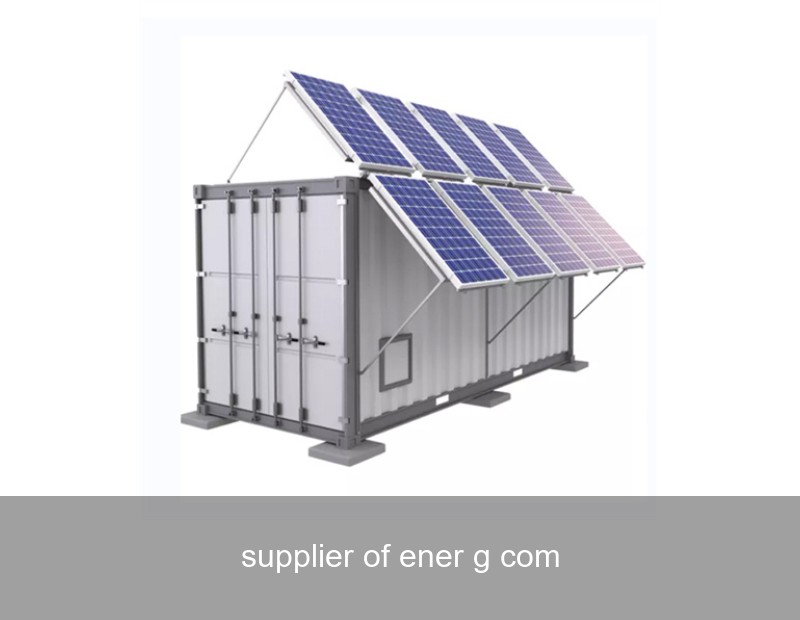
They partnered with Highjoule as their integrated supplier of energy solutions. Highjoule's team conducted a detailed energy audit and deployed a centralized, containerized Battery Energy Storage System (BESS) with a capacity of 1.2 MWh, coupled with an advanced Energy Management System (EMS). The system was intelligently linked to all the site's solar arrays.
The results after one year were transformative:
| Metric | Before Highjoule System | After Highjoule System |
|---|---|---|
| Solar Self-Consumption | 35% (excess fed to grid at low rates) | 85% (stored for later use) |
| Peak Grid Demand | Unmanaged, leading to high tariffs | Reduced by 40% via peak shaving |
| Backup Power | None (full production stop during outages) | Critical processes powered for 4+ hours |
| ROI Period | N/A | Projected under 5 years |
This case exemplifies the modern supplier's role: providing a tailored hardware-and-software solution that turns energy from a cost center into a strategic, controllable asset.
The Insight: What Makes a True Energy Partner?
So, what should you look for beyond the technical specs? A leading supplier of energy systems today must offer a holistic value proposition:
- Deep System Integration: The ability to seamlessly connect solar, storage, existing generators, and the grid into one orchestrated platform.
- Intelligence at the Core: Software that uses AI and weather forecasting to predict energy flows and optimize decisions in real-time for cost and carbon savings.
- Technology Agnosticism: Offering the best-fit battery chemistry (like LFP for safety and longevity) and power electronics for the specific use case.
- Lifecycle Partnership: Support that extends from initial design and financing through installation, long-term maintenance, and performance monitoring.
It's this combination of physical infrastructure and digital intelligence that defines the new gold standard.

Image Source: Unsplash - Representative of a modern BESS installation.
The Highjoule Solution: Integrated Systems for a Demanding Era
Since 2005, Highjoule has been at the forefront of this evolution. We don't just sell components; we engineer intelligent, efficient, and sustainable power ecosystems. Our approach is to become your long-term supplier of energy resilience.
For our commercial and industrial clients across Europe and North America, we provide:
- Highjoule H-Series BESS: Scalable, containerized battery systems built with premium LiFePO4 cells, featuring integrated climate control and safety systems for unmatched reliability.
- Orion Energy Management Platform: Our proprietary cloud-based EMS that provides real-time visibility, automated control, and predictive analytics to maximize your energy investment.
- Custom Microgrid Design: From feasibility studies to turnkey implementation, we design systems that allow campuses, municipalities, and industrial sites to operate independently from the grid if needed.
- Comprehensive Services: Our partnership includes performance guarantees, remote monitoring, and proactive maintenance to ensure your system delivers value for decades.
We understand that every facility has a unique energy fingerprint. Our experts work with you to map that fingerprint and design a solution that addresses your specific financial, operational, and sustainability goals.
The Future: Your Next Step in the Energy Transition
The transition to a resilient, low-carbon energy system is not a distant future—it's happening now. The volatility of fossil fuel markets and the increasing frequency of extreme weather events, as documented by sources like the IPCC, make a passive approach to energy a growing liability.
The most forward-thinking organizations are already asking: How can we take control of our energy destiny? How can we turn our sustainability commitments into tangible economic benefits? How can we ensure our operations are immune to the disruptions of tomorrow?
These questions lead to one pivotal decision: choosing the right partner. What is the first energy challenge you would solve if you had an intelligent, integrated system at your command?
 Inquiry
 Online Chat