


Demystifying the 2 HP Motor Solar System Price: Your Guide to Sustainable Power
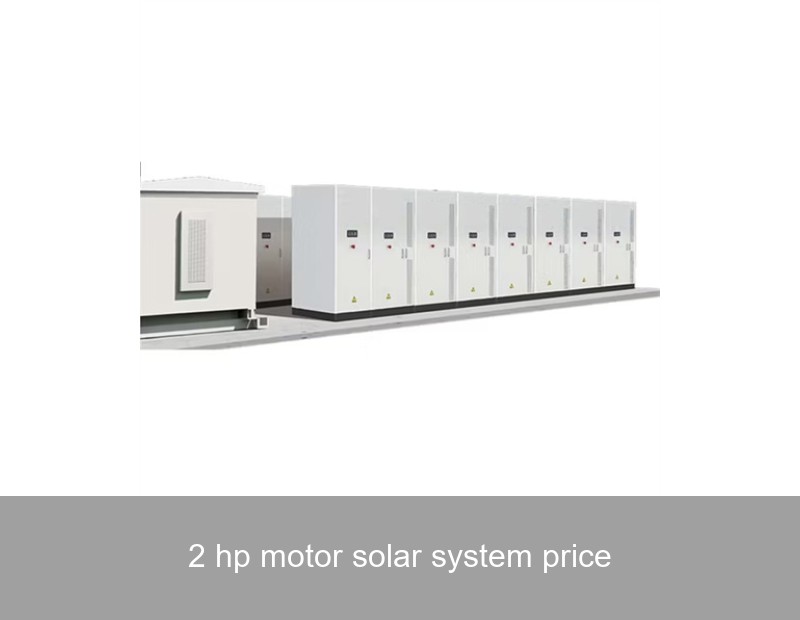
Thinking about powering a reliable 2 HP motor—perhaps for your farm's irrigation pump, a workshop compressor, or a deep-well water system—directly with the sun? You're on the right track. The initial question of "2 hp motor solar system price" opens the door to a transformative discussion about energy independence, operational cost savings, and sustainable power. At Highjoule, a global leader in advanced energy storage since 2005, we understand that this "price" is more than just equipment cost; it's an investment in a resilient, intelligent, and efficient power solution. This article will break down the factors influencing the cost, present real-world data, and show you how a tailored solar-plus-storage system can be the most economical choice in the long run.
Table of Contents
- Understanding the Load: It's More Than Just 2 HP
- Key Components That Define Your System (and Its Price)
- A Realistic Price Breakdown and Range
- Case Study: A California Vineyard's Irrigation Solution
- Beyond the Inverter: The Critical Role of Battery Storage
- The Highjoule Advantage: Smart Systems for Real Needs
- Making the Investment Decision: Key Questions to Ask
Understanding the Load: It's More Than Just 2 HP
The term "2 HP motor" gives us a starting point—approximately 1.5 kilowatts (kW) of mechanical power. However, the electrical demand is where we must focus. Motors have a starting surge (inrush current) that can be 3 to 7 times their running wattage. A 2 HP motor might run on 1.5kW but could momentarily demand 5kW to 10kW at startup. This surge dictates the size of your solar inverter, which is a primary cost driver. Furthermore, you need to consider: How many hours per day will it run? A pump running 4 hours a day uses significantly less energy than one running 12 hours. This daily energy consumption (kWh), not just power (kW), is what your solar array and battery bank must be sized to meet.
Key Components That Define Your System (and Its Price)
The total 2 hp motor solar system price is the sum of several integrated components, each with a specific role.
- Solar Panels (PV Array): These are your fuel source. The size (in kW) depends on your location's solar irradiance and the motor's daily energy use.
- Solar Inverter: The heart of the system. For motor applications, a robust off-grid or hybrid inverter with high surge capacity is essential. It converts DC from panels/batteries to AC for the motor.
- Battery Energy Storage System (BESS): This is what allows you to run the motor when the sun isn't shining. Lithium-ion batteries, like LiFePO4, are the standard for their longevity and depth of discharge.
- Charge Controller: Manages the flow of power from the panels to the batteries, preventing overcharging.
- Mounting, Wiring, and Balance of System (BOS): All the physical hardware, safety equipment, and installation labor.

Credit: Photo by American Public Power Association on Unsplash. A solar-powered agricultural setup similar to what would be needed for a 2 HP motor application.
A Realistic Price Breakdown and Range
Providing a single number is misleading, as needs vary widely. However, we can outline a typical range for a complete, reliable off-grid system capable of running a 2 HP motor in regions like Southern Europe or the Southwestern US.
| System Component | Specification Example | Estimated Cost Range (USD) |
|---|---|---|
| Solar Panels | 3kW - 4kW array | $900 - $1,600 |
| Hybrid Inverter | 5kW continuous, 10kW+ surge | $1,200 - $2,500 |
| Battery Storage (LiFePO4) | 10kWh usable capacity | $3,000 - $5,000 |
| Mounting & Balance of System | Racking, wiring, breakers, etc. | $800 - $1,500 |
| Professional Installation | Site-specific labor | $1,500 - $3,000 |
| Total Estimated System Cost | $7,400 - $13,600+ |
Why the range? A system for a motor running 2 hours on sunny days only will be at the lower end. A system requiring 8 hours of runtime, including at night, with backup for cloudy days, will be at the higher end. Premium components with higher efficiency and longer warranties also affect cost.
Case Study: A California Vineyard's Irrigation Solution
Let's look at real data. A vineyard in Sonoma County, California, needed to power a 2 HP submersible pump for drip irrigation. The challenge: the well was over 500 meters from the nearest grid connection, making a utility extension prohibitively expensive (quoted at over $25,000).
- Goal: Provide 6 hours of daily pumping during the growing season (May-Oct).
- Solution Installed (2022): A 4.2kW solar array, a 5kW hybrid inverter with 12kW surge, and a 14.3kWh Highjoule HES (Home Energy Stack) battery system.
- Total Installed Cost: Approximately $16,200, after applying the federal Investment Tax Credit (ITC).
- Outcome: The system met 100% of the irrigation needs. By avoiding the grid extension and monthly bills, the vineyard owner calculated a payback period of just under 6 years. The Highjoule HES system's intelligent energy management also allowed excess solar power to charge the batteries and later power a small cooling unit in the equipment shed, maximizing utility.
This case shows how the 2 hp motor solar system price must be compared to the alternative cost—in this case, a massive grid extension fee plus decades of electricity bills (U.S. Department of Energy).
Beyond the Inverter: The Critical Role of Battery Storage
For motor applications, a battery isn't just for nighttime use. It provides critical stability. A sudden cloud cover can cause a solar-only system to stumble. A high-quality battery system, like those from Highjoule, instantly fills the gap, ensuring the motor runs smoothly without interruption. Our battery systems use advanced LiFePO4 chemistry and integrated Battery Management Systems (BMS) for safety and a lifespan exceeding 6,000 cycles. When evaluating the price, consider the battery as your system's "shock absorber" and reliability guarantee.
The Highjoule Advantage: Smart Systems for Real Needs
At Highjoule, we don't just sell components; we engineer integrated solutions. For a 2 hp motor solar system, our approach focuses on:
- Right-Sizing with Intelligence: Our design team uses sophisticated modeling to match the system precisely to your motor's surge and running profile, avoiding costly over- or under-sizing.
- The Highjoule HES Series: Our all-in-one energy storage solution is ideal for these applications. It combines a hybrid inverter, LiFePO4 batteries, and a smart management system in one compact unit. Its high surge capability (up to 200% for 10 seconds) is perfect for motor starts.
- Remote Monitoring & Management: Through the Highjoule app, you can monitor your system's performance, schedule motor run times to optimize solar self-consumption, and receive maintenance alerts—all from your phone.
- Global Support: With over 18 years in the industry, our expertise spans commercial, industrial, and residential applications, ensuring you get a system built to last.

Credit: Photo by Michael Fousert on Unsplash. A modern wall-mounted battery storage system similar to Highjoule's HES units.
Making the Investment Decision: Key Questions to Ask
So, is the investment worth it? To move forward, gather this information:
- What is the exact model and specification of your 2 HP motor? (Find the nameplate for starting and running watts).
- What are your daily runtime requirements? (Create a typical schedule).
- What is your site's solar potential? (Tools like NREL's PVWatts Calculator can provide estimates).
- What are your local utility rates and any available incentives or rebates (e.g., ITC in the US, various EU green energy grants)?
The final 2 hp motor solar system price is a key data point, but the true value lies in decades of low-cost, reliable, and emissions-free operation. It's about taking control of your essential power needs.
What single operational challenge would solving your motor's power need unlock for your business or property?
 Inquiry
 Online Chat