


SF Solar Fabrik GmbH & Co. KG and the Critical Role of Advanced Energy Storage
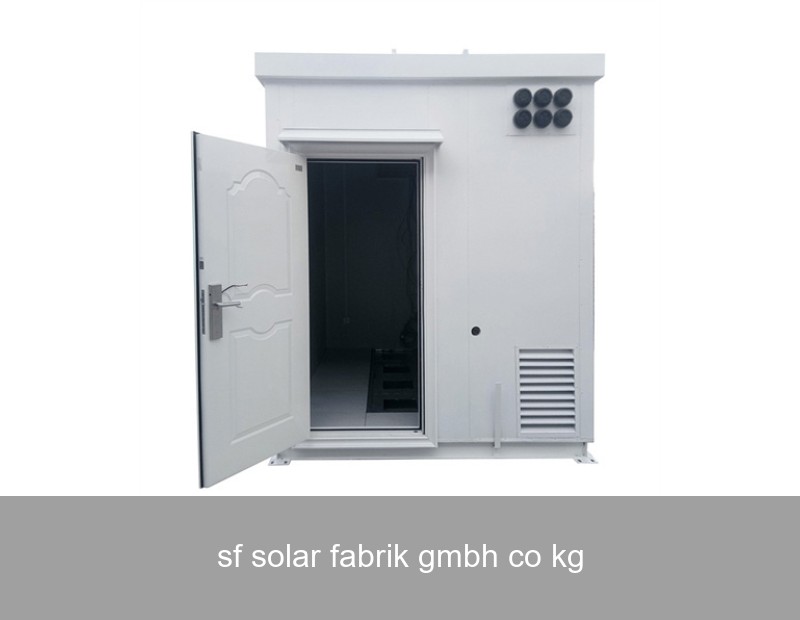
Picture a state-of-the-art solar panel manufacturing facility, like SF Solar Fabrik GmbH & Co. KG. The hum of machinery is constant, precise furnaces operate at extreme temperatures, and laser scribers work with micron-level accuracy. This is where the green energy revolution is literally forged. Yet, there's a profound irony at play: producing the technology that harnesses the sun's free power is an immensely energy-intensive process. For forward-thinking manufacturers, the question is no longer just about producing more efficient panels, but about powering their operations in a way that is resilient, cost-effective, and truly sustainable. This is where the narrative of modern solar manufacturing is being rewritten, moving from being a passive grid consumer to an active, intelligent energy hub.
Beyond the Grid: The Triad of Challenges for Modern Solar Manufacturing
The business case for advanced energy management in solar manufacturing is built on three converging pressures. Let's break them down.
1. Energy Cost Volatility
Industrial electricity prices, especially in Europe, have experienced significant volatility. According to Eurostat, the first half of 2023 saw electricity prices for non-household consumers in the EU averaging €0.183 per kWh, with wide variations between member states. For a facility running 24/7, a cent per kilowatt-hour fluctuation translates to millions in annual operational cost variance. This unpredictability makes financial forecasting a nightmare.
2. Power Quality & Grid Stability
Manufacturing processes, especially those involving precision furnaces and sensitive automation, require pristine power quality. Voltage sags, micro-interruptions, or frequency deviations—increasingly common as grids incorporate more variable renewables—can lead to production downtime, scrap material, and equipment stress. The cost of a single unplanned shutdown can be staggering.
3. Sustainability Goals
It's the ultimate test of credibility. A solar fabrik (solar factory) powered predominantly by fossil fuels faces a significant ESG (Environmental, Social, and Governance) gap. Customers and investors are increasingly scrutinizing the carbon footprint of the products they buy and fund. Achieving a low "embodied carbon" in a solar panel is a key competitive differentiator.

Image: Integrating on-site generation is the first step; coupling it with storage unlocks true potential. (Source: Unsplash)
Case Study: A European Solar Fab's Journey to Resilience
Let's examine a real-world scenario inspired by challenges faced by manufacturers like SF Solar Fabrik GmbH & Co. KG. A prominent European PV cell producer was grappling with peak demand charges that accounted for over 30% of its electricity bill. Furthermore, its region had a high concentration of wind power, leading to occasional grid frequency instability that risked its diffusion furnaces.
The Solution & Results: The company deployed a tailored 4 MWh Battery Energy Storage System (BESS) integrated with its existing on-site solar carport. The system was programmed for strategic load management:
- Peak Shaving: The BESS discharges during the 2-hour daily grid peak, reducing demand charges by 22% annually.
- Frequency Regulation: The system's fast-responding inverters provide grid services, generating additional revenue streams.
- Backup Power: For critical processes, the BESS provides up to 1 MW of backup power for 15 minutes, allowing for a graceful shutdown during outages, preventing product loss.
| Metric | Before BESS | After BESS | Improvement |
|---|---|---|---|
| Peak Demand Cost | €320,000 | €249,600 | -22% |
| Grid Service Revenue | €0 | €45,000 | New Income |
| CO2e Offset (from optimized solar use) | 850 tons | 1,040 tons | +22% |
This case demonstrates that a BESS is not just a cost center but a strategic asset that delivers ROI through multiple channels.
The Highjoule Advantage for High-Tech Manufacturing
At Highjoule, we understand that the energy needs of a solar fabrik are as precise and critical as its production line. Since 2005, we've evolved from an energy storage provider to a full-stack smart energy solutions partner for commercial and industrial entities. Our systems are engineered for the rigor of industrial environments.
Highjoule Industrial BESS: The Power Buffer
Our containerized and modular BESS solutions are built on LFP (Lithium Iron Phosphate) chemistry, chosen for its superior safety, long cycle life (10,000+ cycles), and thermal stability—non-negotiables for a factory setting. They act as a massive, instantaneous power buffer, smoothing out demand spikes and filling in gaps from on-site solar generation.
Smart Energy Software: The Brain
Hardware is only half the story. Our AI-driven energy management platform is the orchestrator. It continuously analyzes:
- Real-time electricity prices (leveraging day-ahead and intraday markets)
- Weather forecasts for solar production
- Factory production schedules and load profiles
It then makes autonomous, millisecond decisions to charge, discharge, or hold, optimizing for cost, sustainability, or resilience based on your pre-set priorities. You can think of it as an autopilot for your factory's energy consumption.
C&I Solar + Storage Integration
We specialize in seamlessly integrating our BESS with new or existing commercial and industrial (C&I) solar installations. This turns a simple solar array into a dispatchable power plant. Instead of exporting excess solar energy at low noon-time rates, you store it and use it during expensive evening peaks, maximizing self-consumption and truly insulating your operations from the grid.

Image: A Highjoule-style BESS provides the critical link between generation, consumption, and grid services. (Source: Unsplash)
Future-Proofing Your Fab: A Practical Roadmap
For a manufacturing leader like SF Solar Fabrik GmbH & Co. KG, the path toward energy independence is a strategic journey. Here’s a potential phased approach:
- Energy Audit & Digital Twin: Model your facility's precise load profile. Identify the most energy-intensive and critical processes.
- Pilot Deployment: Target a specific challenge—e.g., peak shaving for a single high-load department or providing backup for a critical cleanroom. This de-risks the investment and demonstrates value.
- Full-Scale Integration: Scale the solution facility-wide, integrating with HVAC, compressed air, and production management systems for holistic optimization.
- Grid Partner: With a significant BESS asset, participate in grid balancing markets (like FCR, aFRR) to turn your energy flexibility into a direct revenue line.
This progression transforms your factory from an energy cost center into a proactive, profitable node within the wider energy ecosystem. For deeper insights into grid-interactive efficient buildings, the U.S. Department of Energy's resources are an excellent authoritative source.
Let's Start a Conversation
The solar industry was born from a vision of energy independence and sustainability. It's time to apply that same vision to power our means of production. If you were to map your facility's energy flow tomorrow, what single process or cost line would reveal the biggest opportunity for resilience and savings? We invite you to explore that question, and we're here to help turn the answer into a tangible strategy.
 Inquiry
 Online Chat