


Choosing the Right Supplier of USV Battery for Uninterruptible Power Security
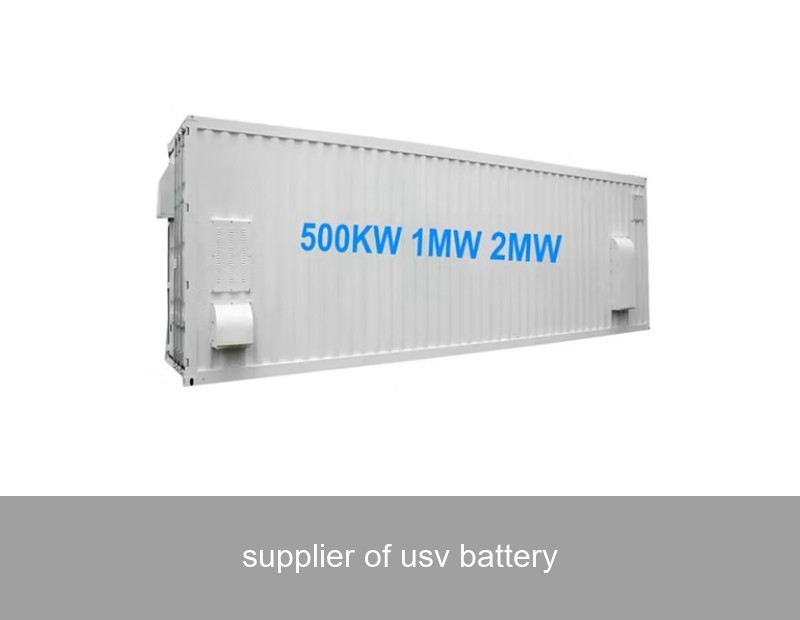
Imagine a critical data center humming along, a hospital running life-saving equipment, or a precision manufacturing line—then, the grid power flickers. In that instant, the Uninterruptible Power Supply (UPS) becomes the silent guardian, and its heart is the USV (Unterbrechungsfreie Stromversorgung) battery. Selecting the right supplier of USV battery systems transcends a simple purchase; it's an investment in operational resilience, safety, and total cost of ownership. For facility managers and energy decision-makers across Europe and the U.S., this choice is more critical than ever as energy demands evolve.
Table of Contents
- The Phenomenon: Why Your USV Battery Choice Matters More Now
- The Data: Quantifying the Cost of Compromise
- Case Study: A German Automotive Plant's Transition
- Key Criteria for Evaluating a USV Battery Supplier
- The Highjoule Approach: Beyond the Battery, a System Solution
- Looking Ahead: The Future of USV and Energy Storage
The Phenomenon: Why Your USV Battery Choice Matters More Now
Traditionally, the supplier of USV battery was often selected based on upfront cost to replace a legacy lead-acid unit. However, the landscape is shifting dramatically. Two key forces are at play: the increasing frequency and severity of grid instability due to extreme weather and aging infrastructure, and the global push for energy efficiency and sustainability. A modern USV system is no longer just a backup; it's becoming an integral part of a site's energy management strategy. The battery technology itself is at the heart of this shift, moving from simple energy containers to intelligent, manageable assets.
The Data: Quantifying the Cost of Compromise
Choosing an inferior or mismatched USV battery can have staggering financial implications. Consider this:
- Failure Cost: Data center downtime costs can exceed $9,000 per minute, according to the Ponemon Institute.
- Inefficiency Cost: Traditional Valve-Regulated Lead-Acid (VRLA) batteries can lose up to 20% of their capacity within 2-3 years in demanding environments, forcing earlier replacement and more frequent testing.
- Footprint & TCO: Lithium-ion batteries, now a mainstream choice, offer up to 60% less space and 50% less weight for the same capacity, with a lifespan 2-3 times longer than VRLA. This drastically reduces Total Cost of Ownership (TCO) despite a higher initial investment.
| Criteria | Traditional VRLA | Advanced Lithium-ion |
|---|---|---|
| Typical Lifespan | 3-5 years | 10+ years |
| Cycle Life | 200-500 cycles | 3,000 - 6,000+ cycles |
| Space Requirement | High | Low (up to 60% savings) |
| Maintenance Needs | Regular, intensive | Minimal, remote monitoring |
| Operational Temperature Range | Narrow | Wider, more adaptable |
Case Study: A German Automotive Plant's Transition
Let's look at a real-world example from our work at Highjoule. A major automotive parts manufacturer in Bavaria, Germany, operated a 500 kVA UPS system protecting a robotic welding line. Their existing VRLA battery bank required a dedicated, climate-controlled room, bi-annual load testing, and was approaching its 4-year replacement window.
The Challenge: Minimize downtime risk, reduce physical footprint for a planned facility expansion, and lower long-term operational costs.
The Solution: Highjoule was selected as the supplier of USV battery system, providing a turnkey lithium-ion battery retrofit solution. We supplied our IntelliCellTM Lithium-Ion Battery Racks, designed for seamless integration with major UPS brands. The system included our proprietary Battery Management System (BMS) for real-time cell monitoring, state-of-charge accuracy, and thermal management.
- Footprint Reduction: The new system occupied 70% less space, freeing up 15 square meters for production use.
- Installation & Commissioning: Completed during a scheduled weekend maintenance window, with zero production disruption.
- Projected TCO Savings: Over a 10-year period, the plant projects a 35% reduction in costs, eliminating two planned VRLA replacement cycles and reducing cooling and maintenance expenses.
- Enhanced Visibility: Facility managers now monitor battery health and status directly from the plant's energy management dashboard.

Image: A modern, space-efficient battery installation similar to Highjoule's IntelliCell system. (Source: Unsplash)
Key Criteria for Evaluating a USV Battery Supplier
So, what should you look for beyond the spec sheet? Here’s a practical checklist:
- Technology Agnosticism: Does the supplier offer the right chemistry (LiFePO4, NMC, advanced lead-carbon) for your specific duty cycle and environment?
- Integration Intelligence: Does the solution include a smart BMS that communicates seamlessly with your UPS and monitoring systems?
- Safety Certifications: Look for UL 1973, UL 9540A (for system-level safety), IEC 62619, and other region-specific certifications. This is non-negotiable.
- Service & Support Lifespan: Will the supplier be there in 8 years? Evaluate their long-term technical support, warranty terms, and service network in your region (Europe or U.S.).
- Proven Track Record: Request case studies and references from similar applications (e.g., data centers, healthcare, industrial).
The Highjoule Approach: Beyond the Battery, a System Solution
At Highjoule, founded in 2005, we believe your supplier of USV battery should be a strategic partner. We don't just sell battery modules; we provide intelligent, scalable Battery Energy Storage Systems (BESS) designed for reliability. Our products for USV and critical backup applications, like the IntelliCell Series, are engineered with these principles:
- Modular Design: Scale capacity seamlessly as your needs grow, protecting your initial investment.
- Predictive Analytics: Our cloud-connected platforms can forecast performance and alert to potential issues before they cause an outage.
- Sustainability Built-In: Our lithium-ion systems have a lower lifetime carbon footprint, and we offer end-of-life recycling programs. For us, efficiency is both operational and environmental.
- Global Support, Local Presence: With engineering support and service hubs in both Europe and North America, we ensure rapid response for our clients.

Image: Advanced monitoring and analytics are key to modern USV battery system management. (Source: Unsplash)
Looking Ahead: The Future of USV and Energy Storage
The line between a standalone USV and a grid-interactive storage system is blurring. With software like Highjoule's GridSynergy Platform, a USV battery bank can potentially participate in demand response programs during normal operation, creating revenue streams or reducing energy costs while remaining primed for backup. This transforms the USV from a cost center into a potential value-generating asset. The U.S. Department of Energy highlights this dual-use potential as a key grid modernization trend.
An Open Question for Your Consideration
As you evaluate your current or future UPS protection strategy, is your organization viewing its USV battery system as a passive insurance policy, or as an active, intelligent component of its broader energy resilience and sustainability goals? What data would you need to make the business case for a transition to a more advanced system?
 Inquiry
 Online Chat