


Beyond Panels: Why Your True Solar Power Partner is a Supplier of Force
You've made the smart decision to go solar. The panels are sleek, the environmental credentials are impeccable, and the promise of lower energy bills is compelling. But as your installer focuses on mounting hardware and inverters, there's a critical question that often goes unasked: Who will be your supplier of force? This isn't about the panels that capture sunlight; it's about the system that delivers reliable, on-demand power—the actual force that runs your business, powers your home, or stabilizes your community's grid. The real game-changer in today's energy landscape isn't just generation; it's intelligent storage and dispatch.
The Grid Challenge: From Intermittency to Resilience
Let's face a fundamental truth: the sun doesn't always shine. This intermittency is the classic challenge of solar power. Without a solution, you're left exporting excess energy at low prices during peak sun and drawing expensive, often carbon-intensive power from the grid at night or on cloudy days. This model doesn't create true energy independence or maximize financial return.
The data paints a clear picture. According to the International Energy Agency (IEA), global renewable capacity is soaring, but the value of that energy hinges on flexibility. In markets like California and Germany, "duck curves" – where net demand plummets during midday solar peaks and spikes in the evening – are becoming steeper, challenging grid stability and making simple solar export less valuable.
This is where the paradigm shifts. The most advanced solar projects are no longer just generators; they are self-sufficient power plants. They need a core component that transforms them from a fair-weather friend into a 24/7 supplier of force. That component is a Battery Energy Storage System (BESS).

Image: A Battery Energy Storage System (BESS) is the critical component that turns intermittent solar into a dispatchable force. (Source: Unsplash)
BESS: The Power Backbone of Modern Solar
Think of a BESS as the muscle and brain of your solar operation. The panels are the senses, gathering energy. The BESS is what stores that strength and releases it with precision and purpose.
- Energy Time-Shifting: Store cheap, abundant midday solar for use during expensive peak evening hours.
- Backup Power & Resilience: Provide seamless backup power during grid outages, keeping critical operations running.
- Grid Services: For larger systems, support grid stability through frequency regulation, reducing the need for fossil-fuel "peaker" plants.
- Maximized Self-Consumption: Dramatically increase the percentage of your own solar energy you use directly, maximizing ROI.
Not all BESS solutions are created equal. The difference between a basic battery bank and an advanced, integrated storage system is the difference between having a pile of bricks and having a fortified castle. This is where expertise matters.
Highjoule: Your Force Multiplier in Solar Energy
Since 2005, Highjoule has been at the forefront of this evolution. We don't just supply batteries; we engineer intelligent supplier of force solutions. Our systems are designed to be the robust, reliable heart of any solar installation, ensuring the generated energy is translated into usable, dependable power.
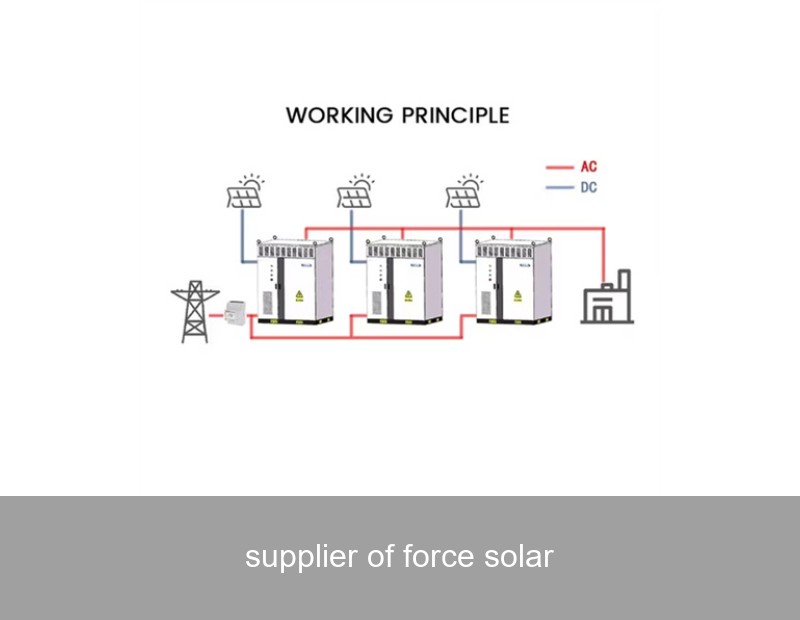
For commercial, industrial, and microgrid applications, our flagship H-Series Modular BESS is a prime example. It's built with industry-leading lithium-iron-phosphate (LFP) battery cells for safety and longevity, and its modular design allows for scalable power (from 250kW to multi-MW) and energy capacity. The true intelligence lies in our Aurora Energy Management System (EMS), a sophisticated software platform that optimizes every kilowatt-hour based on your energy patterns, weather forecasts, and real-time electricity prices.
| Feature | Benefit |
|---|---|
| NMC & LFP Chemistry Options | Optimized balance of energy density, safety, and cycle life for your specific needs. |
| Modular, Containerized Design | Easy to scale, deploy, and maintain. Reduces on-site installation complexity. |
| Aurora EMS with AI Forecasting | Maximizes financial returns through predictive optimization and automated market participation. |
| UL 9540 / IEC 62619 Certified | Meets the highest international safety and performance standards for peace of mind. |
For residential and smaller commercial sites, our Echo Home & Business integrated storage systems provide the same intelligent force, seamlessly pairing with new or existing solar arrays to create a resilient and efficient personal power plant.
Case Study: Empowering a European Manufacturing Plant
Let's look at a real-world application. A mid-sized automotive parts manufacturer in Bavaria, Germany, had a 1.2 MW rooftop solar array. Despite significant generation, they still faced high grid demand charges and couldn't operate critical lines during evening shifts on solar alone. They needed to become their own supplier of force.
Highjoule deployed a 1.5 MWh H-Series BESS integrated with their existing solar infrastructure. The Aurora EMS was programmed with the plant's complex load profile and connected to the local energy market data.
- Energy Cost Reduction: A 34% decrease in overall electricity costs by avoiding peak tariffs and increasing self-consumption to over 80%.
- Demand Charge Management: Peak grid draw was shaved by over 40%, translating to tens of thousands of Euros in annual savings.
- Revenue Generation: The system automatically provides frequency containment reserve (FCR) services to the German grid, creating a new income stream.
- Resilience: The plant now has 4 hours of backup power for its core assembly line, mitigating downtime risk.
This transformation didn't just add storage; it fundamentally changed the facility's relationship with energy, making it a proactive, powerful, and profitable asset. The U.S. Department of Energy highlights such integration as key to a modern, resilient grid.

Image: Industrial solar plus storage projects, like this conceptual one, turn manufacturing facilities into independent power hubs. (Source: Unsplash)
Choosing the Right Solar Force Supplier
When evaluating a supplier of force for your project, look beyond the battery datasheet. Consider the entire ecosystem:
- System Intelligence: Does the EMS offer true, automated optimization for both savings and revenue?
- Safety & Certification: Are the systems certified to the latest international safety standards (UL, IEC)?
- Scalability & Integration: Can the solution grow with your needs and integrate seamlessly with your existing or planned solar/infrastructure?
- Proven Track Record: Does the provider have documented case studies in your sector and region?
- Full Lifecycle Support: What is the offering for commissioning, long-term performance monitoring, and maintenance?
Highjoule's approach is to partner for the long term. Our solutions come with comprehensive monitoring via the Highjoule Portal and expert support to ensure your system delivers force, year after year.
The Future is Dispatchable
The energy transition is accelerating. With policies like the EU's Green Deal and the U.S. Inflation Reduction Act fueling demand, the next wave of solar adoption will be defined by storage. The goal is no longer just to generate green electrons, but to command them—to have unwavering control over your power.
So, as you plan your solar journey, ask yourself and your partners this crucial question: Is your project designed merely to harvest sunlight, or is it engineered to deliver unwavering, intelligent force? The distinction will define your energy resilience and economic return for decades to come.
What is the single biggest energy challenge—be it cost, reliability, or sustainability—that your organization or community faces today, and how could becoming your own supplier of force change that equation?
 Inquiry
 Online Chat